
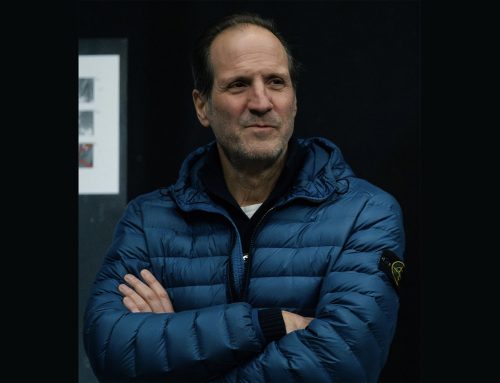
In Conversation with Gary Lucchesi
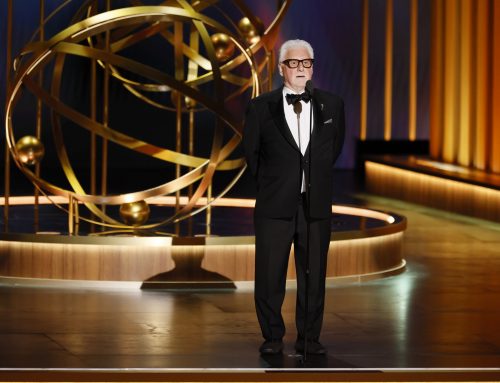
Gary Lucchesi is one of Hollywood’s most respected producers and studio executives. After beginning his career at the William Morris Agency — where he became one of the youngest talent agents in the company’s history — he went on to hold senior leadership roles at Tri-Star Pictures and Paramount, overseeing landmark films including Ghost, The Untouchables, The Godfather Part III, and The Hunt for Red October.
In 1998 he joined Lakeshore Entertainment, producing more than sixty films and series, including the Academy Award–winning Million Dollar Baby and the Underworld Franchise. A former President and President Emeritus of the Producers Guild of America, he now leads the PGA’s International Committee and currently serves as a Partner/Producer at Revelations Entertainment.
Lucchesi has cultivated a uniquely deep relationship with Italy, championing Italian talent and fostering long-standing partnerships between U.S. and Italian producers, institutions, and film commissions. His work has helped shape a stronger bridge between the two industries — creatively, culturally, and strategically.
Your journey into Hollywood began in a quite unique way — from UCLA to the mailroom at William Morris, and then to becoming one of the youngest talent agents in the agency’s history. What did those early years teach you about the business and about yourself, and how did they shape your path as a producer and studio executive?
Gary Lucchesi: After six months in the William Morris mailroom, and at the age of twenty-three, I was promoted to be the assistant to the man who was the Head of Motion Pictures at William Morris and the top agent in Hollywood. His name was Stan Kamen. The workdays were long and pressure filled, every hour seemed to bring a new crisis. For the first few months I was sick to my stomach with nerves every morning. After one anxious night I vividly remember calling my mother, telling her that I was afraid that I wasn’t cut out for the job and it was going to give me an ulcer! My mother gave me profound advice, she said, “Gary, you are anticipating the worst…most of the time the worst won’t happen.” It was after that call that I decided, not to be afraid, and to attack the challenges of the job and not fear whatever I encountered.
An example of this was soon after I became an agent I received an interesting phone call from my wife, who was the assistant to a powerful casting director. She called to say that her boss had just spent one hour with an interesting young actor who was looking for an agent. My wife had spoken to the young man and told him her husband was an agent at William Morris, and he said he would like to meet with me. The next day the actor was in my office…we got along great and I offered to be his agent…he said yes. The man’s name was Kevin Costner. But then a new hurdle existed. Young agents like me, were not supposed to sign clients…that was for the older, more established agents. I surmised that the best thing I could do was to stay quiet and try to get Kevin a job! That happened soon, and Kevin was offered the lead in the film called “Fandango” produced by Steven Spielberg. I quickly made Kevin’s deal for the film and remember walking into a staff meeting the next day. One of the agents exclaimed, “there is a young actor that just got the film “Fandango” we should get into this right away and try to sign him!” I then spoke up and said “his name is Kevin Costner, I signed him and just closed his deal for $50,000.” The agent looked at me and said, “you are not supposed to be signing clients!” To which I responded, “what do you want me to do…not rep him?” That ended the conversation…but suffice it to say the conversation with my mother motivated me to be less “afraid of the job.”
I followed that mantra as a studio executive and now as a producer. There are so many times that one can be afraid of having a conversation with someone you don’t know or pursuing project or a relationship that seems out of your reach…but don’t be afraid. Fear is often the enemy of progress.
Throughout your career, you have consistently acted as a bridge between the United States and Italy — from collaborating with Italian talent in Hollywood to working alongside RAI and major Italian producers. Where did this connection with Italy originate, and what has driven you to cultivate it so deeply over the years
Gary Lucchesi: When I first entered the business, there were only a few Italian Americans in the executive ranks, at the studios, networks or agencies. So when I would come across an Italian American entertainment professional, I would immediately try and introduce myself. As an agent, I represented Italian Americans, Susan Sarandon and Ray Sharkey. Once I became a studio executive, I often met with Italian Producer Dino De Laurentiis, who was always charming and willing to share his experiences. Later on, I had the great fortune to work with Francis Coppola on four films, “Godfather 3”, “Peggy Sue Got Married,” “Gardens of Stone and “Tucker, a Man and his Dreams.” Once I became a producer, working at Lakeshore Entertainment, we had a strong business relationship with RAI Cinema and chairman Giancarlo Leone, and thus my connection to Italy was further enhanced.
But on a personal note, my true connection with Italy started with my grandparents who lived upstairs from us in San Francisco. I grew up in what is known as a “flat” with an upstairs and downstairs apartment…My Grandparents lived upstairs from my family, and I would see them every day. They spoke Italian to my father, so I was witness to their culture. My grandfather died when I was five years old, but my grandmother (Nonna) lived until I was in my thirties, and I knew her very well. She was a very kind and generous woman. I always thought our family was blessed because Nonni would go to church every day and pray for us!
You have a long history of championing Italian filmmakers, talent, and stories — from collaborating with figures like Coppola, Morricone, Spinotti, and Muccino, to your leadership in fostering Italy-U.S. producer dialogues with APA and Cinecittà. Which Italian partnership or project has been particularly significant to you, and why?
Gary Lucchesi I feel that my relationship to Italy took on a new level in the twenty years that worked at Lakeshore Entertainment as President/Producer of over sixty films. This was because Lakeshore business model relied on pre-selling the international rights to films and our strongest relationship was with RAI Cinema. Aside of selling our films to RAI for distribution in Italy, we also worked as RAI’s agent to help RAI acquire films from other producers in the USA. It was in this capacity that I truly saw the benefits of a working relationship between a US Producer and Producers/Distributors in the rest of the world. It was through my initial relationship with RAI that I was introduced to the APA and Roberto Stabile, who became a cherished friend.
Based on your experience leading PGA’s international efforts and your extensive work with Italian institutions and production companies, what would you identify today as the most compelling opportunities — and the main areas of improvement — for Italian producers looking to collaborate with U.S. partners?
Gary Lucchesi The opportunities for U.S. producers to work with Italy are as relevant and as important as they have ever has been in the history of Hollywood. The cost of making films and television series in the U.S. has risen significantly over the years compared to the rest of the world, and US producers are filming more outside of the United States. For example, there is not one Marvel film being made in the US. Previously they were filmed in Atlanta, but that has now changed, and all are now being filmed in London. This is a tragedy for US production, and it is heartbreaking to see the studios in Los Angeles half full. The soundstages are at 50% capacity, and there are new soundstages about to be opened. But this is an opportunity for Italy. The Italian rebate is one of the strongest in Europe and Italy has so many unique regions that it has and will continue to lure many US productions to its shores. This is why Cinecittà is currently at full capacity. If Italy remains competitive with their rebates, I will predict strong growth in Italian-American productions.
The industry is going through profound change — strikes, streaming shifts, AI, evolving financing models. Looking ahead, where do you see the most promising directions for international co-productions between Italy and the U.S., and what should emerging Italian producers focus on to succeed in this evolving landscape?
Gary Lucchesi The industry is indeed going through profound changes. My instinct is that the future will be more individualized and more entrepreneurial. There will be less “filmmakers” but more “content creators.” With less people going to the movie theatres, and watching linear television, the financial models for production will undoubtedly change, but people continue to watch filmed content in great numbers. The content that they watch is more likely to be found on their cellphones and laptop computers.
For the past five years I have traveled through many regions of Italy. Reggio Calabria, Puglia, Basilicata, Friuli-Venezia Giulia, and the South Tyrol. Each one of these regions are quite different, unique and beautiful and are friendly for content creators. Italy should continue to sell its beautifu nation and all of outstanding regions and to continue to offer one of the best rebates in Europe. Few in America would ever turn down a chance to create content in Italy.
Italy Meets Hollywood © — All rights reserved. We thank Gary Lucchesi for his time and valuable insights.
Share:


Related Posts
In Conversation with Gary Lucchesi
Gary Lucchesi is one of Hollywood’s most respected producers and studio executives. After beginning his career at the William Morris Agency — where he became one of the youngest talent agents in the company’s history — he went on to hold senior leadership roles at Tri-Star Pictures and Paramount, overseeing landmark films including Ghost, The Untouchables, The Godfather Part III, and The Hunt for Red October.
In 1998 he joined Lakeshore Entertainment, producing more than sixty films and series, including the Academy Award–winning Million Dollar Baby and the Underworld Franchise. A former President and President Emeritus of the Producers Guild of America, he now leads the PGA’s International Committee and currently serves as a Partner/Producer at Revelations Entertainment.
Lucchesi has cultivated a uniquely deep relationship with Italy, championing Italian talent and fostering long-standing partnerships between U.S. and Italian producers, institutions, and film commissions. His work has helped shape a stronger bridge between the two industries — creatively, culturally, and strategically.
Your journey into Hollywood began in a quite unique way — from UCLA to the mailroom at William Morris, and then to becoming one of the youngest talent agents in the agency’s history. What did those early years teach you about the business and about yourself, and how did they shape your path as a producer and studio executive?
Gary Lucchesi: After six months in the William Morris mailroom, and at the age of twenty-three, I was promoted to be the assistant to the man who was the Head of Motion Pictures at William Morris and the top agent in Hollywood. His name was Stan Kamen. The workdays were long and pressure filled, every hour seemed to bring a new crisis. For the first few months I was sick to my stomach with nerves every morning. After one anxious night I vividly remember calling my mother, telling her that I was afraid that I wasn’t cut out for the job and it was going to give me an ulcer! My mother gave me profound advice, she said, “Gary, you are anticipating the worst…most of the time the worst won’t happen.” It was after that call that I decided, not to be afraid, and to attack the challenges of the job and not fear whatever I encountered.
An example of this was soon after I became an agent I received an interesting phone call from my wife, who was the assistant to a powerful casting director. She called to say that her boss had just spent one hour with an interesting young actor who was looking for an agent. My wife had spoken to the young man and told him her husband was an agent at William Morris, and he said he would like to meet with me. The next day the actor was in my office…we got along great and I offered to be his agent…he said yes. The man’s name was Kevin Costner. But then a new hurdle existed. Young agents like me, were not supposed to sign clients…that was for the older, more established agents. I surmised that the best thing I could do was to stay quiet and try to get Kevin a job! That happened soon, and Kevin was offered the lead in the film called “Fandango” produced by Steven Spielberg. I quickly made Kevin’s deal for the film and remember walking into a staff meeting the next day. One of the agents exclaimed, “there is a young actor that just got the film “Fandango” we should get into this right away and try to sign him!” I then spoke up and said “his name is Kevin Costner, I signed him and just closed his deal for $50,000.” The agent looked at me and said, “you are not supposed to be signing clients!” To which I responded, “what do you want me to do…not rep him?” That ended the conversation…but suffice it to say the conversation with my mother motivated me to be less “afraid of the job.”
I followed that mantra as a studio executive and now as a producer. There are so many times that one can be afraid of having a conversation with someone you don’t know or pursuing project or a relationship that seems out of your reach…but don’t be afraid. Fear is often the enemy of progress.
Throughout your career, you have consistently acted as a bridge between the United States and Italy — from collaborating with Italian talent in Hollywood to working alongside RAI and major Italian producers. Where did this connection with Italy originate, and what has driven you to cultivate it so deeply over the years
Gary Lucchesi: When I first entered the business, there were only a few Italian Americans in the executive ranks, at the studios, networks or agencies. So when I would come across an Italian American entertainment professional, I would immediately try and introduce myself. As an agent, I represented Italian Americans, Susan Sarandon and Ray Sharkey. Once I became a studio executive, I often met with Italian Producer Dino De Laurentiis, who was always charming and willing to share his experiences. Later on, I had the great fortune to work with Francis Coppola on four films, “Godfather 3”, “Peggy Sue Got Married,” “Gardens of Stone and “Tucker, a Man and his Dreams.” Once I became a producer, working at Lakeshore Entertainment, we had a strong business relationship with RAI Cinema and chairman Giancarlo Leone, and thus my connection to Italy was further enhanced.
But on a personal note, my true connection with Italy started with my grandparents who lived upstairs from us in San Francisco. I grew up in what is known as a “flat” with an upstairs and downstairs apartment…My Grandparents lived upstairs from my family, and I would see them every day. They spoke Italian to my father, so I was witness to their culture. My grandfather died when I was five years old, but my grandmother (Nonna) lived until I was in my thirties, and I knew her very well. She was a very kind and generous woman. I always thought our family was blessed because Nonni would go to church every day and pray for us!
You have a long history of championing Italian filmmakers, talent, and stories — from collaborating with figures like Coppola, Morricone, Spinotti, and Muccino, to your leadership in fostering Italy-U.S. producer dialogues with APA and Cinecittà. Which Italian partnership or project has been particularly significant to you, and why?
Gary Lucchesi I feel that my relationship to Italy took on a new level in the twenty years that worked at Lakeshore Entertainment as President/Producer of over sixty films. This was because Lakeshore business model relied on pre-selling the international rights to films and our strongest relationship was with RAI Cinema. Aside of selling our films to RAI for distribution in Italy, we also worked as RAI’s agent to help RAI acquire films from other producers in the USA. It was in this capacity that I truly saw the benefits of a working relationship between a US Producer and Producers/Distributors in the rest of the world. It was through my initial relationship with RAI that I was introduced to the APA and Roberto Stabile, who became a cherished friend.
Based on your experience leading PGA’s international efforts and your extensive work with Italian institutions and production companies, what would you identify today as the most compelling opportunities — and the main areas of improvement — for Italian producers looking to collaborate with U.S. partners?
Gary Lucchesi The opportunities for U.S. producers to work with Italy are as relevant and as important as they have ever has been in the history of Hollywood. The cost of making films and television series in the U.S. has risen significantly over the years compared to the rest of the world, and US producers are filming more outside of the United States. For example, there is not one Marvel film being made in the US. Previously they were filmed in Atlanta, but that has now changed, and all are now being filmed in London. This is a tragedy for US production, and it is heartbreaking to see the studios in Los Angeles half full. The soundstages are at 50% capacity, and there are new soundstages about to be opened. But this is an opportunity for Italy. The Italian rebate is one of the strongest in Europe and Italy has so many unique regions that it has and will continue to lure many US productions to its shores. This is why Cinecittà is currently at full capacity. If Italy remains competitive with their rebates, I will predict strong growth in Italian-American productions.
The industry is going through profound change — strikes, streaming shifts, AI, evolving financing models. Looking ahead, where do you see the most promising directions for international co-productions between Italy and the U.S., and what should emerging Italian producers focus on to succeed in this evolving landscape?
Gary Lucchesi The industry is indeed going through profound changes. My instinct is that the future will be more individualized and more entrepreneurial. There will be less “filmmakers” but more “content creators.” With less people going to the movie theatres, and watching linear television, the financial models for production will undoubtedly change, but people continue to watch filmed content in great numbers. The content that they watch is more likely to be found on their cellphones and laptop computers.
For the past five years I have traveled through many regions of Italy. Reggio Calabria, Puglia, Basilicata, Friuli-Venezia Giulia, and the South Tyrol. Each one of these regions are quite different, unique and beautiful and are friendly for content creators. Italy should continue to sell its beautifu nation and all of outstanding regions and to continue to offer one of the best rebates in Europe. Few in America would ever turn down a chance to create content in Italy.
Italy Meets Hollywood © — All rights reserved. We thank Gary Lucchesi for his time and valuable insights.