
Exploring Venice Immersive with Co-curator Liz Rosenthal
Venice Immersive is the section of the Venice International Film Festival entirely dedicated to works of virtual reality, augmented reality, and immersive arts.
Established in 2017 as the first official competition for Extended Reality (XR) works within an A-list film festival, Venice Immersive quickly became an international benchmark for the experimentation and advancement of new narrative and technological languages. With its creation, the Venice Biennale became the world’s first major film festival to host a section exclusively dedicated to immersive experiences, providing a unique platform every year for artists, creatives, and audiences in the fascinating setting of Lazzaretto Vecchio island, just a few minutes from the Lido.
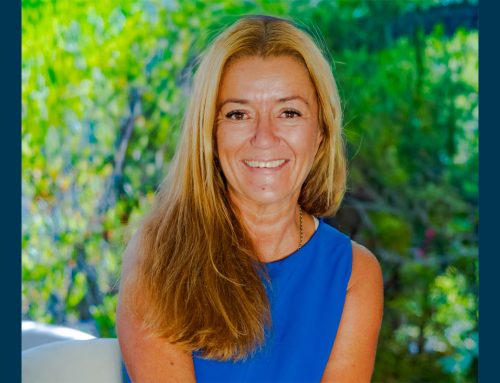
Liz Rosenthal, executive producer and founder of Power to the Pixel, and Michel Reilhac, artist and founder of Melange, have been the curators of Venice Immersive since its inception in 2017. Both bring extensive international experience in narrative innovation and immersive arts to the festival, having led the selection of this section since its foundation.
This year, the section is presenting 69 projects from 27 countries and collaborating with platforms such as VRChat. What is your assessment of these first years, and what factors have enabled Venice to become an international reference point for immersive arts?
Liz Rosenthal: We launched a pilot edition back in 2016, and it was clear from the start that there was potential for something unique. After that successful year, Venice became the first A-list festival to create an official selection entirely for immersive works. What sets it apart is the way we treat these projects with the same artistic care as cinema—presented in an exhibition context, not just as technology demos.
Over nearly ten years, the field has matured: today we see a diversity of forms, from headset-based VR to large-scale multi-user performances, all evolving as distinct artistic languages. It’s the Biennale, a huge house, and we have the art, the architectural engineering team, the team that builds all the exhibitions—an in-house team with incredible skills. This could not be done by another organization: you have this incredible venue and an extraordinary crew that makes it possible.
What are the main criteria you prioritize when selecting projects for the competition?
Liz Rosenthal: The criteria mirror those of the main film competition. Projects must be premieres—most are world premieres, though we allow international ones too. The idea is to give immersive works the same visibility and recognition as films.
We look for artistic quality, narrative strength, innovation, and the ability to resonate with audiences. Every year we also include projects that explore new formats, like narrative games or hybrid live/VR performances.
How do you envision the future of immersive storytelling in relation to new technologies and business models?
Liz Rosenthal: Scalability is a challenge: immersive devices are not yet mass-market. Many hardware makers have reduced investment in artistic content, which makes it harder for creators.
What we see growing is venue-based immersive work—large exhibitions for hundreds of people daily, with tickets priced like live events. These location-based formats, often blending VR with live performance and set design, are showing real market potential. At the same time, cinematic storytelling is gaining ground, with established directors like Doug Liman and Edward Berger experimenting in this space.
What role do networking events and the Venice Immersive Market play in the XR community?
Liz Rosenthal: They’re crucial. Venice Immersive has become the meeting point for creators, producers, distributors, and investors worldwide. Through the Venice Production Bridge, we run a market for projects in development, where selected works are pitched to financiers and distributors.
Many artists we discovered here have built careers through these opportunities—winning awards, finding partners, and returning year after year with new projects. What’s really amazing is that Venice Immersive has become a destination to discover groundbreaking new work, much like Venice has always been for the world’s finest films. That’s what we intended to do, and that’s what this section has become.
Because of this ecosystem, we’ve had projects like director Singing Chen’s: she won the Grand Jury Prize in 2022 with The Man Who Couldn’t Leave. The following year she returned as president of our jury, while also presenting a new project in the market, which is now in competition with The Clouds Are Two Thousand Meters Up, whilst again presenting her new project in development in the market, After being Shattered Into Dust.
The same is true for Craig Quintero: we’ve shown three of his projects, and now his fourth, witnessing the evolution of his work—he even credits his career to Venice.
And May Abdalla, who won the Grand Jury Prize in 2021, later returned as president, then came back again with Impulse in the market and won another award just last year for the completed project.
This is the whole ecosystem: we’ve been able to follow the evolution and maturity of artists’ work, and it’s truly heartwarming to see.
At the same time, we have a mixture of people—established names like Doug Liman or Edward Berger, but also completely new discoveries. For example, there’s a UK project, The Time Before– this year, and even though I live in London, I had never met the creator before Venice.
How would you describe The Clouds Are 2000 Meters Up –winner of the Venice Immersive Grand Prize– in terms of its artistic and narrative contribution to immersive storytelling, and what makes it a standout experience in this year’s selection?
For this question, both curators, Liz Rosenthal and Michel Reilhac, chose to respond together.
Liz Rosenthal and Michel Reilhac: The Clouds Are 2000 Meters Up is an exquisitely crafted free-roam VR experience that transforms Wu Ming-Yi’s short story into a breathtaking work of spatial storytelling. With pioneering capture techniques and a profoundly intimate connection to its protagonist, Guan, it draws us into a surreal journey of grief—from the city to the cloud forest of Taiwan—where he comes to understand his late wife through the unfinished novel she left behind.
It is powerful, moving, and offers the rare sensation of walking through a cinematic story as it unfolds around you—an achievement never previously realised in virtual reality.
Italy Meets Hollywood would like to thank Liz Rosenthal and Michel Reilhac for their valuable contribution.
© Italy Meets Hollywood – All rights reserved.
Share:
 In Conversation with Gary Lucchesi
 Interview with Gaia Tridente – Director of MIA |Mercato Internazionale Audiovisivo, Rome
Related Posts


Venice Immersive is the section of the Venice International Film Festival entirely dedicated to works of virtual reality, augmented reality, and immersive arts.
Established in 2017 as the first official competition for Extended Reality (XR) works within an A-list film festival, Venice Immersive quickly became an international benchmark for the experimentation and advancement of new narrative and technological languages. With its creation, the Venice Biennale became the world’s first major film festival to host a section exclusively dedicated to immersive experiences, providing a unique platform every year for artists, creatives, and audiences in the fascinating setting of Lazzaretto Vecchio island, just a few minutes from the Lido.
Liz Rosenthal, executive producer and founder of Power to the Pixel, and Michel Reilhac, artist and founder of Melange, have been the curators of Venice Immersive since its inception in 2017. Both bring extensive international experience in narrative innovation and immersive arts to the festival, having led the selection of this section since its foundation.
This year, the section is presenting 69 projects from 27 countries and collaborating with platforms such as VRChat. What is your assessment of these first years, and what factors have enabled Venice to become an international reference point for immersive arts?
Liz Rosenthal: We launched a pilot edition back in 2016, and it was clear from the start that there was potential for something unique. After that successful year, Venice became the first A-list festival to create an official selection entirely for immersive works. What sets it apart is the way we treat these projects with the same artistic care as cinema—presented in an exhibition context, not just as technology demos.
Over nearly ten years, the field has matured: today we see a diversity of forms, from headset-based VR to large-scale multi-user performances, all evolving as distinct artistic languages. It’s the Biennale, a huge house, and we have the art, the architectural engineering team, the team that builds all the exhibitions—an in-house team with incredible skills. This could not be done by another organization: you have this incredible venue and an extraordinary crew that makes it possible.
What are the main criteria you prioritize when selecting projects for the competition?
Liz Rosenthal: The criteria mirror those of the main film competition. Projects must be premieres—most are world premieres, though we allow international ones too. The idea is to give immersive works the same visibility and recognition as films.
We look for artistic quality, narrative strength, innovation, and the ability to resonate with audiences. Every year we also include projects that explore new formats, like narrative games or hybrid live/VR performances.
How do you envision the future of immersive storytelling in relation to new technologies and business models?
Liz Rosenthal: Scalability is a challenge: immersive devices are not yet mass-market. Many hardware makers have reduced investment in artistic content, which makes it harder for creators.
What we see growing is venue-based immersive work—large exhibitions for hundreds of people daily, with tickets priced like live events. These location-based formats, often blending VR with live performance and set design, are showing real market potential. At the same time, cinematic storytelling is gaining ground, with established directors like Doug Liman and Edward Berger experimenting in this space.
What role do networking events and the Venice Immersive Market play in the XR community?
Liz Rosenthal: They’re crucial. Venice Immersive has become the meeting point for creators, producers, distributors, and investors worldwide. Through the Venice Production Bridge, we run a market for projects in development, where selected works are pitched to financiers and distributors.
Many artists we discovered here have built careers through these opportunities—winning awards, finding partners, and returning year after year with new projects. What’s really amazing is that Venice Immersive has become a destination to discover groundbreaking new work, much like Venice has always been for the world’s finest films. That’s what we intended to do, and that’s what this section has become.
Because of this ecosystem, we’ve had projects like director Singing Chen’s: she won the Grand Jury Prize in 2022 with The Man Who Couldn’t Leave. The following year she returned as president of our jury, while also presenting a new project in the market, which is now in competition with The Clouds Are Two Thousand Meters Up, whilst again presenting her new project in development in the market, After being Shattered Into Dust.
The same is true for Craig Quintero: we’ve shown three of his projects, and now his fourth, witnessing the evolution of his work—he even credits his career to Venice.
And May Abdalla, who won the Grand Jury Prize in 2021, later returned as president, then came back again with Impulse in the market and won another award just last year for the completed project.
This is the whole ecosystem: we’ve been able to follow the evolution and maturity of artists’ work, and it’s truly heartwarming to see.
At the same time, we have a mixture of people—established names like Doug Liman or Edward Berger, but also completely new discoveries. For example, there’s a UK project, The Time Before– this year, and even though I live in London, I had never met the creator before Venice.
How would you describe The Clouds Are 2000 Meters Up –winner of the Venice Immersive Grand Prize– in terms of its artistic and narrative contribution to immersive storytelling, and what makes it a standout experience in this year’s selection?
For this question, both curators, Liz Rosenthal and Michel Reilhac, chose to respond together.
Liz Rosenthal and Michel Reilhac: The Clouds Are 2000 Meters Up is an exquisitely crafted free-roam VR experience that transforms Wu Ming-Yi’s short story into a breathtaking work of spatial storytelling. With pioneering capture techniques and a profoundly intimate connection to its protagonist, Guan, it draws us into a surreal journey of grief—from the city to the cloud forest of Taiwan—where he comes to understand his late wife through the unfinished novel she left behind.
It is powerful, moving, and offers the rare sensation of walking through a cinematic story as it unfolds around you—an achievement never previously realised in virtual reality.
Italy Meets Hollywood would like to thank Liz Rosenthal and Michel Reilhac for their valuable contribution.
© Italy Meets Hollywood – All rights reserved.
Share:
In Conversation with Gary LucchesiInterview with Gaia Tridente – Director of MIA |Mercato Internazionale Audiovisivo, Rome