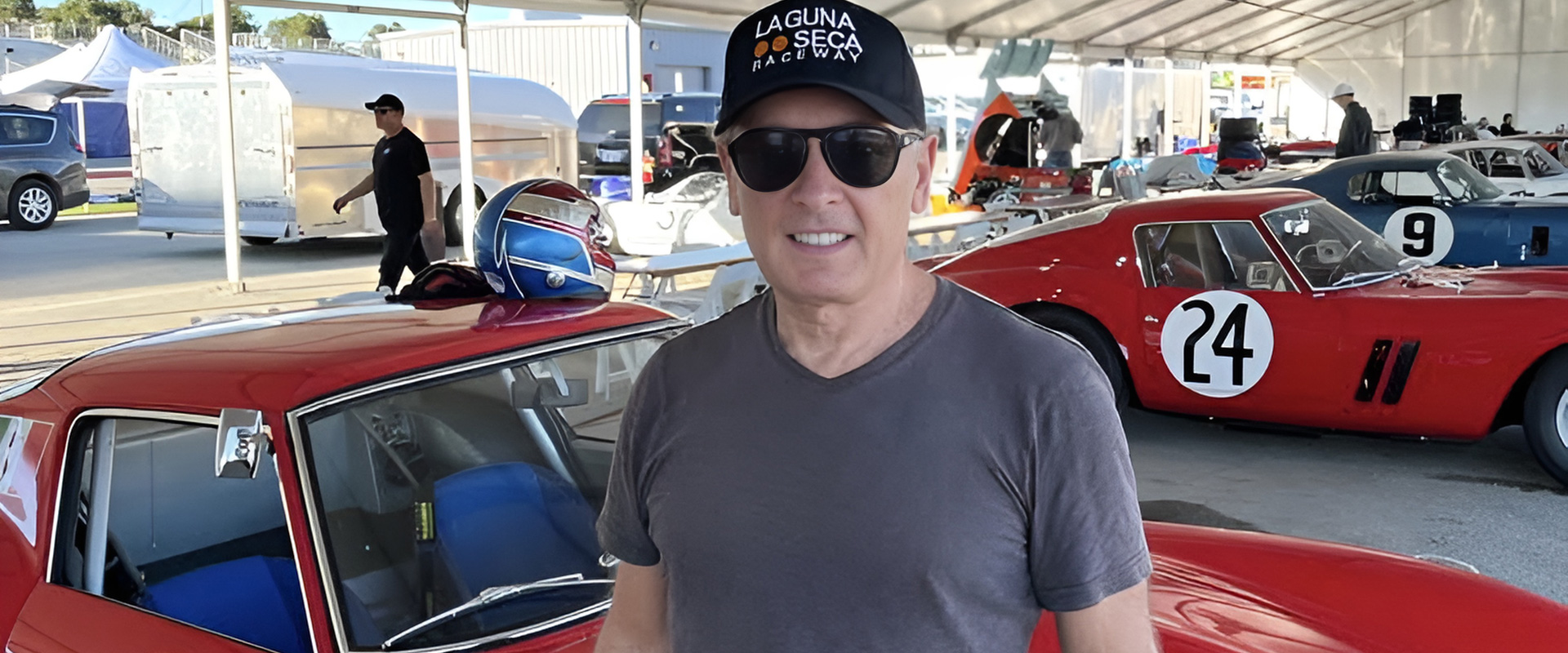
In Conversation with Stefano Gallini-Durante
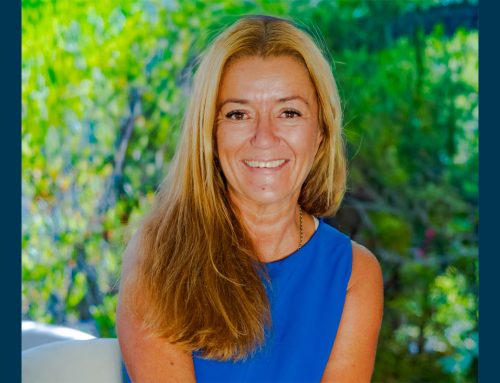
Based in Los Angeles, Italian producer Stefano Gallini-Durante develops projects across film and documentary while maintaining a strong connection with his native Italy. His producing credits include Voice from the Stone (2017), the gothic horror thriller shot in Italy starring Emilia Clarke, and the documentary En La Caliente: Tales of a Reggaeton Warrior (2024). His most recent project, Ferrari: Fury & the Monster (2024/2025), is a documentary portrait of legendary Ferrari engineer Mauro Forghieri and the iconic Ferrari 250 GTO. In 2017 he founded the Riviera International Film Festival in Sestri Levante, a platform dedicated to emerging filmmakers under 35 and documentaries focused on environmental themes.
In this conversation with Italy Meets Hollywood, Gallini-Durante reflects on his journey in the American film industry, the lessons he learned — including those from legendary Italian producer Dino De Laurentiis — and his approach to storytelling and talent.
IMH: You have been working in the U.S. film industry for many years. What originally drew you to Los Angeles, and how has the city’s unique creative and entrepreneurial mindset influenced the way you approach filmmaking and producing?
Stefano Durante-Gallini: My journey began after university. I spent two years in London studying, followed by four years in New York working in finance. In the 1990s, I moved to Los Angeles with the specific goal of working in film, even though I didn’t yet have a fully defined plan — except for a strong desire to work in production. My first job was as an assistant to a producer at New Line Cinema, where I stayed for almost four years. During that time, I was also studying film production and financing at UCLA.
It was a fundamental experience, because New Line was essentially a mini independent studio, with all departments — production, marketing, PR, and distribution — under one roof. It was a very interesting model, functioning as a true one-stop shop: they developed, produced, and distributed films across the entire value chain. This allowed me to gain a close understanding of every stage, from development to production to the promotion of films. Within the studio, there was also a division called Fine Line Features, their specialty company focused on more auteur-driven and independent cinema. Alongside major commercial successes — such as horror franchises and adaptations of Stephen King — Fine Line provided a space for discovering new talent. Many directors who are now working at the highest levels emerged from that environment, including Paul Thomas Anderson, whom I had the opportunity to meet during those years.
But the greatest influence was Los Angeles itself. Coming from cities like New York and London, which are much more structured and business-oriented, Los Angeles represented a strong cultural shift. It is a challenging city — vast, often disorienting — yet at the same time unique for the creative energy it generates.
What struck me the most was the mindset: there is a strong openness to change, to reinvention, and a very free approach to ideas. It’s an environment that encourages you to think differently, and that has deeply influenced the way I approach filmmaking and producing.
IMH: As a producer, you have worked on a number of significant film and documentary projects — from the gothic thriller Voice from the Stone, shot in Italy and starring Emilia Clarke, to very different documentaries such as En La Caliente: Tales of a Reggaeton Warrior, The War in Between, and your most recent Ferrari: Fury & the Monster. Which works do you feel best represent your creative approach, and what draws you to a particular story?
Stefano Gallini-Durante: It’s not something intentional, but I’ve realized that I often return to certain types of characters in my projects. I’m very drawn to imperfect characters, full of contradictions, because ultimately we are all like that — not everyone is aware of it.
To me, the highest form of intelligence is not knowledge, but the ability to understand one’s own thoughts. And the characters that interest me the most are those who, in different ways, confront that awareness.
In general, what draws me to a story is precisely this: complex, often unpredictable characters who are faced with difficult choices and who, through risk and vision, manage to transform a situation.
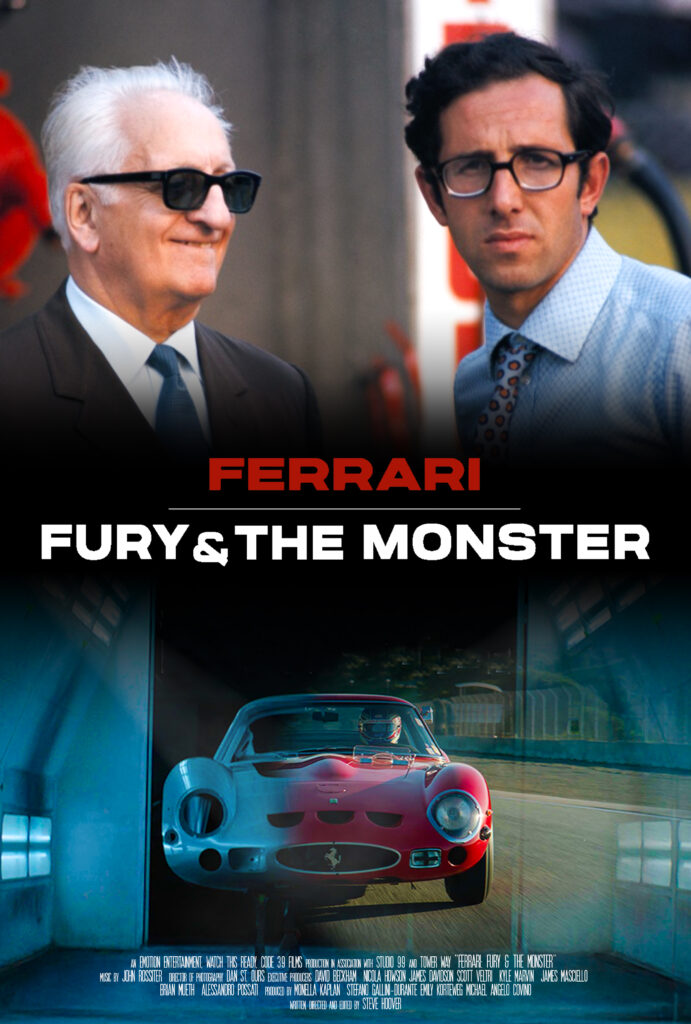
IMH: Ferrari: Fury & the Monster, directed by Steve Hoover, brings together automotive history, Italian engineering genius and a remarkable cast of interviewees. How did this project come together, and what do you hope audiences take away from it?
Stefano Gallini-Durante: The project stems from my interest in the figure of Enzo Ferrari, whom I consider an extraordinary character — not only for what he built, but for his approach to work and to life. What has always fascinated me about him is his willpower — his determination — combined with a willingness to risk everything in order to win, but in an ethical way, grounding that risk in the talent around him rather than in shortcuts. He was driven by a total passion for his work and his engines, not by money. What struck me most while working on this documentary was his ability to recognize talent in others and to trust it, even in extreme situations. The case of Mauro Forghieri is emblematic: in 1961, Ferrari was facing a deep crisis, with much of the technical team leaving the company, and he chose to entrust everything to a 26-year-old with virtually no experience.
In just eight months, in a situation of total uncertainty, the Ferrari 250 GTO was born. At the 24 Hours of Le Mans, they placed first, second, and third — a result that completely changed the destiny of the company and the global perception of Ferrari.
But what I am really interested in telling is not just the story of a car, but the principle behind it: without risk, you don’t get anywhere. And above all, true talent lies in the ability to recognize and elevate the talent of others. Recognizing talent is essential — especially, perhaps, in younger people. At the same time, it’s important to surround yourself with people who are more talented than you are, because that ultimately elevates you as well. It’s a mindset I encountered very strongly in California.
That is also why I worked on creating a film festival dedicated to filmmakers under 35 — to give space to new voices and emerging talent that often struggle to find opportunities.
We also met people who lived through that era firsthand, including one of Ferrari’s last mechanics, who joined as a young man and remained with the company his entire life. These are very powerful, deeply human stories that give a tangible dimension to what is often told in almost mythological terms. I hope audiences take away exactly this: the idea that talent exists, but it needs to be recognized and supported — and that the courage to take risks is often what truly makes the difference.
IMH: You founded the Riviera International Film Festival in Sestri Levante in 2017, with a focus on emerging directors under 35 and documentaries with an environmental dimension. What inspired you to create this platform, and what role do you see it playing in the current landscape for independent cinema?
Stefano Durante-Gallini: The festival came about in a very organic way. For years, I attended festivals around the world and, more than anything, I came to understand what I didn’t want to do. I remember one episode that was very formative for me: one of the first films I had produced was selected at an important festival, and we were very excited. Then we arrived and realized the screening was scheduled early in the morning, with very little audience. It was a bit of a shocking experience, because you realize how much work goes into a film and how, sometimes, young filmmakers are not truly given the opportunity to be seen.
That’s where the idea came from, years later, to create something different. The festival is the result of a team effort that, over time, has shared and developed this vision. I also have a very strong connection to Sestri Levante, and it is thanks in part to this unique setting that the project was able to take shape.
We set out to overturn certain dynamics often seen at other festivals that didn’t resonate with us: putting the red carpet in the background and placing young filmmakers at the center. That’s why the competition is dedicated to filmmakers under 35 — not because we have anything against older filmmakers, but because we wanted to create a real platform for those at the beginning of their journey.
Today, the festival has a very young and highly engaged audience. Screenings take place at the Cinema Ariston, which features two state-of-the-art theaters that have nothing to envy their Californian counterparts, along with a third venue set in a former convent, reserved for special screenings and short films.
We have now reached our tenth edition and have already discovered several notable talents. It has become an international meeting point, while maintaining its original spirit: to give visibility and opportunities to new voices.
I believe that, in today’s independent film landscape, its role is precisely this: to create a real space where young filmmakers can be seen, heard, and truly placed at the center.
IMH: Early in your career, you met Dino De Laurentiis at his Universal Studios office — an encounter you have described as formative. He was very direct in his advice. What did you take away from that meeting?
Stefano Durante-Gallini: It was an encounter I will never forget. I spent almost an entire afternoon with him in his office at Universal Studios, and what struck me immediately was his presence: he was a man from another era — very direct, almost gruff, but with incredible clarity.
At a certain point, he told me two things that have stayed with me ever since. The first: no matter how successful you will become, here you will always be considered an outsider. Even he, after producing countless successful films and winning awards, still felt that way in America. But he explained that it’s not necessarily a disadvantage — it can become a strength, if you know how to use it.
And this thought is directly connected to his second advice: about controlling ideas. He told me very clearly that a producer’s real power is not money — because in America, money can always be found — but ideas. And the key is to control them. He said: never send anything out that you don’t control. Not even a comma, unless you control that comma. That sentence stayed with me — it became almost part of my DNA. In that moment, I truly understood what it means to work in this industry: if you have something that others want, you have real power, but only if you own the rights to it.
These are lessons that have stayed with me throughout my career and that, in an industry increasingly driven by IP, are perhaps more relevant today than ever.
IMH: In this phase of profound transformation in the industry, often accompanied by a sense of pessimism, what is your view on the future of cinema?
Stefano Durante-Gallini: There has always been this kind of pessimism. Since the very beginning of cinema, someone has always been declaring its end: first the arrival of sound, then television, then the internet, streaming, and now artificial intelligence. It’s as if cinema were a train that someone is constantly trying to stop or slow down.
I believe, on the contrary, that cinema is more alive than ever. In recent years, I’ve seen an extraordinary number of great films — not only the ones that are awarded, but many others that demonstrate an incredible vitality. We are clearly in a phase of transformation, but not of decline. It’s true that business models have changed and that the distribution system is undergoing a contraction, but that doesn’t mean cinema is dying. Great films will always find a way to emerge.
As for artificial intelligence, I believe it should be seen as a tool, not as a substitute for talent. It can help and accelerate certain processes, but it will never replace authenticity. In the end, what wins is always the quality of the story and the emotional truth it conveys. In fact, I think we are moving more and more toward a renewed emphasis on authenticity: audiences recognize when something is real.
At the same time, I believe the role of festivals and curators will become even more important, because in such a content-rich environment, the ability to identify and support valuable projects will be essential.
In short, I do not share this pessimistic view: cinema is changing, but it is a transformation that can generate new opportunities. And ultimately, talent always finds a way to emerge.
Italy Meets Hollywood thanks Stefano Gallini-Durante for sharing his journey, insights, and creative vision.
© Italy Meets Hollywood. All rights reserved.
Share:
Related Posts
In Conversation with Stefano Gallini-Durante
Based in Los Angeles, Italian producer Stefano Gallini-Durante develops projects across film and documentary while maintaining a strong connection with his native Italy. His producing credits include Voice from the Stone (2017), the gothic horror thriller shot in Italy starring Emilia Clarke, and the documentary En La Caliente: Tales of a Reggaeton Warrior (2024). His most recent project, Ferrari: Fury & the Monster (2024/2025), is a documentary portrait of legendary Ferrari engineer Mauro Forghieri and the iconic Ferrari 250 GTO. In 2017 he founded the Riviera International Film Festival in Sestri Levante, a platform dedicated to emerging filmmakers under 35 and documentaries focused on environmental themes.
In this conversation with Italy Meets Hollywood, Gallini-Durante reflects on his journey in the American film industry, the lessons he learned — including those from legendary Italian producer Dino De Laurentiis — and his approach to storytelling and talent.
IMH: You have been working in the U.S. film industry for many years. What originally drew you to Los Angeles, and how has the city’s unique creative and entrepreneurial mindset influenced the way you approach filmmaking and producing?
Stefano Durante-Gallini: My journey began after university. I spent two years in London studying, followed by four years in New York working in finance. In the 1990s, I moved to Los Angeles with the specific goal of working in film, even though I didn’t yet have a fully defined plan — except for a strong desire to work in production. My first job was as an assistant to a producer at New Line Cinema, where I stayed for almost four years. During that time, I was also studying film production and financing at UCLA.
It was a fundamental experience, because New Line was essentially a mini independent studio, with all departments — production, marketing, PR, and distribution — under one roof. It was a very interesting model, functioning as a true one-stop shop: they developed, produced, and distributed films across the entire value chain. This allowed me to gain a close understanding of every stage, from development to production to the promotion of films. Within the studio, there was also a division called Fine Line Features, their specialty company focused on more auteur-driven and independent cinema. Alongside major commercial successes — such as horror franchises and adaptations of Stephen King — Fine Line provided a space for discovering new talent. Many directors who are now working at the highest levels emerged from that environment, including Paul Thomas Anderson, whom I had the opportunity to meet during those years.
But the greatest influence was Los Angeles itself. Coming from cities like New York and London, which are much more structured and business-oriented, Los Angeles represented a strong cultural shift. It is a challenging city — vast, often disorienting — yet at the same time unique for the creative energy it generates.
What struck me the most was the mindset: there is a strong openness to change, to reinvention, and a very free approach to ideas. It’s an environment that encourages you to think differently, and that has deeply influenced the way I approach filmmaking and producing.
IMH: As a producer, you have worked on a number of significant film and documentary projects — from the gothic thriller Voice from the Stone, shot in Italy and starring Emilia Clarke, to very different documentaries such as En La Caliente: Tales of a Reggaeton Warrior, The War in Between, and your most recent Ferrari: Fury & the Monster. Which works do you feel best represent your creative approach, and what draws you to a particular story?
Stefano Gallini-Durante: It’s not something intentional, but I’ve realized that I often return to certain types of characters in my projects. I’m very drawn to imperfect characters, full of contradictions, because ultimately we are all like that — not everyone is aware of it.
To me, the highest form of intelligence is not knowledge, but the ability to understand one’s own thoughts. And the characters that interest me the most are those who, in different ways, confront that awareness.
In general, what draws me to a story is precisely this: complex, often unpredictable characters who are faced with difficult choices and who, through risk and vision, manage to transform a situation.
IMH: Ferrari: Fury & the Monster, directed by Steve Hoover, brings together automotive history, Italian engineering genius and a remarkable cast of interviewees. How did this project come together, and what do you hope audiences take away from it?
Stefano Gallini-Durante: The project stems from my interest in the figure of Enzo Ferrari, whom I consider an extraordinary character — not only for what he built, but for his approach to work and to life. What has always fascinated me about him is his willpower — his determination — combined with a willingness to risk everything in order to win, but in an ethical way, grounding that risk in the talent around him rather than in shortcuts. He was driven by a total passion for his work and his engines, not by money. What struck me most while working on this documentary was his ability to recognize talent in others and to trust it, even in extreme situations. The case of Mauro Forghieri is emblematic: in 1961, Ferrari was facing a deep crisis, with much of the technical team leaving the company, and he chose to entrust everything to a 26-year-old with virtually no experience.
In just eight months, in a situation of total uncertainty, the Ferrari 250 GTO was born. At the 24 Hours of Le Mans, they placed first, second, and third — a result that completely changed the destiny of the company and the global perception of Ferrari.
But what I am really interested in telling is not just the story of a car, but the principle behind it: without risk, you don’t get anywhere. And above all, true talent lies in the ability to recognize and elevate the talent of others. Recognizing talent is essential — especially, perhaps, in younger people. At the same time, it’s important to surround yourself with people who are more talented than you are, because that ultimately elevates you as well. It’s a mindset I encountered very strongly in California.
That is also why I worked on creating a film festival dedicated to filmmakers under 35 — to give space to new voices and emerging talent that often struggle to find opportunities.
We also met people who lived through that era firsthand, including one of Ferrari’s last mechanics, who joined as a young man and remained with the company his entire life. These are very powerful, deeply human stories that give a tangible dimension to what is often told in almost mythological terms. I hope audiences take away exactly this: the idea that talent exists, but it needs to be recognized and supported — and that the courage to take risks is often what truly makes the difference.
IMH: You founded the Riviera International Film Festival in Sestri Levante in 2017, with a focus on emerging directors under 35 and documentaries with an environmental dimension. What inspired you to create this platform, and what role do you see it playing in the current landscape for independent cinema?
Stefano Durante-Gallini: The festival came about in a very organic way. For years, I attended festivals around the world and, more than anything, I came to understand what I didn’t want to do. I remember one episode that was very formative for me: one of the first films I had produced was selected at an important festival, and we were very excited. Then we arrived and realized the screening was scheduled early in the morning, with very little audience. It was a bit of a shocking experience, because you realize how much work goes into a film and how, sometimes, young filmmakers are not truly given the opportunity to be seen.
That’s where the idea came from, years later, to create something different. The festival is the result of a team effort that, over time, has shared and developed this vision. I also have a very strong connection to Sestri Levante, and it is thanks in part to this unique setting that the project was able to take shape.
We set out to overturn certain dynamics often seen at other festivals that didn’t resonate with us: putting the red carpet in the background and placing young filmmakers at the center. That’s why the competition is dedicated to filmmakers under 35 — not because we have anything against older filmmakers, but because we wanted to create a real platform for those at the beginning of their journey.
Today, the festival has a very young and highly engaged audience. Screenings take place at the Cinema Ariston, which features two state-of-the-art theaters that have nothing to envy their Californian counterparts, along with a third venue set in a former convent, reserved for special screenings and short films.
We have now reached our tenth edition and have already discovered several notable talents. It has become an international meeting point, while maintaining its original spirit: to give visibility and opportunities to new voices.
I believe that, in today’s independent film landscape, its role is precisely this: to create a real space where young filmmakers can be seen, heard, and truly placed at the center.
IMH: Early in your career, you met Dino De Laurentiis at his Universal Studios office — an encounter you have described as formative. He was very direct in his advice. What did you take away from that meeting?
Stefano Durante-Gallini: It was an encounter I will never forget. I spent almost an entire afternoon with him in his office at Universal Studios, and what struck me immediately was his presence: he was a man from another era — very direct, almost gruff, but with incredible clarity.
At a certain point, he told me two things that have stayed with me ever since. The first: no matter how successful you will become, here you will always be considered an outsider. Even he, after producing countless successful films and winning awards, still felt that way in America. But he explained that it’s not necessarily a disadvantage — it can become a strength, if you know how to use it.
And this thought is directly connected to his second advice: about controlling ideas. He told me very clearly that a producer’s real power is not money — because in America, money can always be found — but ideas. And the key is to control them. He said: never send anything out that you don’t control. Not even a comma, unless you control that comma. That sentence stayed with me — it became almost part of my DNA. In that moment, I truly understood what it means to work in this industry: if you have something that others want, you have real power, but only if you own the rights to it.
These are lessons that have stayed with me throughout my career and that, in an industry increasingly driven by IP, are perhaps more relevant today than ever.
IMH: In this phase of profound transformation in the industry, often accompanied by a sense of pessimism, what is your view on the future of cinema?
Stefano Durante-Gallini: There has always been this kind of pessimism. Since the very beginning of cinema, someone has always been declaring its end: first the arrival of sound, then television, then the internet, streaming, and now artificial intelligence. It’s as if cinema were a train that someone is constantly trying to stop or slow down.
I believe, on the contrary, that cinema is more alive than ever. In recent years, I’ve seen an extraordinary number of great films — not only the ones that are awarded, but many others that demonstrate an incredible vitality. We are clearly in a phase of transformation, but not of decline. It’s true that business models have changed and that the distribution system is undergoing a contraction, but that doesn’t mean cinema is dying. Great films will always find a way to emerge.
As for artificial intelligence, I believe it should be seen as a tool, not as a substitute for talent. It can help and accelerate certain processes, but it will never replace authenticity. In the end, what wins is always the quality of the story and the emotional truth it conveys. In fact, I think we are moving more and more toward a renewed emphasis on authenticity: audiences recognize when something is real.
At the same time, I believe the role of festivals and curators will become even more important, because in such a content-rich environment, the ability to identify and support valuable projects will be essential.
In short, I do not share this pessimistic view: cinema is changing, but it is a transformation that can generate new opportunities. And ultimately, talent always finds a way to emerge.
Italy Meets Hollywood thanks Stefano Gallini-Durante for sharing his journey, insights, and creative vision.
© Italy Meets Hollywood. All rights reserved.