
In Conversation with Len Amato
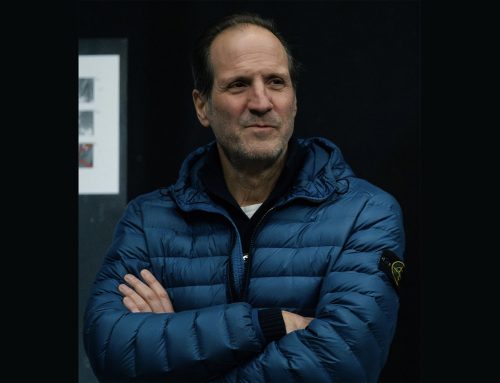
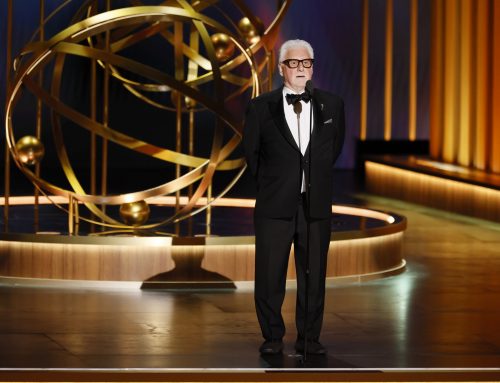
Len Amato is an independent producer of film and television and the founder of Crash & Salvage. He began his career in New York as a freelance reader for Warner Bros. and Universal Pictures before becoming the first story editor at Tribeca Productions, Robert De Niro’s production company. He later joined Spring Creek Productions, where he served as President and produced or executive produced films such as Analyze This, Analyze That, Possession, Deliver Us From Eva, Rumor Has It, the Oscar-nominated Blood Diamond, starring Leonardo DiCaprio, and The Astronaut Farmer with Billy Bob Thornton.
In 2008, Amato joined HBO, where he served for fourteen years as President of HBO Films, Miniseries and Cinemax Programming, overseeing some of the most celebrated television films produced by the premium network. During his tenure, HBO productions received a total of 43 Emmy Awards and 12 Golden Globes®, including Emmy-winning titles such as Grey Gardens, Temple Grandin, Game Change, Behind the Candelabra, The Normal Heart, and Bessie. As an Executive Producer, he personally won the 2008 Emmy Award for Outstanding Made for Television Movie for Recount.
Following his time at HBO, Amato was appointed Chief Content Officer at MasterClass in 2022, where he oversaw the company’s content strategy across its original classes and educational programming. He currently continues to collaborate with MasterClass as a consultant, while managing his own production company, Crash & Salvage.
1.You began your career as a freelance reader for Warner Bros. and Universal before becoming the first story editor at Tribeca Productions. In today’s oversaturated content market, which lessons from those early years still matter most when it comes to identifying strong stories and emerging talent?
Len Amato: I originally came from a background in writing and acting, and then I discovered this strange job where you were paid to read books, plays, and articles — which at the time was not common at all. Because I was based in New York, where publishing was centered, I wasn’t reading screenplays yet. I was reading novels, nonfiction, magazine articles, and plays for all the major studios — Warner Bros., Universal, Paramount — since they all had story departments in New York back then.
That experience was incredibly formative. As a reader, you learn to get to the essence of a story very quickly. I remember being handed the manuscript for Clockers — all 950 pages of it — at six in the evening and being told to come back the next morning with a full analysis for Bob De Niro. That’s an extreme example, but it captures what readers are trained to do: distill a story down to its core and determine whether it has the potential to become a film or series.
At that time, greenlights were often driven by a few key elements: a powerful role for a star, a high-concept plot, or a well-known book. Sometimes character was the driver, sometimes concept. But the discipline of summarizing a complex story into a few pages of clear insight taught me how to recognize what truly matters in material.
Today, I still look for many of the same fundamentals — but above all, I look for originality and voice. Even if the idea itself isn’t entirely new, it has to feel fresh. There should also be a reason for telling the story — a sense that it has something to say. Even pure entertainment benefits from a deeper purpose.
And then, always, it comes back to character. Character, character, character. Great character writing creates emotional engagement. You want to fall in love with the characters — not necessarily because they are good or bad, but because they feel real and dimensional. When characters are strong, even small plot moments gain significance.
Plot matters, of course, and I admire writers who know how to manipulate it skillfully. But for me, the most lasting power always comes from emotional connection. At the end of the day, storytelling hasn’t really changed since the first paintings on cave walls. Without story — and without characters — you don’t have anything.
2. At Spring Creek Productions, you worked across very different genres and tones. In today’s industry, where positioning is everything, how valuable has that versatility been in navigating long-term creative and executive careers?
Len Amato: I’ve been fortunate in that my career has never really been confined to a single genre. Even when working within a specific genre, the goal was always to transcend it. Many of the great filmmakers — from Howard Hawks to John Ford — worked in genre, but they also moved beyond it. Genre becomes a framework, not a limitation.
You see that clearly today, especially in areas like horror, where filmmakers are constantly blending tones and pushing boundaries. There’s nothing wrong with a straight-ahead genre film — it can be incredibly effective and satisfying — but in the world I’ve worked in, the ambition was usually to go beyond that surface and reach toward something more layered.
I’ve always felt fairly agnostic when it comes to the type of story. To me, it’s not inconsistent to work on a comedy like Analyze This, a heavy drama like Blood Diamond, or the nonfiction projects I produced at HBO. It all comes back to the same core principle: you’re searching for the best stories and the most fully realized characters.
At HBO, for example, some of the strongest stories we found came from the nonfiction world. I was never interested in doing projects simply because they were “ripped from the headlines,” and I’ve never loved labels like “biopic.” I was simply looking for compelling storytelling. And Hollywood, more broadly, has always drawn from real life — from On the Waterfront to many of today’s most celebrated films.
Great projects can exist in any genre. What matters is that they are not exploitative, and that the artists involved are using the genre as a vehicle toward a larger artistic idea. Kubrick did this from the very beginning of his career. All the essential elements of storytelling — character, theme, emotional depth — can live across different tones and formats.
Take a film like Shampoo: you could describe it as a zany comedy, a sexual comedy about relationships, or a political commentary. In reality, it’s all of those things at once. That’s what strong filmmaking does — it operates on multiple levels. Sometimes even the filmmaker isn’t fully conscious of all the layers at play. And that’s the beauty of it: the audience brings their own perspective and finds meanings that may be intentional, subliminal, or entirely personal. That exchange between the work and the audience is what makes cinema alive.
3. In 2008, you joined HBO and went on to lead HBO Films, Miniseries and Cinemax Programming for fourteen years. HBO is widely associated with premium content around the world – how did the content selection process actually work during your time there, from spotting ideas to deciding which projects moved forward?
Len Amato: I can only really answer that from my own perspective, and of course every division — limited series, original series, comedy, films, documentaries — has its own specific criteria. But what I can say very clearly is that my time at HBO was never about algorithms. It was about passion, gut instinct, and working with the very best artists.
We cared deeply about whether the people coming in truly believed in what they were pitching. Passion can sound like a cliché when people say it, but it’s absolutely real — and absolutely necessary — to survive the long, often difficult development process. I always say that it’s a small miracle when anything actually gets made.
Take Analyze This, for example. That project took six years to come together. It started at Tribeca, was rejected at one point by TriStar, and at the time Robert De Niro wasn’t ready to play that kind of role. The script followed me to Spring Creek, eventually Warner Bros. acquired it, and only after the script was fully shaped did the timing align for De Niro to come on board. Then suddenly everything clicked — with both Billy Crystal and Bob together — and something very special happened. That kind of journey is much more common than people realize.
As an executive, what truly drove decisions for me was whether I felt an emotional connection to a project, and whether I deeply believed in the writers and directors involved. If I did, then I was willing to fight for it. In many ways, it really was as simple — and as difficult — as that.
HBO’s unique position as a subscription-based service made that possible. Success was not defined by mass appeal alone. A project didn’t have to reach everyone — but it had to resonate strongly with a distinct audience, generate cultural impact, win recognition, and elevate or sustain the brand’s identity. That creative freedom helped make HBO the first stop for many of the world’s most important artists.
That model required a great deal of trust and autonomy for executives. Of course, everyone has bosses — I did, and they do today — but that belief in the executive’s taste and judgment was fundamental. And I think that spirit is still very much alive at HBO.
As for data and technology today, I can’t speak from the inside anymore. But I see analytics as a tool, not as something that should dictate creative decision-making. Used properly, data can actually be creatively stimulating — it can spark ideas, highlight unexpected audience interests, and open new creative directions. But I don’t believe it should ever replace instinct, emotional response, and human judgment. Those elements remain essential.
4. After HBO, you transitioned into the educational space as Chief Content Officer at MasterClass. What does MasterClass reveal about how audiences today want to learn, engage with, and build a relationship with content?
Len Amato: You’re absolutely right in how you frame the question. What I immediately loved about MasterClass was something I had experienced many times in my career — often being in rooms with people who are famous, powerful, or at the very top of their fields. And what you quickly realize is that, at the end of the day, they are just people. You shouldn’t confuse the position with the person.
That realization was always very empowering to me. Yes, some people have achieved extraordinary things, but what you often discover in those rooms is that what you share as human beings is far greater than what separates you. That sense of connection, of community, was something that truly resonated with me.
What MasterClass does so beautifully is that it puts the audience in that room. The camera becomes the bridge. Through the intimacy of the cinematography and the way the classes are constructed, it demystifies these giants. Even before the lesson begins, a relationship forms between the viewer and the person on screen — and that relationship feels warm, personal, and authentic. For someone like me, who is always drawn to emotional engagement, that was incredibly powerful.
In many ways, MasterClass managed to replicate the feeling I had experienced so often in real life — and I always thought, I wish more people could experience this. That was the magic of David Rogier’s original idea, and it stayed at the heart of the platform.
When I first connected with MasterClass, I had already left HBO and was working on White House Plumbers. I honestly thought they just wanted to meet me out of curiosity — I had no idea it would turn into an actual role. But once I saw what they had built, I immediately understood the brilliance of the concept. It was one of those ideas that makes you think, Why didn’t someone think of this sooner?
By the time I joined, they had already accomplished the hardest thing: they had built a powerful brand and a remarkable library. My philosophy there was very similar to HBO — don’t ruin what already works. When a brand is that strong, you can expand in many directions as long as you stay true to its values and never dilute what made it special in the first place.
What also made the experience exceptional were the people — the team behind the platform, who were deeply passionate and committed, and of course the instructors themselves. Working with them was a joy.
I stayed for a couple of years, and even after that, continued as a consultant. But eventually I felt the pull to return to the kind of narrative storytelling I had always done, which led me to start my new company, Crash & Salvage.
5. Having worked across film, premium television and educational streaming, how do you see global storytelling evolving in the coming years? And what opportunities do you believe this evolution could open for European and Italian producers?
From my perspective, the European production model is very different from the U.S. one — but that’s also what makes it attractive. I know filmmakers who are turning to countries like Italy because that’s where projects can actually be made today, thanks to public funding systems and international co-productions. It can be complex, but it works — and I do think, over time, the European and American systems will move closer together, allowing for a freer exchange of artists and stories.
Global storytelling has always moved in cycles. When I fell in love with cinema, it was through Italian Neorealism, the French New Wave, and filmmakers from India, Africa, and China. Those voices shaped American cinema as much as Hollywood shaped them in return. That exchange is part of the DNA of film.
Looking ahead, I believe audiences will become even more global — and that creates real opportunities for European and Italian filmmakers in particular. The legacy and respect for Italian cinema already exist. The challenge today is less about creativity and more about distribution and visibility: great work needs the right platforms, marketing, and support to break through.
There is always a risk that the industry becomes too focused on brands, sequels, and “safe” content. But long-term growth depends on something else: supporting new voices, new talent, and new perspectives. Whether those voices come from Italy, Africa, Asia, or anywhere else, they need a platform. Without that, storytelling cannot evolve.
6. To close with one final question: are you currently working on a specific project with Italy?
Yes — I’ve been exploring some projects with Iginio Straffi and Rainbow, which has been a very organic and meaningful collaboration. I first met Iginio last year in Italy. He has since become a friend and a great creative partner. Italy has such an amazing legacy in film, nothing would make me happier than to work with the incredible storytellers and shoot in the beautiful and varied locations to be found in Italy.
Italy Meets Hollywood © — All rights reserved. We thank Len Amato for his time and valuable insights.
Share:


Related Posts
In Conversation with Len Amato
Len Amato is an independent producer of film and television and the founder of Crash & Salvage. He began his career in New York as a freelance reader for Warner Bros. and Universal Pictures before becoming the first story editor at Tribeca Productions, Robert De Niro’s production company. He later joined Spring Creek Productions, where he served as President and produced or executive produced films such as Analyze This, Analyze That, Possession, Deliver Us From Eva, Rumor Has It, the Oscar-nominated Blood Diamond, starring Leonardo DiCaprio, and The Astronaut Farmer with Billy Bob Thornton.
In 2008, Amato joined HBO, where he served for fourteen years as President of HBO Films, Miniseries and Cinemax Programming, overseeing some of the most celebrated television films produced by the premium network. During his tenure, HBO productions received a total of 43 Emmy Awards and 12 Golden Globes®, including Emmy-winning titles such as Grey Gardens, Temple Grandin, Game Change, Behind the Candelabra, The Normal Heart, and Bessie. As an Executive Producer, he personally won the 2008 Emmy Award for Outstanding Made for Television Movie for Recount.
Following his time at HBO, Amato was appointed Chief Content Officer at MasterClass in 2022, where he oversaw the company’s content strategy across its original classes and educational programming. He currently continues to collaborate with MasterClass as a consultant, while managing his own production company, Crash & Salvage.
1.You began your career as a freelance reader for Warner Bros. and Universal before becoming the first story editor at Tribeca Productions. In today’s oversaturated content market, which lessons from those early years still matter most when it comes to identifying strong stories and emerging talent?
Len Amato: I originally came from a background in writing and acting, and then I discovered this strange job where you were paid to read books, plays, and articles — which at the time was not common at all. Because I was based in New York, where publishing was centered, I wasn’t reading screenplays yet. I was reading novels, nonfiction, magazine articles, and plays for all the major studios — Warner Bros., Universal, Paramount — since they all had story departments in New York back then.
That experience was incredibly formative. As a reader, you learn to get to the essence of a story very quickly. I remember being handed the manuscript for Clockers — all 950 pages of it — at six in the evening and being told to come back the next morning with a full analysis for Bob De Niro. That’s an extreme example, but it captures what readers are trained to do: distill a story down to its core and determine whether it has the potential to become a film or series.
At that time, greenlights were often driven by a few key elements: a powerful role for a star, a high-concept plot, or a well-known book. Sometimes character was the driver, sometimes concept. But the discipline of summarizing a complex story into a few pages of clear insight taught me how to recognize what truly matters in material.
Today, I still look for many of the same fundamentals — but above all, I look for originality and voice. Even if the idea itself isn’t entirely new, it has to feel fresh. There should also be a reason for telling the story — a sense that it has something to say. Even pure entertainment benefits from a deeper purpose.
And then, always, it comes back to character. Character, character, character. Great character writing creates emotional engagement. You want to fall in love with the characters — not necessarily because they are good or bad, but because they feel real and dimensional. When characters are strong, even small plot moments gain significance.
Plot matters, of course, and I admire writers who know how to manipulate it skillfully. But for me, the most lasting power always comes from emotional connection. At the end of the day, storytelling hasn’t really changed since the first paintings on cave walls. Without story — and without characters — you don’t have anything.
2. At Spring Creek Productions, you worked across very different genres and tones. In today’s industry, where positioning is everything, how valuable has that versatility been in navigating long-term creative and executive careers?
Len Amato: I’ve been fortunate in that my career has never really been confined to a single genre. Even when working within a specific genre, the goal was always to transcend it. Many of the great filmmakers — from Howard Hawks to John Ford — worked in genre, but they also moved beyond it. Genre becomes a framework, not a limitation.
You see that clearly today, especially in areas like horror, where filmmakers are constantly blending tones and pushing boundaries. There’s nothing wrong with a straight-ahead genre film — it can be incredibly effective and satisfying — but in the world I’ve worked in, the ambition was usually to go beyond that surface and reach toward something more layered.
I’ve always felt fairly agnostic when it comes to the type of story. To me, it’s not inconsistent to work on a comedy like Analyze This, a heavy drama like Blood Diamond, or the nonfiction projects I produced at HBO. It all comes back to the same core principle: you’re searching for the best stories and the most fully realized characters.
At HBO, for example, some of the strongest stories we found came from the nonfiction world. I was never interested in doing projects simply because they were “ripped from the headlines,” and I’ve never loved labels like “biopic.” I was simply looking for compelling storytelling. And Hollywood, more broadly, has always drawn from real life — from On the Waterfront to many of today’s most celebrated films.
Great projects can exist in any genre. What matters is that they are not exploitative, and that the artists involved are using the genre as a vehicle toward a larger artistic idea. Kubrick did this from the very beginning of his career. All the essential elements of storytelling — character, theme, emotional depth — can live across different tones and formats.
Take a film like Shampoo: you could describe it as a zany comedy, a sexual comedy about relationships, or a political commentary. In reality, it’s all of those things at once. That’s what strong filmmaking does — it operates on multiple levels. Sometimes even the filmmaker isn’t fully conscious of all the layers at play. And that’s the beauty of it: the audience brings their own perspective and finds meanings that may be intentional, subliminal, or entirely personal. That exchange between the work and the audience is what makes cinema alive.
3. In 2008, you joined HBO and went on to lead HBO Films, Miniseries and Cinemax Programming for fourteen years. HBO is widely associated with premium content around the world – how did the content selection process actually work during your time there, from spotting ideas to deciding which projects moved forward?
Len Amato: I can only really answer that from my own perspective, and of course every division — limited series, original series, comedy, films, documentaries — has its own specific criteria. But what I can say very clearly is that my time at HBO was never about algorithms. It was about passion, gut instinct, and working with the very best artists.
We cared deeply about whether the people coming in truly believed in what they were pitching. Passion can sound like a cliché when people say it, but it’s absolutely real — and absolutely necessary — to survive the long, often difficult development process. I always say that it’s a small miracle when anything actually gets made.
Take Analyze This, for example. That project took six years to come together. It started at Tribeca, was rejected at one point by TriStar, and at the time Robert De Niro wasn’t ready to play that kind of role. The script followed me to Spring Creek, eventually Warner Bros. acquired it, and only after the script was fully shaped did the timing align for De Niro to come on board. Then suddenly everything clicked — with both Billy Crystal and Bob together — and something very special happened. That kind of journey is much more common than people realize.
As an executive, what truly drove decisions for me was whether I felt an emotional connection to a project, and whether I deeply believed in the writers and directors involved. If I did, then I was willing to fight for it. In many ways, it really was as simple — and as difficult — as that.
HBO’s unique position as a subscription-based service made that possible. Success was not defined by mass appeal alone. A project didn’t have to reach everyone — but it had to resonate strongly with a distinct audience, generate cultural impact, win recognition, and elevate or sustain the brand’s identity. That creative freedom helped make HBO the first stop for many of the world’s most important artists.
That model required a great deal of trust and autonomy for executives. Of course, everyone has bosses — I did, and they do today — but that belief in the executive’s taste and judgment was fundamental. And I think that spirit is still very much alive at HBO.
As for data and technology today, I can’t speak from the inside anymore. But I see analytics as a tool, not as something that should dictate creative decision-making. Used properly, data can actually be creatively stimulating — it can spark ideas, highlight unexpected audience interests, and open new creative directions. But I don’t believe it should ever replace instinct, emotional response, and human judgment. Those elements remain essential.
4. After HBO, you transitioned into the educational space as Chief Content Officer at MasterClass. What does MasterClass reveal about how audiences today want to learn, engage with, and build a relationship with content?
Len Amato: You’re absolutely right in how you frame the question. What I immediately loved about MasterClass was something I had experienced many times in my career — often being in rooms with people who are famous, powerful, or at the very top of their fields. And what you quickly realize is that, at the end of the day, they are just people. You shouldn’t confuse the position with the person.
That realization was always very empowering to me. Yes, some people have achieved extraordinary things, but what you often discover in those rooms is that what you share as human beings is far greater than what separates you. That sense of connection, of community, was something that truly resonated with me.
What MasterClass does so beautifully is that it puts the audience in that room. The camera becomes the bridge. Through the intimacy of the cinematography and the way the classes are constructed, it demystifies these giants. Even before the lesson begins, a relationship forms between the viewer and the person on screen — and that relationship feels warm, personal, and authentic. For someone like me, who is always drawn to emotional engagement, that was incredibly powerful.
In many ways, MasterClass managed to replicate the feeling I had experienced so often in real life — and I always thought, I wish more people could experience this. That was the magic of David Rogier’s original idea, and it stayed at the heart of the platform.
When I first connected with MasterClass, I had already left HBO and was working on White House Plumbers. I honestly thought they just wanted to meet me out of curiosity — I had no idea it would turn into an actual role. But once I saw what they had built, I immediately understood the brilliance of the concept. It was one of those ideas that makes you think, Why didn’t someone think of this sooner?
By the time I joined, they had already accomplished the hardest thing: they had built a powerful brand and a remarkable library. My philosophy there was very similar to HBO — don’t ruin what already works. When a brand is that strong, you can expand in many directions as long as you stay true to its values and never dilute what made it special in the first place.
What also made the experience exceptional were the people — the team behind the platform, who were deeply passionate and committed, and of course the instructors themselves. Working with them was a joy.
I stayed for a couple of years, and even after that, continued as a consultant. But eventually I felt the pull to return to the kind of narrative storytelling I had always done, which led me to start my new company, Crash & Salvage.
5. Having worked across film, premium television and educational streaming, how do you see global storytelling evolving in the coming years? And what opportunities do you believe this evolution could open for European and Italian producers?
From my perspective, the European production model is very different from the U.S. one — but that’s also what makes it attractive. I know filmmakers who are turning to countries like Italy because that’s where projects can actually be made today, thanks to public funding systems and international co-productions. It can be complex, but it works — and I do think, over time, the European and American systems will move closer together, allowing for a freer exchange of artists and stories.
Global storytelling has always moved in cycles. When I fell in love with cinema, it was through Italian Neorealism, the French New Wave, and filmmakers from India, Africa, and China. Those voices shaped American cinema as much as Hollywood shaped them in return. That exchange is part of the DNA of film.
Looking ahead, I believe audiences will become even more global — and that creates real opportunities for European and Italian filmmakers in particular. The legacy and respect for Italian cinema already exist. The challenge today is less about creativity and more about distribution and visibility: great work needs the right platforms, marketing, and support to break through.
There is always a risk that the industry becomes too focused on brands, sequels, and “safe” content. But long-term growth depends on something else: supporting new voices, new talent, and new perspectives. Whether those voices come from Italy, Africa, Asia, or anywhere else, they need a platform. Without that, storytelling cannot evolve.
6. To close with one final question: are you currently working on a specific project with Italy?
Yes — I’ve been exploring some projects with Iginio Straffi and Rainbow, which has been a very organic and meaningful collaboration. I first met Iginio last year in Italy. He has since become a friend and a great creative partner. Italy has such an amazing legacy in film, nothing would make me happier than to work with the incredible storytellers and shoot in the beautiful and varied locations to be found in Italy.
Italy Meets Hollywood © — All rights reserved. We thank Len Amato for his time and valuable insights.