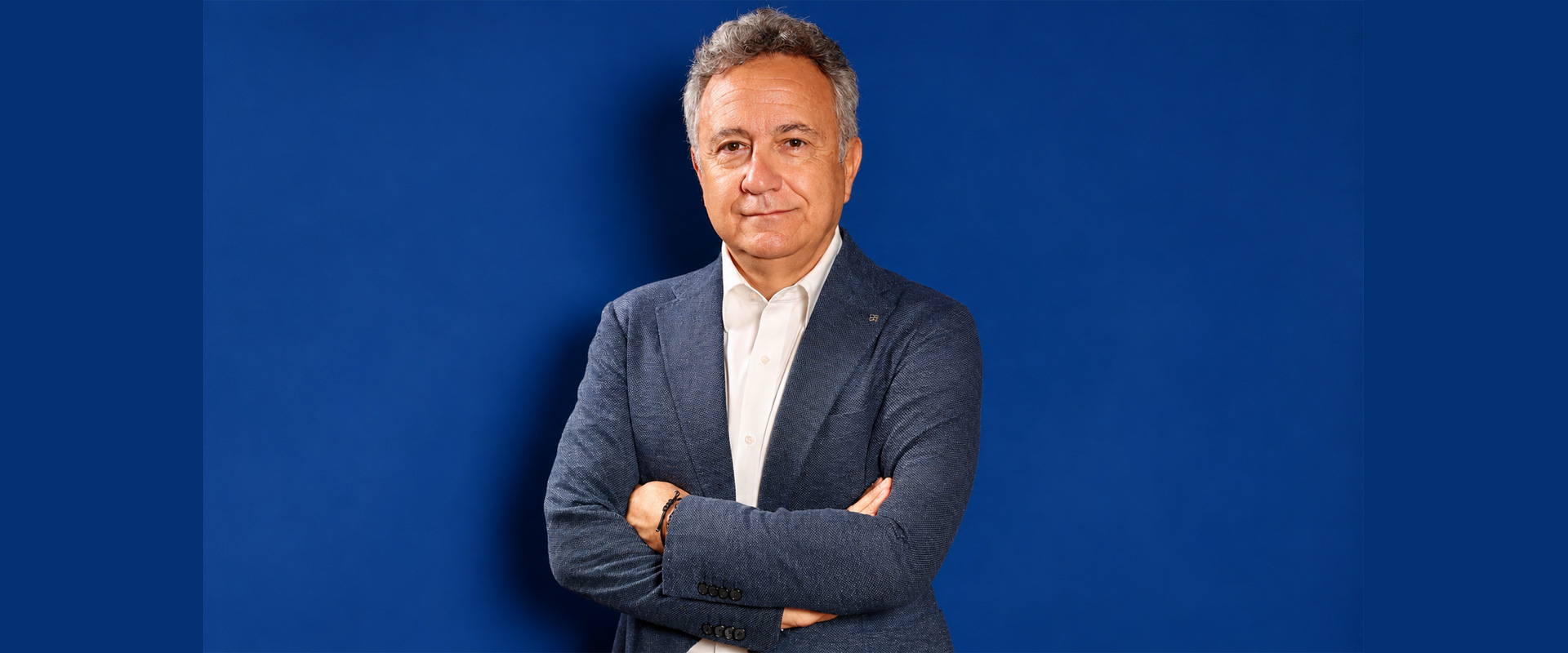
In Conversation with Paolo Del Brocco
Paolo Del Brocco has served as CEO of Rai Cinema since 2010, having previously held the position of General Manager since 2007. Under his leadership, Rai Cinema has strengthened its role in the Italian film industry, championing auteur cinema, emerging talent, and international co-productions.
On the domestic distribution front, 01 Distribution was established in 2000 with the aim of giving new momentum to Italian cinema. Since then, it has worked alongside filmmakers, producers, and directors to make Italian cinema more competitive, increase its visibility, and connect with wider audiences.
In 2024, Rai Cinema launched Rai Cinema International Distribution, a division established to strengthen the presence of Italian cinema in international markets. The division handles international sales of feature films and documentaries, with a particular focus on titles produced and co-produced by Rai Cinema, and promotes their distribution worldwide.
Among its most recent projects is Paolo Strippoli’s L’estranea (The Spiral), produced by Propaganda Italia with Rai Cinema and Dinamo Film, in co-production with France and Belgium. Presented in competition at the Venice International Film Festival and well received at the Toronto International Film Festival, the film was selected as Italy’s official submission for Best International Feature Film at the 99th Academy Awards.
Italy Meets Hollywood spoke with Paolo Del Brocco about The Spiral’s international journey, Rai Cinema’s role in championing new forms of cinematic expression, and opportunities for collaboration between the Italian and U.S. audiovisual industries.
IMH: Paolo Strippoli’s The Spiral, co-produced by Rai Cinema and selected to represent Italy in the race for the 2027 Oscars, is a psychological thriller that also ventures into horror. What convinced you to support a project that explores territory less frequently explored in contemporary Italian cinema?
Paolo Del Brocco: What convinced us was the way Paolo Strippoli uses psychological thriller and horror elements to tell a story from a deeply personal perspective. We believed in his vision and in the work of our production partners, Marina Marzotto and Mattia Oddone’s Propaganda Italia and Dinamo Film. At just 33, Strippoli is already on his fourth feature film and has developed a distinctive filmmaking identity. Identifying emerging talent, recognizing their potential, and providing them with the resources and opportunities they need to develop their careers and establish themselves is central to our work.
We were also drawn to the choice of genre. Horror and psychological thrillers are showing remarkable vitality in contemporary cinema worldwide. The box office performance of films such as Obsession and Backrooms, both directed by young filmmakers, demonstrates the significant audience for this type of cinema. With The Spiral, we saw an opportunity to reach that audience through an Italian film that combines a strong auteur vision with a recognizable genre language.
The film’s selection to represent Italy in the race for the 2027 Oscars is part of an international journey that has taken it from the official competition at the Venice International Film Festival to success in Busan and on to the Toronto International Film Festival, where it was voted First Runner-up for the People’s Choice Midnight Madness Award. At the Chicago International Film Festival, it received the Silver Hugo for Best Visual Effects, while at the Sitges International Fantastic Film Festival, it won the Méliès d’Argent for Best European Fantastic Film and the Best Actress award for Jasmine Trinca. Adding to these milestones is New Line Cinema’s acquisition of the remake rights, opening up new opportunities for the film.
I believe The Spiral can also serve as a successful production model for Italian cinema. It demonstrates that it is possible to build an international co-production around the vision of a young director, take a chance on a genre and cinematic language that remain relatively unexplored in Italy, and make a film capable of finding its audience beyond national borders.
IMH 2: Following Venice and Toronto, The Spiral is now embarking on its Oscar campaign. What is the biggest challenge in bringing an Italian film to the attention of the American film industry?
Paolo Del Brocco: The biggest challenge is ensuring that the film gets seen. Venice, Toronto, and other international festivals have given The Spiral significant visibility, but reaching Academy members requires a substantial effort on the ground in the United States. As I have pointed out on several occasions, what Italian films lack when competing for an Oscar is a structured financial framework to support them throughout the process. That support is essential to compete with major American studios that can allocate substantial resources to promotion, secure a U.S. release, and create opportunities through screenings and industry events for Academy members to see the film and consider it when casting their votes.
We saw this with Maura Delpero’s Vermiglio, with Gianfranco Rosi’s films, and particularly with Matteo Garrone’s Io Capitano. I remember that campaign very well. Rai Cinema did everything it could to support the film, which ultimately secured one of the five nominations. That experience reinforced our understanding of the need for a structured support system modeled on the French approach.
What makes the difference is the U.S. distributor. If the distributor truly believes in the film, it invests in its release and awards campaign, developing initiatives and activities to bring it to the attention of the industry. Having a U.S. distributor on board represents a significant investment that goes beyond the Oscar campaign, helping the film reach a broader American audience and opening up new commercial opportunities.
IMH 3: The Spiral is the result of a co-production between Italy, France, and Belgium. What, if anything, is currently missing to make co-productions between Italy and the United States more frequent and structured?
Paolo Del Brocco: I believe there is still tremendous potential to explore. Italy and the United States have audiovisual industries with different characteristics, scales, and production models. These very differences can represent an opportunity. Italy has independent producers with a strong creative sensibility and established international experience, highly skilled crews, and a wide variety of filming locations. American partners can bring substantial investment capacity, a well-developed industry infrastructure, and distribution networks that enable films to reach audiences on a global scale.
As I mentioned earlier, in the case of The Spiral, the relationship with the United States began with an agreement with New Line Cinema. In addition to the English-language remake rights, the agreement includes distribution rights for the original film in the United States, Canada, and select Asian markets. This is a crucial milestone for Strippoli’s film, both in terms of its international reach and its Oscar campaign.
I believe all the conditions are in place to build stronger partnerships that can lead to films designed to travel beyond national borders while drawing on the respective strengths of both industries. One way to make these collaborations more frequent and structured is certainly to identify stories that generate shared interest, approaching co-production not simply as a financing mechanism, but as a collaborative process that brings together the various creative and production elements.
IMH 4: At the 2026 Venice International Film Festival, Rai Cinema was involved, in various capacities, in the production of all five Italian films in competition—an unprecedented achievement. What does this milestone reveal about your editorial strategy?
Paolo Del Brocco: It is certainly a source of great pride. Having been involved in the production of all five Italian films in competition at Venice confirms Rai Cinema’s central role in supporting and promoting Italian cinema. What we saw at Venice was the result of the work we do throughout the year. Our editorial approach is rooted in diversity in film production and a commitment to supporting projects with different creative sensibilities, visions, and cinematic languages that reflect the richness and complexity of our country.
For Rai Cinema, this also represents a responsibility. There is no single vision of cinema to promote: our role is to give space to a diversity of voices, supporting emerging talent as well as established filmmakers. It is particularly significant that, alongside the five films in competition, there were also two films presented out of competition by two masters of Italian cinema, Mario Martone and Gianni Amelio, with whom we have built longstanding relationships based on mutual trust.
Rather than seeing this achievement as an endpoint, I consider it an incentive to pursue our work with even greater conviction, foster dialogue across generations, and contribute to the growth of a film industry with a strong cultural identity that can engage with audiences and the international marketplace.
IMH 5: With streaming platforms, changing viewing habits, and the challenges of bringing audiences back to theaters, the film market is undergoing a profound transformation. What is the most pressing challenge facing film producers and distributors in Italy today?
Paolo Del Brocco: I believe the most pressing challenge is to continue fostering a dialogue with audiences while preserving the central role of movie theaters. Ultimately, it is the same audience choosing between the big screen, television, and streaming platforms. What changes is the experience. Movie theaters retain a unique value in terms of emotional engagement, the quality of the viewing experience, and the shared ritual of watching a film together.
Audience expectations have also changed. People are more discerning and expect an experience that justifies the time they devote to it, the price of a ticket, and the decision to leave home. A film may perform well on a streaming platform, but to generate the same level of interest in theaters, it must give audiences a compelling reason to go.
In this landscape, independent producers play a crucial role as the primary driving force behind our industry. They are the first to seek out stories, take chances on filmmakers and emerging talent, and guide projects through the development process. It is largely through their work and their willingness to take both business and creative risks that Italian cinema can continue to reinvent itself.
As producers and distributors, we must be able to anticipate market shifts and help shape new trends through bold editorial choices, original stories, and filmmakers who can reflect our cultural identity while offering fresh perspectives.
These choices must be matched by an equally thoughtful approach to theatrical releases. It is therefore essential both to identify films that can stand out and to safeguard the central role of theatrical distribution, giving each film the space and time it needs to connect with audiences and follow its own commercial and cultural trajectory. Every film has a different journey. The theatrical window is not simply a stepping stone to subsequent distribution channels, but an essential stage in the life of a film.
IMH 6: Among your upcoming projects are Marco Bellocchio’s film about Sergio Marchionne and Giuseppe Tornatore’s film about the founder of Bank of America—two stories with strong ties to the United States. How important is the American market in shaping Rai Cinema’s production and creative decisions today?
Paolo Del Brocco: The American market is important, particularly when we consider what audiences a film might reach beyond Italy. For us, the starting point is always the story and the perspective of the filmmaker telling it. In Marco Bellocchio’s and Giuseppe Tornatore’s projects, currently in production and pre-production, respectively, the connection to the United States is inherent in the stories themselves. Bellocchio tells the story of Sergio Marchionne and his role in bringing Fiat and Chrysler together. Tornatore tells the story of Amadeo Peter Giannini, the son of Italian immigrants, who founded what would eventually become Bank of America. These are two very different ways of illustrating how deeply intertwined the histories of our two countries have been.
I believe this connection is stronger than we might realize. Italians helped build America, and America, in turn, became part of our cultural imagination, not least through cinema. It is only natural to think that these two stories—told by two of Italy’s most internationally renowned directors, particularly well known in the United States—could resonate with American audiences as well.
Share:
 In Conversation with Luca Ferrario
Related Posts
In Conversation with Paolo Del Brocco
Paolo Del Brocco has served as CEO of Rai Cinema since 2010, having previously held the position of General Manager since 2007. Under his leadership, Rai Cinema has strengthened its role in the Italian film industry, championing auteur cinema, emerging talent, and international co-productions.
On the domestic distribution front, 01 Distribution was established in 2000 with the aim of giving new momentum to Italian cinema. Since then, it has worked alongside filmmakers, producers, and directors to make Italian cinema more competitive, increase its visibility, and connect with wider audiences.
In 2024, Rai Cinema launched Rai Cinema International Distribution, a division established to strengthen the presence of Italian cinema in international markets. The division handles international sales of feature films and documentaries, with a particular focus on titles produced and co-produced by Rai Cinema, and promotes their distribution worldwide.
Among its most recent projects is Paolo Strippoli’s L’estranea (The Spiral), produced by Propaganda Italia with Rai Cinema and Dinamo Film, in co-production with France and Belgium. Presented in competition at the Venice International Film Festival and well received at the Toronto International Film Festival, the film was selected as Italy’s official submission for Best International Feature Film at the 99th Academy Awards.
Italy Meets Hollywood spoke with Paolo Del Brocco about The Spiral’s international journey, Rai Cinema’s role in championing new forms of cinematic expression, and opportunities for collaboration between the Italian and U.S. audiovisual industries.
IMH: Paolo Strippoli’s The Spiral, co-produced by Rai Cinema and selected to represent Italy in the race for the 2027 Oscars, is a psychological thriller that also ventures into horror. What convinced you to support a project that explores territory less frequently explored in contemporary Italian cinema?
Paolo Del Brocco: What convinced us was the way Paolo Strippoli uses psychological thriller and horror elements to tell a story from a deeply personal perspective. We believed in his vision and in the work of our production partners, Marina Marzotto and Mattia Oddone’s Propaganda Italia and Dinamo Film. At just 33, Strippoli is already on his fourth feature film and has developed a distinctive filmmaking identity. Identifying emerging talent, recognizing their potential, and providing them with the resources and opportunities they need to develop their careers and establish themselves is central to our work.
We were also drawn to the choice of genre. Horror and psychological thrillers are showing remarkable vitality in contemporary cinema worldwide. The box office performance of films such as Obsession and Backrooms, both directed by young filmmakers, demonstrates the significant audience for this type of cinema. With The Spiral, we saw an opportunity to reach that audience through an Italian film that combines a strong auteur vision with a recognizable genre language.
The film’s selection to represent Italy in the race for the 2027 Oscars is part of an international journey that has taken it from the official competition at the Venice International Film Festival to success in Busan and on to the Toronto International Film Festival, where it was voted First Runner-up for the People’s Choice Midnight Madness Award. At the Chicago International Film Festival, it received the Silver Hugo for Best Visual Effects, while at the Sitges International Fantastic Film Festival, it won the Méliès d’Argent for Best European Fantastic Film and the Best Actress award for Jasmine Trinca. Adding to these milestones is New Line Cinema’s acquisition of the remake rights, opening up new opportunities for the film.
I believe The Spiral can also serve as a successful production model for Italian cinema. It demonstrates that it is possible to build an international co-production around the vision of a young director, take a chance on a genre and cinematic language that remain relatively unexplored in Italy, and make a film capable of finding its audience beyond national borders.
IMH 2: Following Venice and Toronto, The Spiral is now embarking on its Oscar campaign. What is the biggest challenge in bringing an Italian film to the attention of the American film industry?
Paolo Del Brocco: The biggest challenge is ensuring that the film gets seen. Venice, Toronto, and other international festivals have given The Spiral significant visibility, but reaching Academy members requires a substantial effort on the ground in the United States. As I have pointed out on several occasions, what Italian films lack when competing for an Oscar is a structured financial framework to support them throughout the process. That support is essential to compete with major American studios that can allocate substantial resources to promotion, secure a U.S. release, and create opportunities through screenings and industry events for Academy members to see the film and consider it when casting their votes.
We saw this with Maura Delpero’s Vermiglio, with Gianfranco Rosi’s films, and particularly with Matteo Garrone’s Io Capitano. I remember that campaign very well. Rai Cinema did everything it could to support the film, which ultimately secured one of the five nominations. That experience reinforced our understanding of the need for a structured support system modeled on the French approach.
What makes the difference is the U.S. distributor. If the distributor truly believes in the film, it invests in its release and awards campaign, developing initiatives and activities to bring it to the attention of the industry. Having a U.S. distributor on board represents a significant investment that goes beyond the Oscar campaign, helping the film reach a broader American audience and opening up new commercial opportunities.
IMH 3: The Spiral is the result of a co-production between Italy, France, and Belgium. What, if anything, is currently missing to make co-productions between Italy and the United States more frequent and structured?
Paolo Del Brocco: I believe there is still tremendous potential to explore. Italy and the United States have audiovisual industries with different characteristics, scales, and production models. These very differences can represent an opportunity. Italy has independent producers with a strong creative sensibility and established international experience, highly skilled crews, and a wide variety of filming locations. American partners can bring substantial investment capacity, a well-developed industry infrastructure, and distribution networks that enable films to reach audiences on a global scale.
As I mentioned earlier, in the case of The Spiral, the relationship with the United States began with an agreement with New Line Cinema. In addition to the English-language remake rights, the agreement includes distribution rights for the original film in the United States, Canada, and select Asian markets. This is a crucial milestone for Strippoli’s film, both in terms of its international reach and its Oscar campaign.
I believe all the conditions are in place to build stronger partnerships that can lead to films designed to travel beyond national borders while drawing on the respective strengths of both industries. One way to make these collaborations more frequent and structured is certainly to identify stories that generate shared interest, approaching co-production not simply as a financing mechanism, but as a collaborative process that brings together the various creative and production elements.
IMH 4: At the 2026 Venice International Film Festival, Rai Cinema was involved, in various capacities, in the production of all five Italian films in competition—an unprecedented achievement. What does this milestone reveal about your editorial strategy?
Paolo Del Brocco: It is certainly a source of great pride. Having been involved in the production of all five Italian films in competition at Venice confirms Rai Cinema’s central role in supporting and promoting Italian cinema. What we saw at Venice was the result of the work we do throughout the year. Our editorial approach is rooted in diversity in film production and a commitment to supporting projects with different creative sensibilities, visions, and cinematic languages that reflect the richness and complexity of our country.
For Rai Cinema, this also represents a responsibility. There is no single vision of cinema to promote: our role is to give space to a diversity of voices, supporting emerging talent as well as established filmmakers. It is particularly significant that, alongside the five films in competition, there were also two films presented out of competition by two masters of Italian cinema, Mario Martone and Gianni Amelio, with whom we have built longstanding relationships based on mutual trust.
Rather than seeing this achievement as an endpoint, I consider it an incentive to pursue our work with even greater conviction, foster dialogue across generations, and contribute to the growth of a film industry with a strong cultural identity that can engage with audiences and the international marketplace.
IMH 5: With streaming platforms, changing viewing habits, and the challenges of bringing audiences back to theaters, the film market is undergoing a profound transformation. What is the most pressing challenge facing film producers and distributors in Italy today?
Paolo Del Brocco: I believe the most pressing challenge is to continue fostering a dialogue with audiences while preserving the central role of movie theaters. Ultimately, it is the same audience choosing between the big screen, television, and streaming platforms. What changes is the experience. Movie theaters retain a unique value in terms of emotional engagement, the quality of the viewing experience, and the shared ritual of watching a film together.
Audience expectations have also changed. People are more discerning and expect an experience that justifies the time they devote to it, the price of a ticket, and the decision to leave home. A film may perform well on a streaming platform, but to generate the same level of interest in theaters, it must give audiences a compelling reason to go.
In this landscape, independent producers play a crucial role as the primary driving force behind our industry. They are the first to seek out stories, take chances on filmmakers and emerging talent, and guide projects through the development process. It is largely through their work and their willingness to take both business and creative risks that Italian cinema can continue to reinvent itself.
As producers and distributors, we must be able to anticipate market shifts and help shape new trends through bold editorial choices, original stories, and filmmakers who can reflect our cultural identity while offering fresh perspectives.
These choices must be matched by an equally thoughtful approach to theatrical releases. It is therefore essential both to identify films that can stand out and to safeguard the central role of theatrical distribution, giving each film the space and time it needs to connect with audiences and follow its own commercial and cultural trajectory. Every film has a different journey. The theatrical window is not simply a stepping stone to subsequent distribution channels, but an essential stage in the life of a film.
IMH 6: Among your upcoming projects are Marco Bellocchio’s film about Sergio Marchionne and Giuseppe Tornatore’s film about the founder of Bank of America—two stories with strong ties to the United States. How important is the American market in shaping Rai Cinema’s production and creative decisions today?
Paolo Del Brocco: The American market is important, particularly when we consider what audiences a film might reach beyond Italy. For us, the starting point is always the story and the perspective of the filmmaker telling it. In Marco Bellocchio’s and Giuseppe Tornatore’s projects, currently in production and pre-production, respectively, the connection to the United States is inherent in the stories themselves. Bellocchio tells the story of Sergio Marchionne and his role in bringing Fiat and Chrysler together. Tornatore tells the story of Amadeo Peter Giannini, the son of Italian immigrants, who founded what would eventually become Bank of America. These are two very different ways of illustrating how deeply intertwined the histories of our two countries have been.
I believe this connection is stronger than we might realize. Italians helped build America, and America, in turn, became part of our cultural imagination, not least through cinema. It is only natural to think that these two stories—told by two of Italy’s most internationally renowned directors, particularly well known in the United States—could resonate with American audiences as well.
Share:
In Conversation with Luca Ferrario