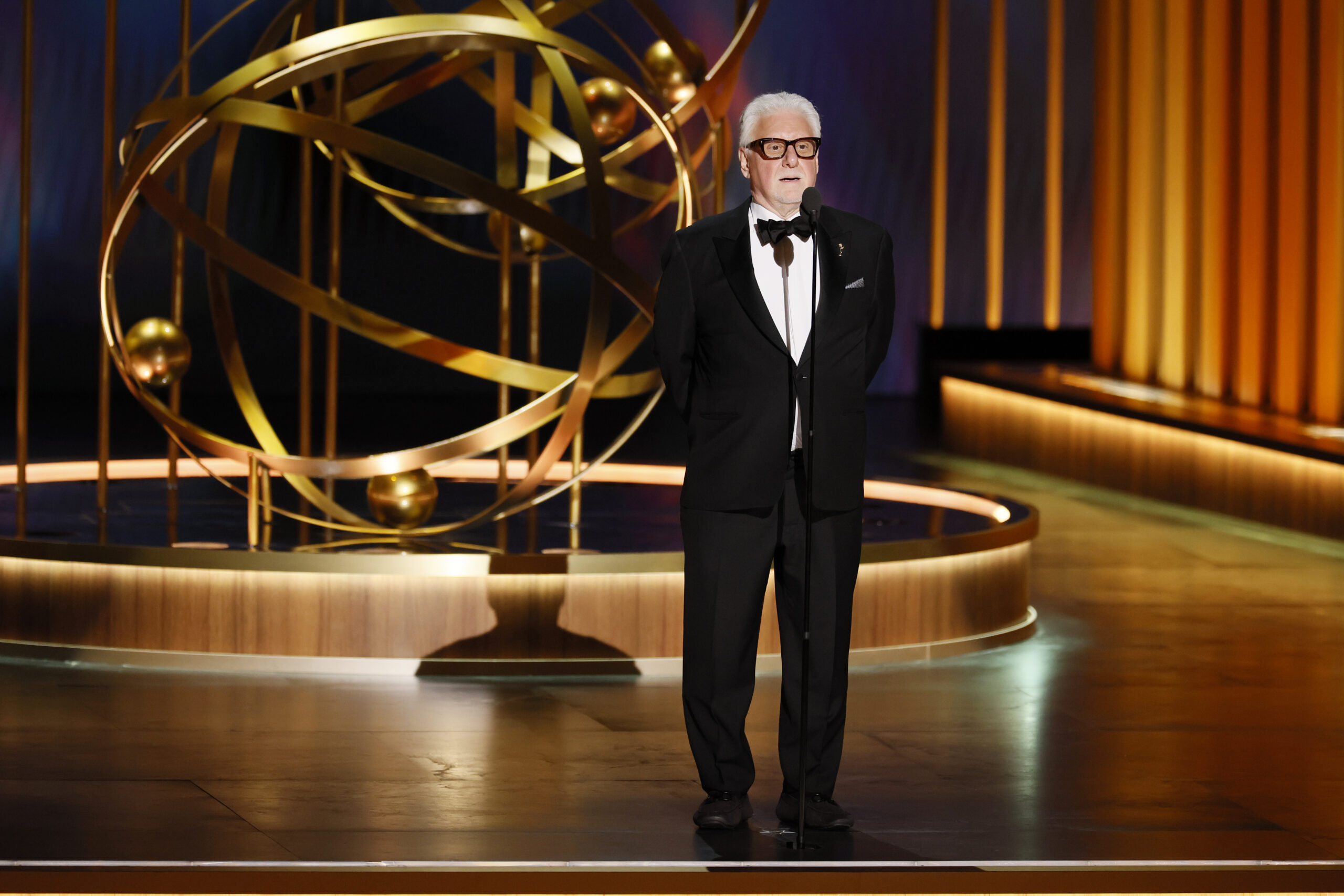
In Conversation with Frank Scherma
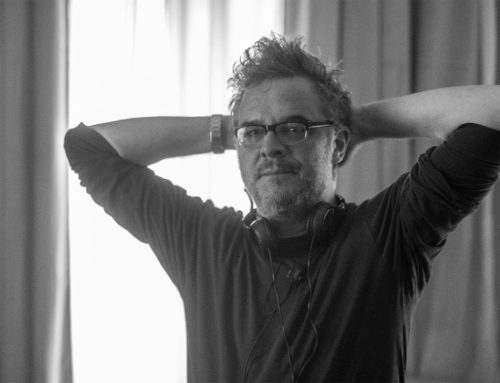
President and co-founder of RadicalMedia, the independent production company he built alongside longtime partner Jon Kamen, Frank Scherma is a leading figure in the entertainment industry. Under their leadership, RadicalMedia has partnered with some of the world’s most iconic brands, including Apple, Nike, Mercedes-Benz, Google, and Coca-Cola, while expanding far beyond advertising into award-winning film, television, and documentary work, with offices in New York, Los Angeles, Berlin, and London.
His work has earned two Academy Awards® (for Errol Morris’s The Fog of War and Questlove’s Summer of Soul), along with multiple Emmys® for productions including David Byrne’s American Utopia and What Happened, Miss Simone?, and numerous Webbys®. RadicalMedia has also received two Palme d’Ors as best production company at the Cannes Lions International Festival of Creativity, the highest honor in commercial creativity.
Beyond the production floor, Frank helps steer the industry itself, as a board member of the AICP (Association of Independent Commercial Producers) and as Immediate Past Chairman and CEO of the Television Academy. His gift has always been the same: merging art and commerce without losing either.
IMH: Let’s start at the very beginning. You once said you realized early on that you preferred ‘doing the picking rather than waiting to be picked.’ How did the actor become the producer?
Frank Scherma: I was never a successful actor — small parts on soap operas, under-five-line stuff. But as an actor, you have to show your work to agents and managers, so I put on an off-Broadway play I was acting in, back when you could still rent a loft in SoHo for a hundred bucks. That’s when it hit me: I was better at putting the pieces together than at being in front of the camera.
Around then I got to know people at Chiat/Day, which had just opened a New York office — the LA disruptors, they called themselves pirates, doing everything differently than the New York agencies. They hired me as an assistant producer, trained me to produce commercials, and within eight months I was running production at the agency. A few years of Nike and New York Air, three more on BMW and Pulsar Watches at another shop — six years total on the agency side — and I saw the business migrating to LA. I moved out not knowing a soul, and started calling the production companies I’d already worked with.
The real turn came when I hooked up with a photographer who’d been shooting all the BMW print work — he was always photographing cars in motion, and I thought, put a moving camera in his hands and he could direct commercials. We went into business together. I flew back to New York for advice, and that’s when Jon Kamen — we’ve been partners almost 40 years now — said, “why don’t you open our West Coast office, and we’ll put up the money.” A few years later, his then-partner wanted to cash out, so we bought him out, and I became a full partner. We were just doing commercials at first, until TiVo and Replay made advertisers realize people were fast-forwarding through them — and that’s what pushed us into movies and television.
IMH: When you and Jon Kamen founded RadicalMedia in 1993, you weren’t just starting another production company, you sensed that the old model of advertising was about to break, and that something like the internet was going to change everything. What did you see back then that others didn’t?
Frank Scherma: It started with the devices letting people skip commercials — TiVo fast-forwarded through them, Replay skipped them entirely, and that second one freaked everybody out. Around the same time, a relative of Jon’s took the first new-media class ever offered at NYU and came into our office talking about this thing called the internet. It even changed our name — we started asking what that “@” sign meant, and once we understood it was the new internet protocol, we became “@RadicalMedia.” Nobody had any idea what that meant yet.
We started doing things digitally before almost anyone. We had a deal with Hachette Filipacchi on the launch of George magazine — while they did the print edition, we put it online, first of its kind. I remember Jon giving office tours, opening a door to five guys on computers and just saying, “this is the internet,” because nobody knew what the hell it was. We understood this was the next wave after cable, which everyone — even the unions — had dismissed the same way. Once video could move online, not just print, brands would have to follow their audience there. That shift in mindset, treating the internet as inevitable instead of a threat, is what really set us apart from day one.
IMH: Summer of Soul (2021) was footage forgotten in a basement for fifty years. The Fog of War (2003) was an old man talking about a war America wanted to forget. On paper, neither one screamed ‘hit.’ How do you recognize a story worth betting on?
Frank Scherma: Everyone’s obsessed with algorithms and numbers these days. I was at a seminar recently where someone finally said it out loud: those are great tools, but you still need instinct. The moment a story is only about the numbers, everything starts to look the same.
Summer of Soul (winner of the 2022 Academy Award for Best Documentary Feature, the BAFTA for Best Documentary, and a Peabody Award, among other honors) is the best example I have. It actually started with a different project — What Happened, Miss Simone?, the first documentary Netflix ever produced themselves. Buried in that footage was a Nina Simone performance nobody had ever seen, found by one of our researchers in a man’s garage. My partner, Jon Kamen, asked one simple question — “where did this come from?” — and that question led us to the lawyer holding the rights to a much larger trove: hours of forgotten concert footage that had been sitting untouched for fifty years. We knew immediately: this is amazing, how could we not tell this story? We brought on Questlove, who’d never directed anything before, but he understood the music and the moment — a country going to the moon while people were starving. Fifty years later, we’re still living that contradiction.
Fog of War (winner of the 2003 Academy Award for Best Documentary Feature) found us, not the other way around. I was on the phone with Errol Morris about an unrelated commercial when he suddenly said, “I’ve got to go, Robert McNamara is here.” He called back and said, “this isn’t a TV show, this is a movie.” When Errol Morris tells you that, you listen. Watching the finished film, I was furious — McNamara had lied to the country about Vietnam — and at that exact moment, Colin Powell came on TV talking about Iraq. We were watching history repeat itself live. That’s the kind of story you have to tell, hit or not.
IMH: Back in 1993, you saw a wave coming before most people did. Today the industry is facing another one — maybe two at once. AI is rethinking how content gets made, and at the same time vertical, mobile-first video is rewriting how audiences actually watch. You’ve said your biggest open question is how technology will reshape the craft. So let me put it to you: what are you seeing this time?
Frank Scherma: With AI, everybody on the advertiser side thinks it’s the solution — cheaper, easier, done. Even six months ago people were saying, “we have to do this in AI, right now.” Now they’re realizing you can use AI to help, but you can’t do the whole thing with it. Maybe it makes certain backgrounds easier, maybe you skip the giant helicopter shots. But if you want human emotion — which is what brands actually want — you still need real actors, real people, directors who know how to work with them. AI augments what you’re doing. It doesn’t replace it.
There’s a sadder side too — what happens to the set builders, the production designers, once backgrounds don’t need to be built anymore? We’ll all keep experimenting as the technology moves from one version to the next, but I firmly believe storytellers and human emotion will never be captured by AI. That’s the thing to hold onto.
Vertical, mobile content is becoming a cultural touchstone for an entire generation — though I hope the stories get a little smarter, because they’re pretty stupid right now. That’s indicative of what’s happened to this young generation, being on phones and iPads all the time. And looking at things quickly: it’s creating this culture of real ADD. But look at something like Obsession — what mattered wasn’t just the film itself, it’s that an entire generation was on social media talking about it, seeing their own relationships in it. If you hadn’t seen it, you couldn’t be part of the conversation. That’s what expanded the audience.
IMH: Beyond making the work, you spent years leading the Television Academy as Chairman and CEO. After a career of building things, what made you want to give back to the creative community in that way — and after all of it, what still excites you most?
Frank Scherma: The industry has been very good to me. I raised three kids who are all grown now, out on their own. When they were young, my Italian side really came out — I had to be home on weekends, at every game. I only allowed myself two business trips a week; the rest of the time I was home. Once the kids were grown and out of the house, it felt like the right moment to give something back.
I’d been involved with the Television Academy for years, first on the commercial side, then more on the entertainment side as my own career shifted — and I realized the Academy needed to change the same way our business had. That’s what I told people when I ran for office: it’s a different business now, we have to adjust.
One thing I’d wanted to do for years, going back to when I was vice chair, was bring real diversity and education initiatives into the Academy — work people before me had been reluctant to take on. Once I became chair, I put real budget behind it, regardless of pushback. That’s what still excites me most — the sense that the work isn’t finished, that there’s always another way to push the community forward.
IMH: To close: what’s on your slate right now that you can share? And after everything, the films, the awards, the decades: where do you still see your Italian side in the way you work and live?
Frank Scherma: Definitely my Italian side came out when the kids were small — I had to be home on the weekends, at all their games. If I went away, I went away on Monday and came back Friday night. That was non-negotiable.
I’ve shot in Italy many, many times, and some of it is my favorite work we’ve ever done. We did an epic scene at Cinecittà with Britney Spears, this whole gladiator kind of thing. And I’ve shot in Sicily, in a small town where our security guy turned out to also be the chief of police. I asked him where I could get great olive oil, and the next day he showed up with a bottle from his own backyard. That kind of thing only happens in Italy.
Right now we’re working on a music documentary on Jerry Garcia — we have footage nobody’s ever seen, which is extraordinary. We’re also working on a project for the centenary of the Macy’s Thanksgiving Parade, and hopefully a second season of This Is the Gardening Show.
Italy Meets Hollywood thanks Frank Scherma for his time and for sharing the stories and vision behind more than three decades at RadicalMedia.
Italy Meets Hollywood © — All rights reserved.
Share:

Related Posts

In Conversation with Frank Scherma
President and co-founder of RadicalMedia, the independent production company he built alongside longtime partner Jon Kamen, Frank Scherma is a leading figure in the entertainment industry. Under their leadership, RadicalMedia has partnered with some of the world’s most iconic brands, including Apple, Nike, Mercedes-Benz, Google, and Coca-Cola, while expanding far beyond advertising into award-winning film, television, and documentary work, with offices in New York, Los Angeles, Berlin, and London.
His work has earned two Academy Awards® (for Errol Morris’s The Fog of War and Questlove’s Summer of Soul), along with multiple Emmys® for productions including David Byrne’s American Utopia and What Happened, Miss Simone?, and numerous Webbys®. RadicalMedia has also received two Palme d’Ors as best production company at the Cannes Lions International Festival of Creativity, the highest honor in commercial creativity.
Beyond the production floor, Frank helps steer the industry itself, as a board member of the AICP (Association of Independent Commercial Producers) and as Immediate Past Chairman and CEO of the Television Academy. His gift has always been the same: merging art and commerce without losing either.
IMH: Let’s start at the very beginning. You once said you realized early on that you preferred ‘doing the picking rather than waiting to be picked.’ How did the actor become the producer?
Frank Scherma: I was never a successful actor — small parts on soap operas, under-five-line stuff. But as an actor, you have to show your work to agents and managers, so I put on an off-Broadway play I was acting in, back when you could still rent a loft in SoHo for a hundred bucks. That’s when it hit me: I was better at putting the pieces together than at being in front of the camera.
Around then I got to know people at Chiat/Day, which had just opened a New York office — the LA disruptors, they called themselves pirates, doing everything differently than the New York agencies. They hired me as an assistant producer, trained me to produce commercials, and within eight months I was running production at the agency. A few years of Nike and New York Air, three more on BMW and Pulsar Watches at another shop — six years total on the agency side — and I saw the business migrating to LA. I moved out not knowing a soul, and started calling the production companies I’d already worked with.
The real turn came when I hooked up with a photographer who’d been shooting all the BMW print work — he was always photographing cars in motion, and I thought, put a moving camera in his hands and he could direct commercials. We went into business together. I flew back to New York for advice, and that’s when Jon Kamen — we’ve been partners almost 40 years now — said, “why don’t you open our West Coast office, and we’ll put up the money.” A few years later, his then-partner wanted to cash out, so we bought him out, and I became a full partner. We were just doing commercials at first, until TiVo and Replay made advertisers realize people were fast-forwarding through them — and that’s what pushed us into movies and television.
IMH: When you and Jon Kamen founded RadicalMedia in 1993, you weren’t just starting another production company, you sensed that the old model of advertising was about to break, and that something like the internet was going to change everything. What did you see back then that others didn’t?
Frank Scherma: It started with the devices letting people skip commercials — TiVo fast-forwarded through them, Replay skipped them entirely, and that second one freaked everybody out. Around the same time, a relative of Jon’s took the first new-media class ever offered at NYU and came into our office talking about this thing called the internet. It even changed our name — we started asking what that “@” sign meant, and once we understood it was the new internet protocol, we became “@RadicalMedia.” Nobody had any idea what that meant yet.
We started doing things digitally before almost anyone. We had a deal with Hachette Filipacchi on the launch of George magazine — while they did the print edition, we put it online, first of its kind. I remember Jon giving office tours, opening a door to five guys on computers and just saying, “this is the internet,” because nobody knew what the hell it was. We understood this was the next wave after cable, which everyone — even the unions — had dismissed the same way. Once video could move online, not just print, brands would have to follow their audience there. That shift in mindset, treating the internet as inevitable instead of a threat, is what really set us apart from day one.
IMH: Summer of Soul (2021) was footage forgotten in a basement for fifty years. The Fog of War (2003) was an old man talking about a war America wanted to forget. On paper, neither one screamed ‘hit.’ How do you recognize a story worth betting on?
Frank Scherma: Everyone’s obsessed with algorithms and numbers these days. I was at a seminar recently where someone finally said it out loud: those are great tools, but you still need instinct. The moment a story is only about the numbers, everything starts to look the same.
Summer of Soul (winner of the 2022 Academy Award for Best Documentary Feature, the BAFTA for Best Documentary, and a Peabody Award, among other honors) is the best example I have. It actually started with a different project — What Happened, Miss Simone?, the first documentary Netflix ever produced themselves. Buried in that footage was a Nina Simone performance nobody had ever seen, found by one of our researchers in a man’s garage. My partner, Jon Kamen, asked one simple question — “where did this come from?” — and that question led us to the lawyer holding the rights to a much larger trove: hours of forgotten concert footage that had been sitting untouched for fifty years. We knew immediately: this is amazing, how could we not tell this story? We brought on Questlove, who’d never directed anything before, but he understood the music and the moment — a country going to the moon while people were starving. Fifty years later, we’re still living that contradiction.
Fog of War (winner of the 2003 Academy Award for Best Documentary Feature) found us, not the other way around. I was on the phone with Errol Morris about an unrelated commercial when he suddenly said, “I’ve got to go, Robert McNamara is here.” He called back and said, “this isn’t a TV show, this is a movie.” When Errol Morris tells you that, you listen. Watching the finished film, I was furious — McNamara had lied to the country about Vietnam — and at that exact moment, Colin Powell came on TV talking about Iraq. We were watching history repeat itself live. That’s the kind of story you have to tell, hit or not.
IMH: Back in 1993, you saw a wave coming before most people did. Today the industry is facing another one — maybe two at once. AI is rethinking how content gets made, and at the same time vertical, mobile-first video is rewriting how audiences actually watch. You’ve said your biggest open question is how technology will reshape the craft. So let me put it to you: what are you seeing this time?
Frank Scherma: With AI, everybody on the advertiser side thinks it’s the solution — cheaper, easier, done. Even six months ago people were saying, “we have to do this in AI, right now.” Now they’re realizing you can use AI to help, but you can’t do the whole thing with it. Maybe it makes certain backgrounds easier, maybe you skip the giant helicopter shots. But if you want human emotion — which is what brands actually want — you still need real actors, real people, directors who know how to work with them. AI augments what you’re doing. It doesn’t replace it.
There’s a sadder side too — what happens to the set builders, the production designers, once backgrounds don’t need to be built anymore? We’ll all keep experimenting as the technology moves from one version to the next, but I firmly believe storytellers and human emotion will never be captured by AI. That’s the thing to hold onto.
Vertical, mobile content is becoming a cultural touchstone for an entire generation — though I hope the stories get a little smarter, because they’re pretty stupid right now. That’s indicative of what’s happened to this young generation, being on phones and iPads all the time. And looking at things quickly: it’s creating this culture of real ADD. But look at something like Obsession — what mattered wasn’t just the film itself, it’s that an entire generation was on social media talking about it, seeing their own relationships in it. If you hadn’t seen it, you couldn’t be part of the conversation. That’s what expanded the audience.
IMH: Beyond making the work, you spent years leading the Television Academy as Chairman and CEO. After a career of building things, what made you want to give back to the creative community in that way — and after all of it, what still excites you most?
Frank Scherma: The industry has been very good to me. I raised three kids who are all grown now, out on their own. When they were young, my Italian side really came out — I had to be home on weekends, at every game. I only allowed myself two business trips a week; the rest of the time I was home. Once the kids were grown and out of the house, it felt like the right moment to give something back.
I’d been involved with the Television Academy for years, first on the commercial side, then more on the entertainment side as my own career shifted — and I realized the Academy needed to change the same way our business had. That’s what I told people when I ran for office: it’s a different business now, we have to adjust.
One thing I’d wanted to do for years, going back to when I was vice chair, was bring real diversity and education initiatives into the Academy — work people before me had been reluctant to take on. Once I became chair, I put real budget behind it, regardless of pushback. That’s what still excites me most — the sense that the work isn’t finished, that there’s always another way to push the community forward.
IMH: To close: what’s on your slate right now that you can share? And after everything, the films, the awards, the decades: where do you still see your Italian side in the way you work and live?
Frank Scherma: Definitely my Italian side came out when the kids were small — I had to be home on the weekends, at all their games. If I went away, I went away on Monday and came back Friday night. That was non-negotiable.
I’ve shot in Italy many, many times, and some of it is my favorite work we’ve ever done. We did an epic scene at Cinecittà with Britney Spears, this whole gladiator kind of thing. And I’ve shot in Sicily, in a small town where our security guy turned out to also be the chief of police. I asked him where I could get great olive oil, and the next day he showed up with a bottle from his own backyard. That kind of thing only happens in Italy.
Right now we’re working on a music documentary on Jerry Garcia — we have footage nobody’s ever seen, which is extraordinary. We’re also working on a project for the centenary of the Macy’s Thanksgiving Parade, and hopefully a second season of This Is the Gardening Show.
Italy Meets Hollywood thanks Frank Scherma for his time and for sharing the stories and vision behind more than three decades at RadicalMedia.
Italy Meets Hollywood © — All rights reserved.