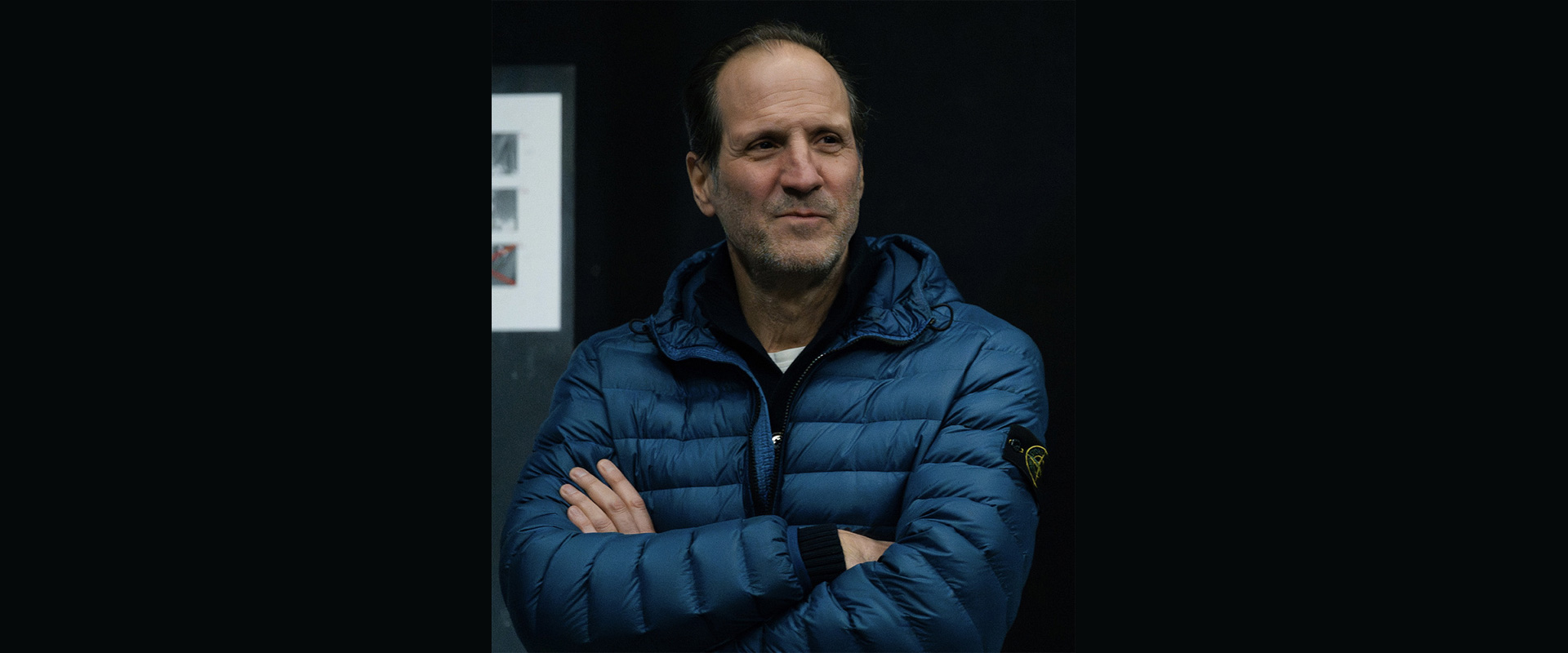
In Conversation with Robert Bernacchi
Robert Bernacchi is a producer whose career reads like a passport stamped across four decades and five continents. From his early days working with Pupi Avati and Michele Placido on Italian-American co-productions in the 1990s, to co-producing Bong Joon-ho’s Snowpiercer, executive producing John Wick: Chapter 2 in Rome, and most recently serving as Head of Production for International Original Movies at Amazon MGM Studios, a role he held for nearly five years, Bernacchi has built one of Hollywood’s most genuinely global careers.
Fluent in Italian and Romanian, educated at Southern Illinois University and the Università di Pavia, he is an American producer shaped by Europe, who has spent thirty years bringing Hollywood’s biggest stories to life far beyond the studio lot. Now represented by CAA and with the new Resident Evil feature in Prague on his slate, Robert Bernacchi is very much still in motion.
IMH: Robert, you started out as a Unit Production Manager on Italian-American co-productions in Chicago in the early 1990s, working with directors like Pupi Avati and Michele Placido. What did that apprenticeship teach you that no film school could have?
Robert Bernacchi: I actually started before that, as a runner and a production assistant. You don’t become a production manager overnight. I worked my way up from production assistant on films like Home Alone to assistant director and eventually production manager.
Italians, and Europeans in general, are very thrifty. They know how to make money go a long way, and consequently everybody does a little bit of everything. With Pupi Avati, for example, I was an actor, a production manager, a caterer, I helped the art department. You would run around and do everything. It was very much an “all hands on deck” mentality.
American productions tend to be different. The roles are much more defined. There are usually greater resources, more money, more people, and roles are much more clearly defined. You do one thing very specifically. Starting the way I did gave me versatility, but more importantly, it taught me what everybody else does.
That became invaluable later when I moved into production management and executive producing. If you’re responsible for a production, you need to understand what everyone’s job is so you can set them up for success. If you don’t understand what they do, it’s very easy to dismiss what they need. You learn that by starting at the bottom and working your way up.
IMH: You’ve built productions in Bucharest, Budapest, Prague long before those cities became the industry’s default answer to tax incentives. What does it actually take to build a crew from scratch in a market that doesn’t have one yet, and how has that changed now that everyone is chasing the same rebates?
Robert Bernacchi: We were the trailblazers. In Eastern and Central Europe, the job came with a lot of teaching. You would find a local production manager or producer and together put together a team, but you would suddenly realize that the people you were assigning as art director, transport coordinator or costume supervisor had never actually done those jobs before.
In my opinion, to be successful you have to start at the bottom and work your way up and learn all the intricacies of the business. If you start in the middle or at the top, you miss a big part of your education. So we were teaching as we went along. You had to be patient and learn how to communicate, especially because language was a huge issue back then. We had interpreters in every department, something that is no longer necessary today.
Rome was a completely different situation. It had a rich, long-running tradition of cinema, and the 1950s, ’60s, ’70s and ’80s were golden years for Italian cinema. So when I started working in Eastern and Central Europe in the mid-1990s and into the following decade, Italy was much further ahead of everyone in terms of talent and resources.
To compensate for what was missing in those other countries, we had to bring in a lot of people. When I went to Prague in 2000 for a Guillermo del Toro movie, for example, we even brought caterers from England because there were no Czech caterers equipped for a production like ours. We could bring in anywhere from 60 to 125 people, not counting cast, just to supplement the lack of local knowledge and experience.
Today that has changed dramatically in all of those places. But Rome, in my opinion, is one of the best-furnished cities in the world for movies. You can find everything: props, costumes, technical equipment, stages and locations. In Italy, you didn’t need to bring all those people. They were already there.
IMH: You co-produced Snowpiercer with Bong Joon-ho in Prague back in 2012, years before he became the director of “Parasite”. Looking back at “Snowpiercer”, what had Bong already figured out about telling stories across cultures that Hollywood hadn’t quite caught up to yet?
Robert Bernacchi: I would temporarily remove “across cultures” from the question. Bong is a master storyteller, and if you’re a master storyteller, it doesn’t matter if you’re Korean, Italian or American. People will be drawn to your work because of the quality of the storytelling.
What impressed me most about him was his preparation. There are actually a lot of similarities between the way Bong prepares his movies and the way Zach Cregger works. They’re both very heavy storyboarders. Zach storyboarded the entire movie before we started. Bong wasn’t quite that complete on day one, but he eventually got there.
On Snowpiercer, we would put the storyboards up on a bulletin board on the stage so everyone could see the shots we were doing that day. Bong also had an editor working on set. As we shot, the editor would start cutting the scene together. By midday, you could go into the editing tent, press play and see the scene beginning to unfold, even if there were still gaps where shots hadn’t been filmed yet.
Bong could then bring in Chris Evans, Octavia Spencer or Ed Harris, show them the sequence and point to one of those gaps: that’s what we’re going to shoot now. It was a very visual way of communicating with his collaborators.
The successful storytellers are very well organized and very communicative. They know how to communicate with their collaborators, with their cast and, ultimately, with the audience. That’s what allows a story to cross cultures.
IMH: As Head of Production for International Originals at Amazon MGM Studios, you spent nearly five years overseeing films made outside the United States for a global streaming audience. What trade-offs did you actually have to make between a story feeling authentic to its own market and making it travel internationally?
Robert Bernacchi: That’s always the dilemma. All of the streamers want to make a movie in a particular country, in a particular language, and hope that it’s going to become a hit everywhere. Netflix has been particularly successful at that. Money Heist was a Spanish-language show that everybody watched. All Quiet on the Western Front was a German-language movie that won Oscars.
But I think it ultimately goes back to great storytelling. You don’t need to shoot Parasite in English for it to be successful. If the characters are real, you become invested in their lives and in their story. The same is true of films like All Quiet on the Western Front, The Zone of Interest or Anatomy of a Fall. Foreign-language movies don’t have a problem finding an international audience when they’re driven by great filmmakers and great storytelling.
There have been different attempts to make local productions travel more easily. You can shoot in two languages, for example, or build a co-production around actors from different countries. It’s an approach European cinema has used for a long time, bringing together an Italian actor, a French actor or a German actor, in part to reach audiences in each of those markets.
But I don’t think language is the key ingredient. For me, it comes back to the filmmaker. If you want a story to travel beyond its own borders, you need a great storyteller.
IMH: The new “Resident Evil”, directed by Zach Cregger, is a reboot with an entirely original story, that’s not tied to the games’ familiar characters. It keeps the brand recognition of an established franchise but leaves behind the existing characters and continuity. Compared to a straight sequel, where the story and audience expectations are already established, what does producing something like this actually require?
Robert Bernacchi: I don’t know if I would personally call it a reboot. I guess we’d first have to define what we mean by that word. When I first got the call about Resident Evil, my reaction was, “Resident Evil? Haven’t they already made seven of these movies? This is the eighth. It doesn’t sound very exciting to me.”
Then I learned that Zach Cregger was attached to direct, and I suddenly got very excited. He’s a visionary, particularly in the way he approaches horror. If you look at Weapons, for example, it’s a very interesting film from a narrative point of view, with the story told from different perspectives. He carved out a different space for himself within the horror genre, and that made the project much more interesting to me.
I didn’t know the Resident Evil video game. I’m not a gamer, although I knew the movies. I had made Underworld in 2002, which was a competitor to the first Resident Evil. They were two franchises that took off around the same time.
But after meeting Zach and reading the script, I realized there was very little in common with the previous seven films. There are many references to the video game, but this really felt like something new. So I approached it as a completely new movie that happened to have the title Resident Evil. From that point of view, producing it was simple.
IMH: You’re an Italian-American producer, fluent in Italian and Romanian, who has spent thirty years building his career in Europe rather than on a studio lot in Los Angeles. Does that background show up in concrete ways in how you actually produce, in how you balance an American and a European crew, in what you push for on set, even on movies made for an American audience?
Robert Bernacchi: I’m going to answer that by telling you a story about someone else. One of my mentors in the business was Steve Papazian, who ran physical production at Warner Bros. for many years. Steve was a big believer in working internationally at a time when the industry wasn’t necessarily comfortable going abroad.
He made many movies in England and eventually did all eight Harry Potter films at Leavesden, which had originally been a Rolls-Royce factory. Warner Bros. transformed it into a studio, and today it’s a state-of-the-art production facility.
If you look at the slate of Warner Bros. movies that came out during that period, the Harry Potter films, the Batman films, Sherlock Holmes, you can see the craftsmanship and the imprint of British filmmakers. There is a common aesthetic thread running through them which is tied to Steve Papazian’s passion for working in England. Indirectly, he left his visual mark on these films by choice of location.
I think something similar applies to the movies I’ve worked on. I often find myself talking to producers who want to make their movie in the United States or Canada and are told they should go to Europe instead. Sometimes they’re fearful about it. It’s unfamiliar, and it means being away from their personal and professional lives. Part of my job is convincing them that going to Europe can actually be a good thing for the movie. When I succeed, I think you can see it in the production value. There is a similar visual continuity to the films that I produced which comes from the locations where they were shot and the craftsmanship in those countries.
Italy is a particularly interesting case. Historically, it has attracted productions because the story was set there. But in Prague, Budapest or Bucharest, movies are constantly made that are set somewhere else, whether it’s the United States, Russia or a fictional place. There’s no reason Italy couldn’t court that market as well. It has all the resources you need. Italian craftsmanship in wardrobe, set dressing, production design and cinematography can bring a distinctive quality to a movie even when the story isn’t set in Italy.
John Wick: Chapter 2 is a good example. We initially planned to shoot almost the entire movie in New York and spend as little time as possible in Rome, maybe a week or less. I was able to convince the studio and the filmmakers that it was in their interest to shoot more in Italy. There was a scene set in an Italian restaurant in New York, for example. Why not shoot it in Rome? The interior doesn’t look that different, and you can get much more value from the shoot.
Eventually, our Rome shoot grew from about one week to three. We also had a scene that was supposed to be at the Metropolitan Museum of Art in New York, but we couldn’t shoot there. We ended up filming it at the Galleria Nazionale d’Arte Moderna in Rome, and in the finished movie you think you’re in New York.
That’s how I try to sell Rome: as a location suitable for production, period. It doesn’t have to be a script set in Italy.
IMH: After thirty years shooting between Bucharest, Budapest and Prague, is there a project you’d still want to bring back to Italy, and what would it need to be?
Robert Bernacchi: I do have a passion project that I’ve been trying to make for many years. I’ve had producers join me along the way, including Ed Pressman, who produced films like Wall Street and The Crow, and together we tried to package the movie.
The idea came to me when I was living in Italy and thinking about how much Italian cinema had influenced my decision to go into this business. At the time, it felt as if the American industry was looking for reasons to celebrate Italian cinema. You had Cinema Paradiso, Mediterraneo and Life Is Beautiful. The Academy honored Sophia Loren and Dino De Laurentiis. Americans were hungry for Italian culture and in love with Italy, and I wanted to develop a story that could speak to that audience.
The film is based on a true story set in Isola delle Femmine, near Palermo. At the center is a young man who works for the local municipality and is in love with the woman who runs the town bar. She wants to leave because she doesn’t see a future there. He wants to prove her wrong and show her that the town can be a place worth staying for.
The real event behind the story is Joe DiMaggio’s planned visit to Isola delle Femmine, where his parents came from. DiMaggio had traveled to Italy and agreed to visit the town, which began preparing for his arrival. But the evening before, he became ill and his doctor advised him to return home. The town had prepared this enormous celebration, and suddenly its guest of honor wasn’t coming. Eventually, a friend who was traveling with DiMaggio went in his place, and the town celebrated him almost as if DiMaggio himself had arrived.
I’ve always thought of it in the spirit of films like Big Night and Il Postino. It’s an Italian story, intended to be made in Italian, but with something universal at its center. It’s a charming love story that I believe audiences outside Italy would embrace.
I’ve never given up on it. Of all the movies I could make in Italy, that’s the one I would most like to make.
Italy Meets Hollywood thanks Robert Bernacchi for sharing his remarkable journey across international production and his enduring passion for bringing great stories to life, wherever they may lead.
© Italy Meets Hollywood. All rights reserved.
Share:
 In Conversation with Lorenzo Grasso
Related Posts

In Conversation with Robert Bernacchi
Robert Bernacchi is a producer whose career reads like a passport stamped across four decades and five continents. From his early days working with Pupi Avati and Michele Placido on Italian-American co-productions in the 1990s, to co-producing Bong Joon-ho’s Snowpiercer, executive producing John Wick: Chapter 2 in Rome, and most recently serving as Head of Production for International Original Movies at Amazon MGM Studios, a role he held for nearly five years, Bernacchi has built one of Hollywood’s most genuinely global careers.
Fluent in Italian and Romanian, educated at Southern Illinois University and the Università di Pavia, he is an American producer shaped by Europe, who has spent thirty years bringing Hollywood’s biggest stories to life far beyond the studio lot. Now represented by CAA and with the new Resident Evil feature in Prague on his slate, Robert Bernacchi is very much still in motion.
IMH: Robert, you started out as a Unit Production Manager on Italian-American co-productions in Chicago in the early 1990s, working with directors like Pupi Avati and Michele Placido. What did that apprenticeship teach you that no film school could have?
Robert Bernacchi: I actually started before that, as a runner and a production assistant. You don’t become a production manager overnight. I worked my way up from production assistant on films like Home Alone to assistant director and eventually production manager.
Italians, and Europeans in general, are very thrifty. They know how to make money go a long way, and consequently everybody does a little bit of everything. With Pupi Avati, for example, I was an actor, a production manager, a caterer, I helped the art department. You would run around and do everything. It was very much an “all hands on deck” mentality.
American productions tend to be different. The roles are much more defined. There are usually greater resources, more money, more people, and roles are much more clearly defined. You do one thing very specifically. Starting the way I did gave me versatility, but more importantly, it taught me what everybody else does.
That became invaluable later when I moved into production management and executive producing. If you’re responsible for a production, you need to understand what everyone’s job is so you can set them up for success. If you don’t understand what they do, it’s very easy to dismiss what they need. You learn that by starting at the bottom and working your way up.
IMH: You’ve built productions in Bucharest, Budapest, Prague long before those cities became the industry’s default answer to tax incentives. What does it actually take to build a crew from scratch in a market that doesn’t have one yet, and how has that changed now that everyone is chasing the same rebates?
Robert Bernacchi: We were the trailblazers. In Eastern and Central Europe, the job came with a lot of teaching. You would find a local production manager or producer and together put together a team, but you would suddenly realize that the people you were assigning as art director, transport coordinator or costume supervisor had never actually done those jobs before.
In my opinion, to be successful you have to start at the bottom and work your way up and learn all the intricacies of the business. If you start in the middle or at the top, you miss a big part of your education. So we were teaching as we went along. You had to be patient and learn how to communicate, especially because language was a huge issue back then. We had interpreters in every department, something that is no longer necessary today.
Rome was a completely different situation. It had a rich, long-running tradition of cinema, and the 1950s, ’60s, ’70s and ’80s were golden years for Italian cinema. So when I started working in Eastern and Central Europe in the mid-1990s and into the following decade, Italy was much further ahead of everyone in terms of talent and resources.
To compensate for what was missing in those other countries, we had to bring in a lot of people. When I went to Prague in 2000 for a Guillermo del Toro movie, for example, we even brought caterers from England because there were no Czech caterers equipped for a production like ours. We could bring in anywhere from 60 to 125 people, not counting cast, just to supplement the lack of local knowledge and experience.
Today that has changed dramatically in all of those places. But Rome, in my opinion, is one of the best-furnished cities in the world for movies. You can find everything: props, costumes, technical equipment, stages and locations. In Italy, you didn’t need to bring all those people. They were already there.
IMH: You co-produced Snowpiercer with Bong Joon-ho in Prague back in 2012, years before he became the director of “Parasite”. Looking back at “Snowpiercer”, what had Bong already figured out about telling stories across cultures that Hollywood hadn’t quite caught up to yet?
Robert Bernacchi: I would temporarily remove “across cultures” from the question. Bong is a master storyteller, and if you’re a master storyteller, it doesn’t matter if you’re Korean, Italian or American. People will be drawn to your work because of the quality of the storytelling.
What impressed me most about him was his preparation. There are actually a lot of similarities between the way Bong prepares his movies and the way Zach Cregger works. They’re both very heavy storyboarders. Zach storyboarded the entire movie before we started. Bong wasn’t quite that complete on day one, but he eventually got there.
On Snowpiercer, we would put the storyboards up on a bulletin board on the stage so everyone could see the shots we were doing that day. Bong also had an editor working on set. As we shot, the editor would start cutting the scene together. By midday, you could go into the editing tent, press play and see the scene beginning to unfold, even if there were still gaps where shots hadn’t been filmed yet.
Bong could then bring in Chris Evans, Octavia Spencer or Ed Harris, show them the sequence and point to one of those gaps: that’s what we’re going to shoot now. It was a very visual way of communicating with his collaborators.
The successful storytellers are very well organized and very communicative. They know how to communicate with their collaborators, with their cast and, ultimately, with the audience. That’s what allows a story to cross cultures.
IMH: As Head of Production for International Originals at Amazon MGM Studios, you spent nearly five years overseeing films made outside the United States for a global streaming audience. What trade-offs did you actually have to make between a story feeling authentic to its own market and making it travel internationally?
Robert Bernacchi: That’s always the dilemma. All of the streamers want to make a movie in a particular country, in a particular language, and hope that it’s going to become a hit everywhere. Netflix has been particularly successful at that. Money Heist was a Spanish-language show that everybody watched. All Quiet on the Western Front was a German-language movie that won Oscars.
But I think it ultimately goes back to great storytelling. You don’t need to shoot Parasite in English for it to be successful. If the characters are real, you become invested in their lives and in their story. The same is true of films like All Quiet on the Western Front, The Zone of Interest or Anatomy of a Fall. Foreign-language movies don’t have a problem finding an international audience when they’re driven by great filmmakers and great storytelling.
There have been different attempts to make local productions travel more easily. You can shoot in two languages, for example, or build a co-production around actors from different countries. It’s an approach European cinema has used for a long time, bringing together an Italian actor, a French actor or a German actor, in part to reach audiences in each of those markets.
But I don’t think language is the key ingredient. For me, it comes back to the filmmaker. If you want a story to travel beyond its own borders, you need a great storyteller.
IMH: The new “Resident Evil”, directed by Zach Cregger, is a reboot with an entirely original story, that’s not tied to the games’ familiar characters. It keeps the brand recognition of an established franchise but leaves behind the existing characters and continuity. Compared to a straight sequel, where the story and audience expectations are already established, what does producing something like this actually require?
Robert Bernacchi: I don’t know if I would personally call it a reboot. I guess we’d first have to define what we mean by that word. When I first got the call about Resident Evil, my reaction was, “Resident Evil? Haven’t they already made seven of these movies? This is the eighth. It doesn’t sound very exciting to me.”
Then I learned that Zach Cregger was attached to direct, and I suddenly got very excited. He’s a visionary, particularly in the way he approaches horror. If you look at Weapons, for example, it’s a very interesting film from a narrative point of view, with the story told from different perspectives. He carved out a different space for himself within the horror genre, and that made the project much more interesting to me.
I didn’t know the Resident Evil video game. I’m not a gamer, although I knew the movies. I had made Underworld in 2002, which was a competitor to the first Resident Evil. They were two franchises that took off around the same time.
But after meeting Zach and reading the script, I realized there was very little in common with the previous seven films. There are many references to the video game, but this really felt like something new. So I approached it as a completely new movie that happened to have the title Resident Evil. From that point of view, producing it was simple.
IMH: You’re an Italian-American producer, fluent in Italian and Romanian, who has spent thirty years building his career in Europe rather than on a studio lot in Los Angeles. Does that background show up in concrete ways in how you actually produce, in how you balance an American and a European crew, in what you push for on set, even on movies made for an American audience?
Robert Bernacchi: I’m going to answer that by telling you a story about someone else. One of my mentors in the business was Steve Papazian, who ran physical production at Warner Bros. for many years. Steve was a big believer in working internationally at a time when the industry wasn’t necessarily comfortable going abroad.
He made many movies in England and eventually did all eight Harry Potter films at Leavesden, which had originally been a Rolls-Royce factory. Warner Bros. transformed it into a studio, and today it’s a state-of-the-art production facility.
If you look at the slate of Warner Bros. movies that came out during that period, the Harry Potter films, the Batman films, Sherlock Holmes, you can see the craftsmanship and the imprint of British filmmakers. There is a common aesthetic thread running through them which is tied to Steve Papazian’s passion for working in England. Indirectly, he left his visual mark on these films by choice of location.
I think something similar applies to the movies I’ve worked on. I often find myself talking to producers who want to make their movie in the United States or Canada and are told they should go to Europe instead. Sometimes they’re fearful about it. It’s unfamiliar, and it means being away from their personal and professional lives. Part of my job is convincing them that going to Europe can actually be a good thing for the movie. When I succeed, I think you can see it in the production value. There is a similar visual continuity to the films that I produced which comes from the locations where they were shot and the craftsmanship in those countries.
Italy is a particularly interesting case. Historically, it has attracted productions because the story was set there. But in Prague, Budapest or Bucharest, movies are constantly made that are set somewhere else, whether it’s the United States, Russia or a fictional place. There’s no reason Italy couldn’t court that market as well. It has all the resources you need. Italian craftsmanship in wardrobe, set dressing, production design and cinematography can bring a distinctive quality to a movie even when the story isn’t set in Italy.
John Wick: Chapter 2 is a good example. We initially planned to shoot almost the entire movie in New York and spend as little time as possible in Rome, maybe a week or less. I was able to convince the studio and the filmmakers that it was in their interest to shoot more in Italy. There was a scene set in an Italian restaurant in New York, for example. Why not shoot it in Rome? The interior doesn’t look that different, and you can get much more value from the shoot.
Eventually, our Rome shoot grew from about one week to three. We also had a scene that was supposed to be at the Metropolitan Museum of Art in New York, but we couldn’t shoot there. We ended up filming it at the Galleria Nazionale d’Arte Moderna in Rome, and in the finished movie you think you’re in New York.
That’s how I try to sell Rome: as a location suitable for production, period. It doesn’t have to be a script set in Italy.
IMH: After thirty years shooting between Bucharest, Budapest and Prague, is there a project you’d still want to bring back to Italy, and what would it need to be?
Robert Bernacchi: I do have a passion project that I’ve been trying to make for many years. I’ve had producers join me along the way, including Ed Pressman, who produced films like Wall Street and The Crow, and together we tried to package the movie.
The idea came to me when I was living in Italy and thinking about how much Italian cinema had influenced my decision to go into this business. At the time, it felt as if the American industry was looking for reasons to celebrate Italian cinema. You had Cinema Paradiso, Mediterraneo and Life Is Beautiful. The Academy honored Sophia Loren and Dino De Laurentiis. Americans were hungry for Italian culture and in love with Italy, and I wanted to develop a story that could speak to that audience.
The film is based on a true story set in Isola delle Femmine, near Palermo. At the center is a young man who works for the local municipality and is in love with the woman who runs the town bar. She wants to leave because she doesn’t see a future there. He wants to prove her wrong and show her that the town can be a place worth staying for.
The real event behind the story is Joe DiMaggio’s planned visit to Isola delle Femmine, where his parents came from. DiMaggio had traveled to Italy and agreed to visit the town, which began preparing for his arrival. But the evening before, he became ill and his doctor advised him to return home. The town had prepared this enormous celebration, and suddenly its guest of honor wasn’t coming. Eventually, a friend who was traveling with DiMaggio went in his place, and the town celebrated him almost as if DiMaggio himself had arrived.
I’ve always thought of it in the spirit of films like Big Night and Il Postino. It’s an Italian story, intended to be made in Italian, but with something universal at its center. It’s a charming love story that I believe audiences outside Italy would embrace.
I’ve never given up on it. Of all the movies I could make in Italy, that’s the one I would most like to make.
Italy Meets Hollywood thanks Robert Bernacchi for sharing his remarkable journey across international production and his enduring passion for bringing great stories to life, wherever they may lead.
© Italy Meets Hollywood. All rights reserved.
Share:
In Conversation with Lorenzo Grasso