In Conversation with Luca Ferrario
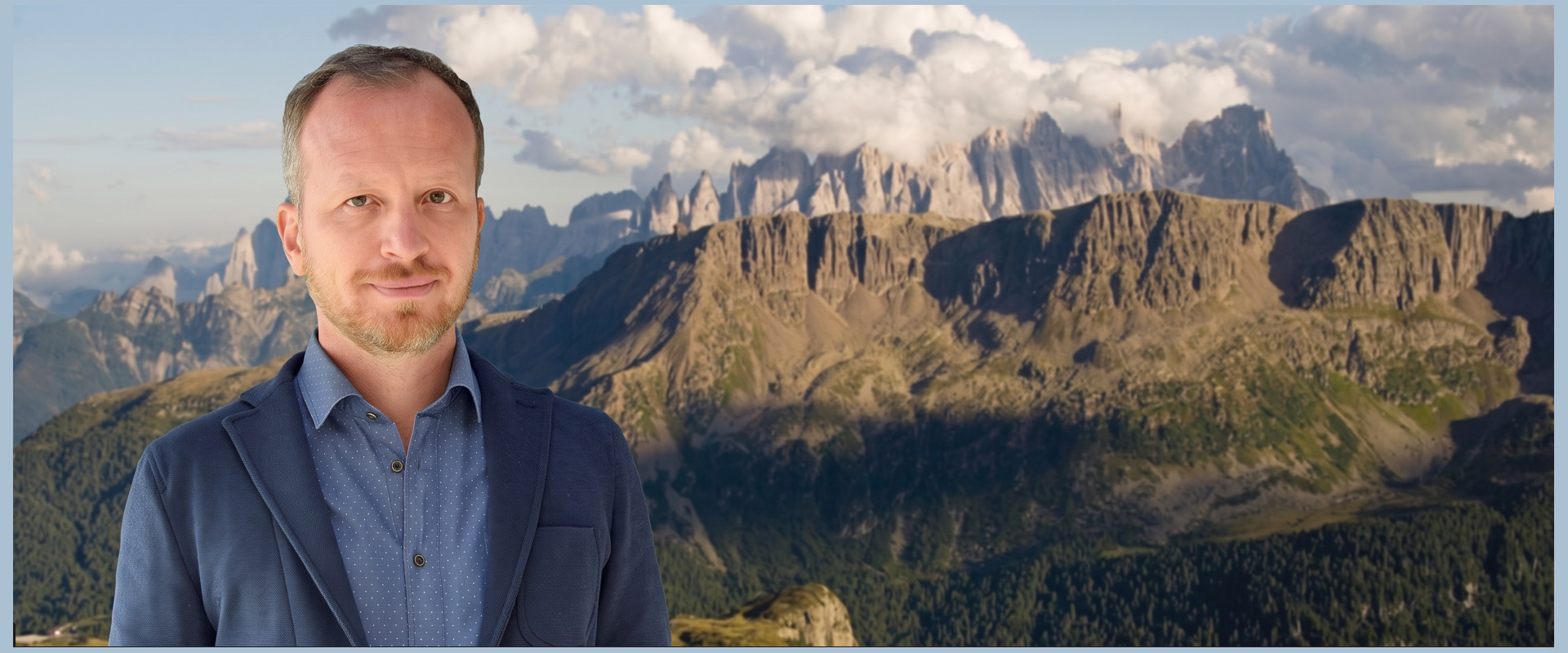
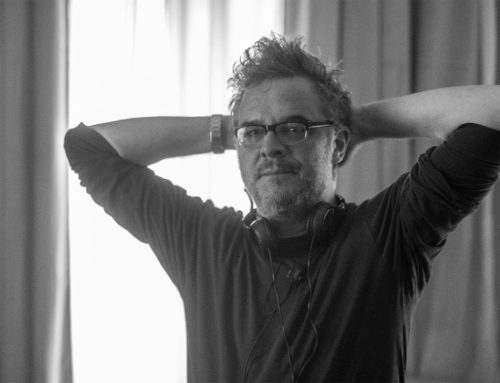
As Director of Trentino Film Commission, Luca Ferrario works to strengthen the region’s audiovisual industry and attract film and television productions from Italy and abroad. Established in 2011, the Film Commission is part of Trentino Sviluppo, the economic development agency of the Autonomous Province of Trento. Ferrario previously worked in television production, including at Magnolia, the Italian production company that merged with DryMedia in 2019 to form Banijay Italia.
Italy Meets Hollywood spoke with Ferrario about the Film Commission’s role in attracting domestic and international productions, its approach to developing the local audiovisual industry, and the opportunities Trentino offers filmmakers and producers.
IMH: The Dolomites are already an internationally recognized calling card. But what actually convinces an American production to choose Trentino as a filming location for a movie or series? What services, local talent, and financial incentives can the Film Commission offer today?
Luca Ferrario: I believe there are two particularly important factors. The first is the level of support we can provide to productions, especially those unfamiliar with the region. We offer highly personalized assistance, from location scouting and information gathering to permits and connecting productions with the right people. Trentino is a small, well-organized region, which means we can reach virtually anyone in just a few steps, whether it’s a museum, the owner of a villa, or the authorities responsible for authorizing filming on a lake or inside a nature park.
This is something international productions really appreciate. Some producers arrive after previous experiences in Italy with concerns about response times, unexpected complications, or the reliability of administrative procedures. Here, they discover a system that can make their work considerably easier.
The second factor, particularly for the American market, is what I would call “the Italy you haven’t discovered yet.” When people in the United States think of Italy as a filming location, Florence, Venice, and a handful of other destinations immediately come to mind. When they’re looking for Alpine scenery, they often turn to Austria or Switzerland instead. Trentino offers both: the Dolomites and extraordinary mountain landscapes, but also places with a distinctly Italian identity that international audiences haven’t seen repeatedly on screen.
For a production, that means being able to tell a different story about Italy or find the mountain setting it might otherwise look for elsewhere, with the added experience of filming in Italy. I believe this is one of our most compelling advantages.
IMH: Trentino Film Commission is part of Trentino Sviluppo, the region’s economic development agency. What does this organizational structure mean, and how can attracting a film or television production translate into economic development for Trentino?
Luca Ferrario: Every Film Commission decides how much emphasis to place on the different aspects of the audiovisual industry. Some prioritize promoting the region and increasing its visibility, others focus more on culture, and still others on the industry’s economic and business dimensions. From the very beginning, we have placed particular importance on the latter.
This means working to attract productions while considering the economic activity they can generate, the professionals they employ, and, above all, the opportunity to develop a local audiovisual ecosystem. Trentino is a small region and cannot match the scale of some other Italian regions, but this ecosystem has made significant progress over the years.
Being part of Trentino Sviluppo is consistent with this approach. We provide business support services and incentives, while also organizing training and matchmaking activities for local industry professionals. Of course, cultural value and a project’s ability to showcase the region remain important considerations when evaluating applications.
IMH: In recent years, Trentino has hosted high-profile productions, from Maura Delpero’s Vermiglio, selected as Italy’s submission for the Academy Awards, to the second season of The Four Seasons, the Netflix series starring Tina Fey. What role did the Film Commission play in these productions, and what different challenges did you face?
Luca Ferrario: In the case of Vermiglio, in addition to providing financial support, we offered extensive assistance, not only with location scouting but also with gathering the information needed for the film’s historical reconstruction. We connected the production with people who could share firsthand knowledge and memories of that period, experts from the Trentino History Museum, and local organizations where period objects and furnishings could be sourced. It was an ongoing effort that began during development and continued throughout preproduction.
For The Four Seasons, our role was different. We did not provide financial support, but instead focused on creating the conditions that would allow a crew of more than 200 people to film in Trento during a particularly challenging period, when the city’s Christmas markets were taking place. The series filmed inside the markets and at several of the city’s main landmarks. Working with the municipal government, local police, and other stakeholders, we helped coordinate permits, access, and logistics so the production could operate as smoothly as possible.
IMH: Trentino Film Commission was among the first in Italy to take a structured approach to sustainable production through Green Film, a model developed in Trentino and subsequently adopted by other Film Commissions. How important is sustainability in production decisions today, and can it provide a competitive advantage in attracting international projects?
Luca Ferrario: We developed Green Film about ten years ago, creating a sustainability certification system for audiovisual productions. In 2017, to the best of my knowledge, we became the first organization in Europe to link sustainability to funding, introducing an additional incentive in the evaluation process for productions certified as sustainable.
Since then, the model has expanded considerably. Other Film Commissions have adopted it, and national and European funding programs have gradually begun offering incentives for certified productions as well. Today, Green Film is used to certify productions not only in Italy but also in several other European countries, including Spain, Finland, and Croatia.
It’s difficult to measure how decisive sustainability alone is in attracting a production. What we can say is that producers interested in making a film more sustainably know that, in Trentino, this choice is not only incentivized but also supported by a region equipped to make it a practical reality.
IMH: Attracting productions also means creating opportunities for people working locally. How much has Trentino’s audiovisual industry grown in recent years, and what professional skills and services have you been able to develop locally? Are there still crew positions that productions generally need to fill with professionals from outside the region?
Luca Ferrario: It has grown enormously, partly because we were starting almost from scratch. Trentino does not have a long-established filmmaking tradition, and when we first began hosting major productions, opportunities for local professionals were still very limited.
Over the years, however, we have seen a steady flow of Italian and international productions, continued support for local projects, and investment in training. Today, we average approximately 300 filming days per year, a significant number for a region of our size. The number of local production companies has also increased, and new professional skills and businesses have emerged in areas that were previously almost nonexistent, from postproduction and animation to data management.
Naturally, a major American production still cannot find everything it needs in Trentino. However, it can rely on a pool of experienced local crew members, including professionals who can work in English. Certain senior positions, particularly department heads, still need to be filled by professionals from outside the region. Our local industry remains largely made up of small and medium-sized businesses and has developed particular expertise in television programming and documentaries, both for television and independent filmmaking.
For more information about Trentino Film Commission and its activities, visit trentinofilmcommission.it.
Share:
 In Conversation with Robert Bernacchi
Related Posts


In Conversation with Luca Ferrario
As Director of Trentino Film Commission, Luca Ferrario works to strengthen the region’s audiovisual industry and attract film and television productions from Italy and abroad. Established in 2011, the Film Commission is part of Trentino Sviluppo, the economic development agency of the Autonomous Province of Trento. Ferrario previously worked in television production, including at Magnolia, the Italian production company that merged with DryMedia in 2019 to form Banijay Italia.
Italy Meets Hollywood spoke with Ferrario about the Film Commission’s role in attracting domestic and international productions, its approach to developing the local audiovisual industry, and the opportunities Trentino offers filmmakers and producers.
IMH: The Dolomites are already an internationally recognized calling card. But what actually convinces an American production to choose Trentino as a filming location for a movie or series? What services, local talent, and financial incentives can the Film Commission offer today?
Luca Ferrario: I believe there are two particularly important factors. The first is the level of support we can provide to productions, especially those unfamiliar with the region. We offer highly personalized assistance, from location scouting and information gathering to permits and connecting productions with the right people. Trentino is a small, well-organized region, which means we can reach virtually anyone in just a few steps, whether it’s a museum, the owner of a villa, or the authorities responsible for authorizing filming on a lake or inside a nature park.
This is something international productions really appreciate. Some producers arrive after previous experiences in Italy with concerns about response times, unexpected complications, or the reliability of administrative procedures. Here, they discover a system that can make their work considerably easier.
The second factor, particularly for the American market, is what I would call “the Italy you haven’t discovered yet.” When people in the United States think of Italy as a filming location, Florence, Venice, and a handful of other destinations immediately come to mind. When they’re looking for Alpine scenery, they often turn to Austria or Switzerland instead. Trentino offers both: the Dolomites and extraordinary mountain landscapes, but also places with a distinctly Italian identity that international audiences haven’t seen repeatedly on screen.
For a production, that means being able to tell a different story about Italy or find the mountain setting it might otherwise look for elsewhere, with the added experience of filming in Italy. I believe this is one of our most compelling advantages.
IMH: Trentino Film Commission is part of Trentino Sviluppo, the region’s economic development agency. What does this organizational structure mean, and how can attracting a film or television production translate into economic development for Trentino?
Luca Ferrario: Every Film Commission decides how much emphasis to place on the different aspects of the audiovisual industry. Some prioritize promoting the region and increasing its visibility, others focus more on culture, and still others on the industry’s economic and business dimensions. From the very beginning, we have placed particular importance on the latter.
This means working to attract productions while considering the economic activity they can generate, the professionals they employ, and, above all, the opportunity to develop a local audiovisual ecosystem. Trentino is a small region and cannot match the scale of some other Italian regions, but this ecosystem has made significant progress over the years.
Being part of Trentino Sviluppo is consistent with this approach. We provide business support services and incentives, while also organizing training and matchmaking activities for local industry professionals. Of course, cultural value and a project’s ability to showcase the region remain important considerations when evaluating applications.
IMH: In recent years, Trentino has hosted high-profile productions, from Maura Delpero’s Vermiglio, selected as Italy’s submission for the Academy Awards, to the second season of The Four Seasons, the Netflix series starring Tina Fey. What role did the Film Commission play in these productions, and what different challenges did you face?
Luca Ferrario: In the case of Vermiglio, in addition to providing financial support, we offered extensive assistance, not only with location scouting but also with gathering the information needed for the film’s historical reconstruction. We connected the production with people who could share firsthand knowledge and memories of that period, experts from the Trentino History Museum, and local organizations where period objects and furnishings could be sourced. It was an ongoing effort that began during development and continued throughout preproduction.
For The Four Seasons, our role was different. We did not provide financial support, but instead focused on creating the conditions that would allow a crew of more than 200 people to film in Trento during a particularly challenging period, when the city’s Christmas markets were taking place. The series filmed inside the markets and at several of the city’s main landmarks. Working with the municipal government, local police, and other stakeholders, we helped coordinate permits, access, and logistics so the production could operate as smoothly as possible.
IMH: Trentino Film Commission was among the first in Italy to take a structured approach to sustainable production through Green Film, a model developed in Trentino and subsequently adopted by other Film Commissions. How important is sustainability in production decisions today, and can it provide a competitive advantage in attracting international projects?
Luca Ferrario: We developed Green Film about ten years ago, creating a sustainability certification system for audiovisual productions. In 2017, to the best of my knowledge, we became the first organization in Europe to link sustainability to funding, introducing an additional incentive in the evaluation process for productions certified as sustainable.
Since then, the model has expanded considerably. Other Film Commissions have adopted it, and national and European funding programs have gradually begun offering incentives for certified productions as well. Today, Green Film is used to certify productions not only in Italy but also in several other European countries, including Spain, Finland, and Croatia.
It’s difficult to measure how decisive sustainability alone is in attracting a production. What we can say is that producers interested in making a film more sustainably know that, in Trentino, this choice is not only incentivized but also supported by a region equipped to make it a practical reality.
IMH: Attracting productions also means creating opportunities for people working locally. How much has Trentino’s audiovisual industry grown in recent years, and what professional skills and services have you been able to develop locally? Are there still crew positions that productions generally need to fill with professionals from outside the region?
Luca Ferrario: It has grown enormously, partly because we were starting almost from scratch. Trentino does not have a long-established filmmaking tradition, and when we first began hosting major productions, opportunities for local professionals were still very limited.
Over the years, however, we have seen a steady flow of Italian and international productions, continued support for local projects, and investment in training. Today, we average approximately 300 filming days per year, a significant number for a region of our size. The number of local production companies has also increased, and new professional skills and businesses have emerged in areas that were previously almost nonexistent, from postproduction and animation to data management.
Naturally, a major American production still cannot find everything it needs in Trentino. However, it can rely on a pool of experienced local crew members, including professionals who can work in English. Certain senior positions, particularly department heads, still need to be filled by professionals from outside the region. Our local industry remains largely made up of small and medium-sized businesses and has developed particular expertise in television programming and documentaries, both for television and independent filmmaking.
For more information about Trentino Film Commission and its activities, visit trentinofilmcommission.it.
Share:
In Conversation with Robert Bernacchi