In Conversation with Lorenzo Grasso
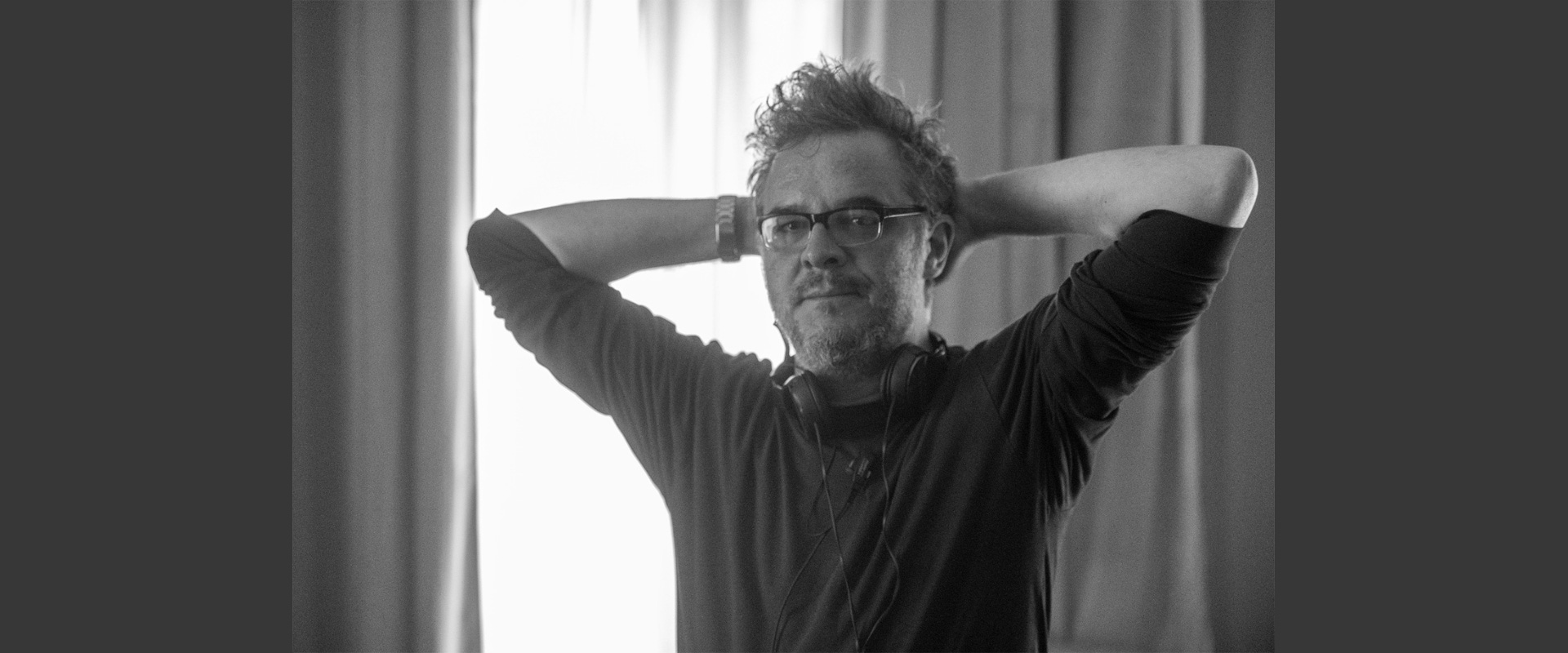
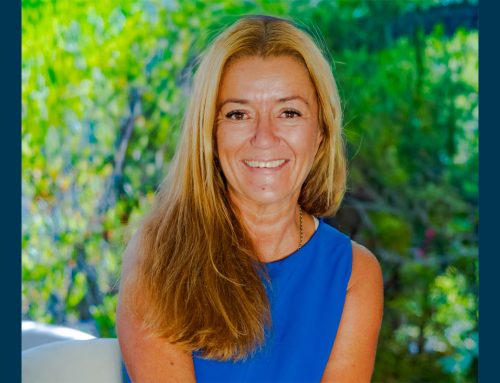
Lorenzo Grasso appears in the credits, but his name rarely gets a second glance. Yet he has been part of some of the most-watched productions of recent years: from Gomorrah (the series) to The Equalizer 3, and on films that have screened at Cannes, Venice, Sundance, and Tribeca.
Born in Florence, he grew up on American TV series of the Eighties, the kind that made California and Los Angeles look like the center of the universe. He studied Psychology at Sapienza University of Rome, officially to please his parents, in reality to get closer to cinema. He found his natural home on set, and has spent over 20 years building a career as a First Assistant Director.
He is the one who keeps the schedule, coordinates the cast and the crew, and manages the unexpected: a role that demands a cool head, understated authority, and, perhaps not by chance, a strong understanding of people.
IMH: Many people dream of Los Angeles, few actually end up working there. How did it happen for you — was it a plan you built over time, or did a series of circumstances bring you there?
Lorenzo Grasso: Not exactly a plan, more of a long shot dream. I grew up completely soaked in American culture — mostly Italia 1’s fault ( [Italy’s youth-skewing commercial TV network], and all those Eighties TV series: A-Team, Wonder Woman, CHiPs, Supercar. I skated, played basketball, played guitar — and everything kept pointing back to that city I saw on screen, all wide streets, palm trees, and neon signs.
In 2001, my friend Alessandro Cassigoli and I drove Route 66 from Chicago to Los Angeles in a Chevy Impala with almost no money. We made it to the Griffith Observatory and took a photo: me giving a thumbs up toward the Hollywood sign, him with a rather different gesture. He’s now an acclaimed director on the international festival circuit; I ended up serving the great Hollywood machine. That photo was already a prophecy.
Then I went back to Italy, built my career, and years later made the definitive leap. When my mother came to visit and I took her to Venice Beach, she looked around: the basketball courts, the skaters, the guitars, the film shoots, and said: “Now I understand why you came here.” Then she added: “If I’d known, I never would have bought you that skateboard.”
IMH: The First AD is the person who translates the director’s vision into an executable production plan. On The Equalizer 3 and Gomorrah the series you worked in radically different contexts: a Hollywood major on one side, a European co-production with its own language and production structure on the other. How do workflow, and your operational approach shift moving from one system to the other?
Lorenzo Grasso: The core concept is always the same. The director is the painter: he has a vision, he wants to make a work of art. The producer holds the wallet and sets the limits. I’m the one in the middle: I listen to both, and then I organize the cascade of people needed to turn that vision into images. We’re often talking hundreds, sometimes thousands of people — just look at the end credits of any film.
My first job when I come onto a project is to build the schedule: breaking the screenplay down into shooting days, factoring in locations, weather, actors’ availability, traffic, police permits. Then on set, I’m the one running the rhythm, I call the sound and camera to roll and most of the time the “action!” too, coordinate departments, manage extras actions, and make sure everything is safe.
I often use a Formula 1 analogy: I’m the chief engine engineer. Hamilton drives, but without the engine he’s going nowhere. And my final goal is not to get behind the wheel — at least not at that speed.
So when you ask about the difference between Gomorrah and The Equalizer 3, the underlying logic is identical. What changes is the scale. Gomorrah was already a high-level production, but Equalizer 3 is Formula 1: more people, more departments, more budget, more pressure, more coordination. It’s the difference between racing a go-kart and racing in the World Championship. Same principle, completely different machine.
That said, I find far more similarities than differences between the two systems. The operational logic of a set: planning, communication, managing the unexpected, is universal. What shifts is the size of the playground.
IMH: A Psychology degree from Sapienza University of Rome, then over 20 years on sets around the world. How much did that academic background shape the working method you have today?
Lorenzo Grasso: Absolutely, and not just at work. It has been useful in life. I love people. I watch them constantly, I enjoy listening to them. On set I have to deal with dozens of different personalities at the same moment: the grip asking when we break for lunch, the lead actress who needs attention, the production designer telling me a wall just collapsed and we need to change all our plans and guess whos’ going to tell the lead actor, that was ready for the crying scene, that he will need to wait in the trailer for another 5 hours? Psychology helps me navigate what I call the daily madness of a film set.
I shift my tone, my approach, my whole attitude depending on who I’m talking to. I become assertive when I need to, gentle when that’s what’s called for, and I’ll take the blame for things that aren’t my fault if that’s what keeps the machine running. I think that ability to adapt is one of my real strengths.
And then, honestly, I had to graduate. I had told my parents I was studying psychology in Rome, which was true, but the real reason I was there was to break into cinema. I owed them that degree.
IMH: The First AD is the person who also bears the operational weight when a production goes off the rails. What was the most critical situation you’ve had to manage on set?
Lorenzo Grasso: I could tell you many. One involves a gun. The armorer had to leave early afternoon due to contractual obligations. Everyone knew, including the director. But we kept going, kept shooting, and by sunset we had this big wide shot on a set that looked like an abandoned western village. The camera starts wide and the director, in the moment, decides to push in closer, which was never part of the plan. And that’s when the panic hit: that move would put the gun in close-up. The one we had on hand was not the original, a unique chrome-plated piece, because the armorer had already left. We shot it anyway. The director never noticed, or at least never said anything to me, and the scene stayed in the final cut. If he had noticed, we would have had to reconvene everyone the next day, bring the actors back, reopen the location. An enormous financial damage.
Another moment of real tension: during the shoot of a war film, we were riding in a 1940s jeep driven by a collector. The director had decided to move the whole group in that vehicle, about ten people, and at some point we found ourselves on a road running along the edge of a mountain, a sheer drop on one side, the path getting narrower and narrower. I had to shout to get us stopped. My first move was to make sure everyone on board was safe before anything else. Safety is always my absolute priority. I am legally responsible for everything that happens on set.
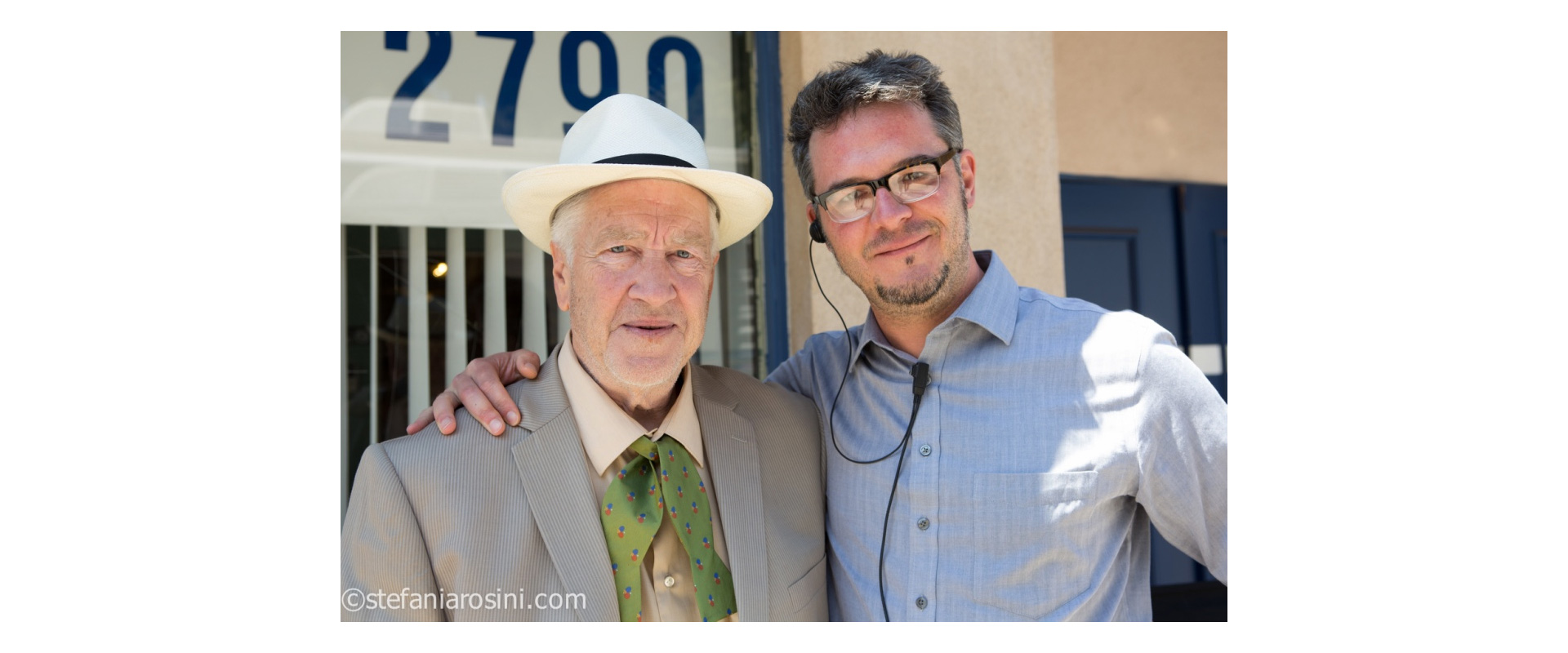
But not every critical moment is about danger. Some are about managing your own emotions while keeping the machine running. On the set of Lucky, David Lynch was there as an actor — a co-protagonist. When his car pulled up that morning, I did what I always do: I’m the first to walk up and welcome the talent. You’re their reference point. They need to feel that someone is taking care of everything. So I walked over, and there was David Lynch coming toward me — one of my absolute icons — and I said, “Hi David, I’m Lorenzo,” and my voice just died. Completely. He was looking at me, hand out, and I froze. It had never happened to me before. Everyone around me started laughing because they’d never seen me like that. I started coughing, managed to recover, and said, “Sorry — I’m Lorenzo, I’m your First AD.” And he just smiled and said, “Hey, don’t worry. I’m David. Whenever you need me, I’m going to be outside smoking.”
And he was. He kept coming back to me throughout the day, checking in — which is actually rare. Most actors disappear between setups and you spend half your time tracking them down. But the real test came when I had to give him his cue to enter the bar set. That’s one of the simplest things I do every single day — I watch the script, I count the lines, and at the right moment I signal the actor. But there was David Lynch, ten centimeters from my face, staring at me, waiting for my signal. Keeping my head clear in that moment, not letting my brain derail while an icon was literally waiting on me — that was a different kind of pressure entirely. A beautiful one.
IMH: What are your dreams and goals for the future?
Lorenzo Grasso: I have two great heroes: Denis Villeneuve and David Fincher. Those are the directors I want to work with. And the extraordinary thing is that a few weeks ago, Villeneuve’s team called me. He had put my name forward for the additional photography of his next movie here in Los Angeles. Then the re-shoot days moved to London and nothing came of it, but the fact that he said the name Lorenzo Grasso is something that keeps me dreaming. Fincher is the other great dream.
The reason I came to Hollywood is that in Italy I had reached the limit of what I could do. I had worked with Bellocchio, Sollima, Virzì. Beautiful work, the highest level, but here, as they say, sky is the limit. I want to work on productions that keep raising the bar.
And then, of course, I have a family here, a life built in Los Angeles. And I still look at this city through the eyes of that twenty-year-old who arrived in a Chevy Impala, with almost no money and a thumb raised toward the Hollywood sign.
Italy Meets Hollywood thanks Lorenzo Grasso for sharing his journey, his dedication to the craft, and his vision of what it means to keep a film set alive.
© Italy Meets Hollywood. All rights reserved.
Share:
Related Posts
In Conversation with Lorenzo Grasso
Lorenzo Grasso appears in the credits, but his name rarely gets a second glance. Yet he has been part of some of the most-watched productions of recent years: from Gomorrah (the series) to The Equalizer 3, and on films that have screened at Cannes, Venice, Sundance, and Tribeca.
Born in Florence, he grew up on American TV series of the Eighties, the kind that made California and Los Angeles look like the center of the universe. He studied Psychology at Sapienza University of Rome, officially to please his parents, in reality to get closer to cinema. He found his natural home on set, and has spent over 20 years building a career as a First Assistant Director.
He is the one who keeps the schedule, coordinates the cast and the crew, and manages the unexpected: a role that demands a cool head, understated authority, and, perhaps not by chance, a strong understanding of people.
IMH: Many people dream of Los Angeles, few actually end up working there. How did it happen for you — was it a plan you built over time, or did a series of circumstances bring you there?
Lorenzo Grasso: Not exactly a plan, more of a long shot dream. I grew up completely soaked in American culture — mostly Italia 1’s fault ( [Italy’s youth-skewing commercial TV network], and all those Eighties TV series: A-Team, Wonder Woman, CHiPs, Supercar. I skated, played basketball, played guitar — and everything kept pointing back to that city I saw on screen, all wide streets, palm trees, and neon signs.
In 2001, my friend Alessandro Cassigoli and I drove Route 66 from Chicago to Los Angeles in a Chevy Impala with almost no money. We made it to the Griffith Observatory and took a photo: me giving a thumbs up toward the Hollywood sign, him with a rather different gesture. He’s now an acclaimed director on the international festival circuit; I ended up serving the great Hollywood machine. That photo was already a prophecy.
Then I went back to Italy, built my career, and years later made the definitive leap. When my mother came to visit and I took her to Venice Beach, she looked around: the basketball courts, the skaters, the guitars, the film shoots, and said: “Now I understand why you came here.” Then she added: “If I’d known, I never would have bought you that skateboard.”
IMH: The First AD is the person who translates the director’s vision into an executable production plan. On The Equalizer 3 and Gomorrah the series you worked in radically different contexts: a Hollywood major on one side, a European co-production with its own language and production structure on the other. How do workflow, and your operational approach shift moving from one system to the other?
Lorenzo Grasso: The core concept is always the same. The director is the painter: he has a vision, he wants to make a work of art. The producer holds the wallet and sets the limits. I’m the one in the middle: I listen to both, and then I organize the cascade of people needed to turn that vision into images. We’re often talking hundreds, sometimes thousands of people — just look at the end credits of any film.
My first job when I come onto a project is to build the schedule: breaking the screenplay down into shooting days, factoring in locations, weather, actors’ availability, traffic, police permits. Then on set, I’m the one running the rhythm, I call the sound and camera to roll and most of the time the “action!” too, coordinate departments, manage extras actions, and make sure everything is safe.
I often use a Formula 1 analogy: I’m the chief engine engineer. Hamilton drives, but without the engine he’s going nowhere. And my final goal is not to get behind the wheel — at least not at that speed.
So when you ask about the difference between Gomorrah and The Equalizer 3, the underlying logic is identical. What changes is the scale. Gomorrah was already a high-level production, but Equalizer 3 is Formula 1: more people, more departments, more budget, more pressure, more coordination. It’s the difference between racing a go-kart and racing in the World Championship. Same principle, completely different machine.
That said, I find far more similarities than differences between the two systems. The operational logic of a set: planning, communication, managing the unexpected, is universal. What shifts is the size of the playground.
IMH: A Psychology degree from Sapienza University of Rome, then over 20 years on sets around the world. How much did that academic background shape the working method you have today?
Lorenzo Grasso: Absolutely, and not just at work. It has been useful in life. I love people. I watch them constantly, I enjoy listening to them. On set I have to deal with dozens of different personalities at the same moment: the grip asking when we break for lunch, the lead actress who needs attention, the production designer telling me a wall just collapsed and we need to change all our plans and guess whos’ going to tell the lead actor, that was ready for the crying scene, that he will need to wait in the trailer for another 5 hours? Psychology helps me navigate what I call the daily madness of a film set.
I shift my tone, my approach, my whole attitude depending on who I’m talking to. I become assertive when I need to, gentle when that’s what’s called for, and I’ll take the blame for things that aren’t my fault if that’s what keeps the machine running. I think that ability to adapt is one of my real strengths.
And then, honestly, I had to graduate. I had told my parents I was studying psychology in Rome, which was true, but the real reason I was there was to break into cinema. I owed them that degree.
IMH: The First AD is the person who also bears the operational weight when a production goes off the rails. What was the most critical situation you’ve had to manage on set?
Lorenzo Grasso: I could tell you many. One involves a gun. The armorer had to leave early afternoon due to contractual obligations. Everyone knew, including the director. But we kept going, kept shooting, and by sunset we had this big wide shot on a set that looked like an abandoned western village. The camera starts wide and the director, in the moment, decides to push in closer, which was never part of the plan. And that’s when the panic hit: that move would put the gun in close-up. The one we had on hand was not the original, a unique chrome-plated piece, because the armorer had already left. We shot it anyway. The director never noticed, or at least never said anything to me, and the scene stayed in the final cut. If he had noticed, we would have had to reconvene everyone the next day, bring the actors back, reopen the location. An enormous financial damage.
Another moment of real tension: during the shoot of a war film, we were riding in a 1940s jeep driven by a collector. The director had decided to move the whole group in that vehicle, about ten people, and at some point we found ourselves on a road running along the edge of a mountain, a sheer drop on one side, the path getting narrower and narrower. I had to shout to get us stopped. My first move was to make sure everyone on board was safe before anything else. Safety is always my absolute priority. I am legally responsible for everything that happens on set.
But not every critical moment is about danger. Some are about managing your own emotions while keeping the machine running. On the set of Lucky, David Lynch was there as an actor — a co-protagonist. When his car pulled up that morning, I did what I always do: I’m the first to walk up and welcome the talent. You’re their reference point. They need to feel that someone is taking care of everything. So I walked over, and there was David Lynch coming toward me — one of my absolute icons — and I said, “Hi David, I’m Lorenzo,” and my voice just died. Completely. He was looking at me, hand out, and I froze. It had never happened to me before. Everyone around me started laughing because they’d never seen me like that. I started coughing, managed to recover, and said, “Sorry — I’m Lorenzo, I’m your First AD.” And he just smiled and said, “Hey, don’t worry. I’m David. Whenever you need me, I’m going to be outside smoking.”
And he was. He kept coming back to me throughout the day, checking in — which is actually rare. Most actors disappear between setups and you spend half your time tracking them down. But the real test came when I had to give him his cue to enter the bar set. That’s one of the simplest things I do every single day — I watch the script, I count the lines, and at the right moment I signal the actor. But there was David Lynch, ten centimeters from my face, staring at me, waiting for my signal. Keeping my head clear in that moment, not letting my brain derail while an icon was literally waiting on me — that was a different kind of pressure entirely. A beautiful one.
IMH: What are your dreams and goals for the future?
Lorenzo Grasso: I have two great heroes: Denis Villeneuve and David Fincher. Those are the directors I want to work with. And the extraordinary thing is that a few weeks ago, Villeneuve’s team called me. He had put my name forward for the additional photography of his next movie here in Los Angeles. Then the re-shoot days moved to London and nothing came of it, but the fact that he said the name Lorenzo Grasso is something that keeps me dreaming. Fincher is the other great dream.
The reason I came to Hollywood is that in Italy I had reached the limit of what I could do. I had worked with Bellocchio, Sollima, Virzì. Beautiful work, the highest level, but here, as they say, sky is the limit. I want to work on productions that keep raising the bar.
And then, of course, I have a family here, a life built in Los Angeles. And I still look at this city through the eyes of that twenty-year-old who arrived in a Chevy Impala, with almost no money and a thumb raised toward the Hollywood sign.
Italy Meets Hollywood thanks Lorenzo Grasso for sharing his journey, his dedication to the craft, and his vision of what it means to keep a film set alive.
© Italy Meets Hollywood. All rights reserved.