In Conversation with Roberta Sparta’
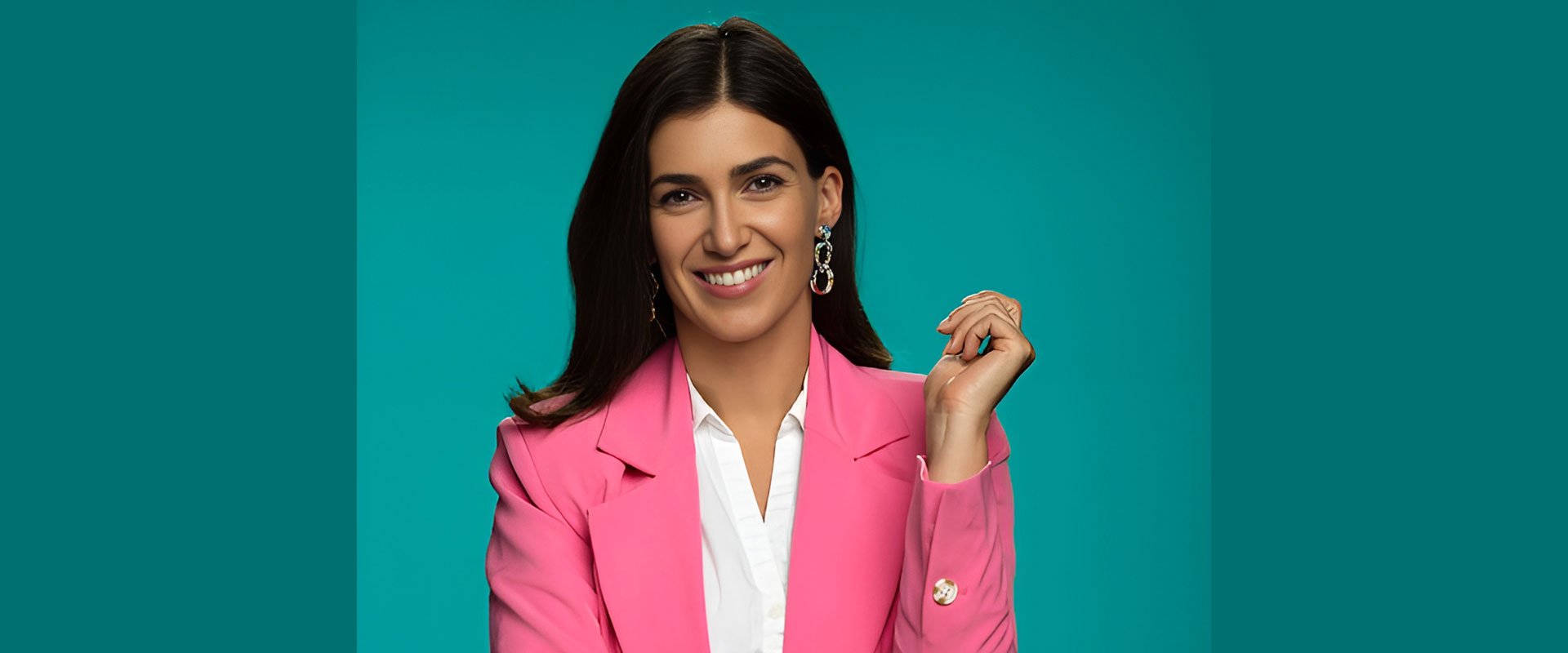
Founder and Creative Lead of Sparta Productions, a Los Angeles–based production company, Roberta Spartà develops and produces content for film, television, and digital platforms, with a particular focus on independent projects and stories that move between Europe and the United States.
After a career as an actress — which led her to become the only Italian actress to be part of the Star Wars universe — in 2021 Roberta chose to move behind the camera, embarking on a path as a producer and assistant director. Today, Sparta Productions operates across four main areas: development and production of narrative projects, production services for third parties, commercial and branded content, and digital and vertical storytelling formats for platforms and social media, offering end-to-end support from concept through post-production. Her most recent projects include The Remedy, a psychological horror film directed by Alex Kahuam and presented as a market premiere at the Fantastic Pavilion during the Marché du Film in Cannes 2025, where it screened to a sold-out audience; the ensemble western Buffalo Daze; and the Lifetime film Abducted at an HBCU: A Black Girl Missing Movie.
IMH: From working in front of the camera on set to taking on creative and producing roles behind the scenes, your career has followed a distinctive path. Looking back at your journey, had you always imagined your career would lead you to where you are today? Was it a conscious decision, or a natural evolution shaped by hands-on experience?
Roberta Spartà: It was not a conscious decision at all. It was a very organic, almost “non-plan planned” evolution. What’s interesting is that when I was a child — six or seven years old — while other kids were dreaming of becoming astronauts or firefighters, my dream was to become a CEO, a company manager. I was very specific: I wanted to study at Bocconi and pursue a business career. Then I took a complete left turn by stepping in front of the camera and becoming an artist. But today, everything makes sense. What I do now merges those two worlds: my business-oriented mindset, shaped by my upbringing, and my creative life in the arts. It feels like a perfect balance.
IMH: In recent years, there has been much talk about a “crisis” in filmmaking in Los Angeles, amid production slowdowns and broader market shifts. Where have you shot your most recent projects, and how are you experiencing this transitional moment as an independent producer working on the ground?
Roberta Spartà: I’ve actually shot a lot in Los Angeles, which goes somewhat against the general narrative. Before that, in 2023 and 2024, I worked in Georgia and Kentucky, and I had extremely positive experiences in both states. I met great collaborators and worked with excellent crews. At the same time, I love living in Los Angeles, so I missed being in California. I’m happy to see that production seems to be coming back here. I’ve also filmed abroad, especially in Italy, which matters to me emotionally. Filming in places that feel like home adds something intangible to a project.
For me, every decision comes down to what’s best for the project. I’m not attached to a specific place — my goal is finding opportunities. If nothing is happening in LA, I’ll look elsewhere. Flexibility is essential.
IMH: When you say “what’s best for the project,” does that also include financial considerations such as tax incentives?
Roberta Spartà: Absolutely. I’m currently executive producing a film that wrapped in Kentucky — the first feature ever shot in Franklin, Kentucky. It’s a horror film directed by Alex Kahuam. We timed the shoot carefully because our goal is to submit it to Cannes, which meant shooting in January to allow enough time for post-production.
Ironically, the crew got stuck in a snowstorm, but it ended up adding unexpected production value. Kentucky has been wonderful — the people are fantastic, and from a financial standpoint, it allows smaller-budget films to maximize resources.
That said, if I had to choose purely based on creative infrastructure, I would always choose Los Angeles. The availability of talent, crews, equipment, and overall resources is unmatched. I’m encouraged by recent initiatives from the city, such as reduced permit costs for small crews and new funding programs supporting micro-budget films. Independent filmmaking represents the industry’s “middle class,” and supporting it is crucial for the ecosystem to thrive.
IMH: Sparta Productions is now increasingly focused on micro-dramas, also known as vertical content. How did you first approach this market, and what convinced you of its creative and industrial potential?
Roberta Spartà: It was a very focused and intentional effort to enter the market. In 2023, while I was working on an independent feature, one of my friends and cinematographer, Khoi Nguyen, mentioned that he was booked back-to-back on vertical productions. At the time, I didn’t even know what “verticals” were, so he walked me through the model, and I was immediately intrigued.
What fascinated me right away was the efficiency of the system. These productions are fast, highly structured, and extremely goal-oriented — often shot in eight days or less. That kind of workflow really spoke to me, both creatively and operationally. I’m drawn to environments that require precision, focus, and problem-solving, and the vertical format embodies all of that.
I initially stepped into the space as a first assistant director, which allowed me to fully understand the mechanics of these sets from the ground up. From there, I gradually moved into producing and began setting up projects through my own production company. Experiencing the process firsthand was essential to understanding both its strengths and its limitations.
What struck me most on my very first day on a vertical set was hearing the actors deliver dialogue from scripts that were completely different from anything I had encountered before. Many of the early storylines were almost absurd — exaggerated, outlandish, and intentionally over-the-top. Paradoxically, that extreme quality created a sense of freedom on set, for both the actors and the crew. There was far less pressure to conform to traditional narrative expectations, which made the environment surprisingly playful and creatively open.
Over time, however, the real challenge became clear: finding the right balance between the format’s demand for constant high stakes — something happening every page and a half — and the desire to maintain strong, coherent storytelling. That tension is where the space is evolving now. What ultimately convinced me of the long-term creative and industrial potential of micro-dramas is precisely this evolution: the opportunity to refine the format, elevate the writing, and move toward more nuanced narratives without losing the speed, intensity, and efficiency that define vertical content.
IMH: The vertical space now includes dozens of active platforms worldwide.
From your perspective, what are the key differences between the production model of a vertical project and that of a traditional film or TV series, in terms of writing, production timelines, crew size, casting, and the relationship with creators, influencers, and digital communities?
Roberta Spartà: The difference is substantial. Traditional film and television productions operate on longer timelines, with extended development and prep phases and a level of financial flexibility that allows you to get very close to what you originally envision. The vertical space, instead, is built almost entirely around speed. Budgets are professional and well-structured, but efficiency is everything, which means every creative decision has to be grounded in production reality from the very beginning.
That approach starts with writing. If a script calls for multiple locations, you’re not going to chase five different houses — you’ll find one versatile location that can be adapted creatively. The format itself reinforces this mindset. Many platforms shoot exclusively in a 9:16 frame, while others work with vertical crops, which means you see far less within the frame. That limitation becomes an advantage: locations can be reused, visual storytelling becomes more focused, and details like wardrobe, shoes, or a specific element of set design suddenly carry much more narrative weight.
Production schedules are equally compressed. Vertical series are typically shot in six to nine days, with very high page counts — often a minimum of 11 pages per day and, in some cases, up to 18. That level of output requires an extremely organized crew and intense concentration from everyone involved. The workflow is sometimes compared to soap operas, in the sense that blocking is minimal, sets are lit efficiently, actors receive large portions of material at once, and the priority is to keep moving — but here everything is accelerated.
What truly sets vertical content apart, however, is the relationship with its audience and the kind of star system it has created. Micro-dramas have produced recognizable vertical stars — actors who are consistently requested by platforms and directors and who build direct, ongoing relationships with fans. Talent such as Kasey Esser, often referred to within the space as the “Brad Pitt of verticals,” or Steven Morana, a recurring male lead across multiple productions, exemplifies how visibility and continuity work differently in this ecosystem.
Unlike traditional Hollywood stardom, where access is tightly controlled, vertical actors are present within the same digital spaces as their audiences. Fans comment in real time, follow performers across platforms, and interact with them directly through social media. That proximity has fueled an unusually strong sense of community and loyalty, and it has had tangible industry effects. During periods when work was scarce elsewhere, vertical productions kept actors and crews consistently employed, with multiple series often shooting simultaneously in Los Angeles.
That engagement has also extended beyond the screen, evolving into conventions — both online and in person — as well as merchandise collaborations and community-driven initiatives. Ultimately, the power of the vertical ecosystem comes from its fans. They are the engine behind its growth, its visibility, and its commercial sustainability.
From a demographic standpoint, available data suggests that the core audience currently skews female, roughly between the ages of 30 and 40. At the same time, platforms are actively working to broaden that base by introducing new genres, from action to comedy, in order to reach male viewers and diversify the audience. As the space continues to mature, what’s emerging is not just a new format, but a production and audience model that operates by rules entirely its own.
IMH: Holywater, backed by FOX Entertainment, is now one of the leading players in the vertical content market. In your view, how important is the entry of Hollywood majors into this new storytelling ecosystem?
Roberta Sparta’: It was inevitable that Hollywood would jump in. Once the financial potential became clear, it was only a matter of time before major players started looking at this space and asking how to enter it.
What makes this moment interesting is that micro-dramas have worked so far because of the model they were built on. If Hollywood’s arrival simply brings more money and drives costs up across the board, without respecting that structure, I don’t think that’s necessarily going to help. The challenge is finding a way to bridge the two worlds.
Hollywood can bring more human resources and a deeper knowledge of traditional filmmaking and entertainment production. That experience can be useful if it helps elevate the writing, introduce new genres, and expand the creative range of micro-dramas, while keeping the format intact. The structure — 60- to 90-second episodes designed for mobile viewing — works, and I don’t think it needs to change. What can and should change is the variety of genres and casting to be more inclusive (diverse).
I also think we’re going to see consolidation. Right now there are many platforms operating at the same time, and it reminds me of the early days of streaming, when there were countless services before mergers and partnerships started happening. I expect something similar in the micro-drama space.
That will likely have an impact on subscription models as well. Some audiences are already feeling the pressure of high weekly subscriptions or in-app purchases to access full series. A few platforms are experimenting with advertising-based models, and it will be interesting to see whether Hollywood’s entry accelerates changes on that front. Overall, this feels like a transitional phase, and the next couple of years will be very telling for where the space goes.
IMH: Looking ahead, what is your next professional step? Is there a project you dream of developing that also draws on your Italian background—and that bridge position between two creative ecosystems that has become increasingly central to your work?
Roberta Spartà:
What I want to do next is bring a slate of vertical projects to Italy. I’ve already started doing that, and I want to do it in a more structured and consistent way. We shot a micro-drama there in November, and it was a wonderful experience. On a personal level, it also allows me to be closer to my family, which is very important to me.
Beyond that, I want to create real opportunities for Italian crews and actors. I don’t know if “benefit” is the right word, but the idea is to give people ongoing work — the chance to do what they love, consistently. That’s what happened here in the U.S.: it started in Los Angeles, then expanded to Atlanta and Kentucky. In Europe, there’s comparatively less production activity, aside from places like London, while in North America you also have Canada. I see Italy as a place where this model could genuinely take root.
The way I’ve approached it so far is very practical. Since these projects currently need to be shot in English, for the micro-drama I directed and produced — Married Against the Will — I flew in the two lead actors from the U.S., while the rest of the cast and the entire crew were Italian, or Americans living and working in Italy. One example is David Callahan, who works extensively in Italian television and played the villain. Seeing that level of talent on set was incredibly rewarding.
Italy also brings an undeniable production value. No matter where you point the camera, the locations elevate the project. A church in Italy might date back to the 1400s; in Los Angeles, it might have been built in the 1980s. The light is different, the textures are different, and it shows on screen. Other producers noticed it immediately — the projects simply look different.
I understand that, for platforms, shooting in Italy can feel intimidating. It’s far away, there’s a nine-hour time difference, and it requires trust. But now that I have a concrete example to show, I want to use it as a calling card — to demonstrate what’s possible and to bring more projects there. I’ve done it once. Now I want to do it more deliberately, with more planning and continuity.
Italy Meets Hollywood thanks Roberta Spartà for sharing her insights.
© Italy Meets Hollywood. All rights reserved.
Share:
Related Posts



Founder and Creative Lead of Sparta Productions, a Los Angeles–based production company, Roberta Spartà develops and produces content for film, television, and digital platforms, with a particular focus on independent projects and stories that move between Europe and the United States.
After a career as an actress — which led her to become the only Italian actress to be part of the Star Wars universe — in 2021 Roberta chose to move behind the camera, embarking on a path as a producer and assistant director. Today, Sparta Productions operates across four main areas: development and production of narrative projects, production services for third parties, commercial and branded content, and digital and vertical storytelling formats for platforms and social media, offering end-to-end support from concept through post-production. Her most recent projects include The Remedy, a psychological horror film directed by Alex Kahuam and presented as a market premiere at the Fantastic Pavilion during the Marché du Film in Cannes 2025, where it screened to a sold-out audience; the ensemble western Buffalo Daze; and the Lifetime film Abducted at an HBCU: A Black Girl Missing Movie.
IMH: From working in front of the camera on set to taking on creative and producing roles behind the scenes, your career has followed a distinctive path. Looking back at your journey, had you always imagined your career would lead you to where you are today? Was it a conscious decision, or a natural evolution shaped by hands-on experience?
Roberta Spartà: It was not a conscious decision at all. It was a very organic, almost “non-plan planned” evolution. What’s interesting is that when I was a child — six or seven years old — while other kids were dreaming of becoming astronauts or firefighters, my dream was to become a CEO, a company manager. I was very specific: I wanted to study at Bocconi and pursue a business career. Then I took a complete left turn by stepping in front of the camera and becoming an artist. But today, everything makes sense. What I do now merges those two worlds: my business-oriented mindset, shaped by my upbringing, and my creative life in the arts. It feels like a perfect balance.
IMH: In recent years, there has been much talk about a “crisis” in filmmaking in Los Angeles, amid production slowdowns and broader market shifts. Where have you shot your most recent projects, and how are you experiencing this transitional moment as an independent producer working on the ground?
Roberta Spartà: I’ve actually shot a lot in Los Angeles, which goes somewhat against the general narrative. Before that, in 2023 and 2024, I worked in Georgia and Kentucky, and I had extremely positive experiences in both states. I met great collaborators and worked with excellent crews. At the same time, I love living in Los Angeles, so I missed being in California. I’m happy to see that production seems to be coming back here. I’ve also filmed abroad, especially in Italy, which matters to me emotionally. Filming in places that feel like home adds something intangible to a project.
For me, every decision comes down to what’s best for the project. I’m not attached to a specific place — my goal is finding opportunities. If nothing is happening in LA, I’ll look elsewhere. Flexibility is essential.
IMH: When you say “what’s best for the project,” does that also include financial considerations such as tax incentives?
Roberta Spartà: Absolutely. I’m currently executive producing a film that wrapped in Kentucky — the first feature ever shot in Franklin, Kentucky. It’s a horror film directed by Alex Kahuam. We timed the shoot carefully because our goal is to submit it to Cannes, which meant shooting in January to allow enough time for post-production.
Ironically, the crew got stuck in a snowstorm, but it ended up adding unexpected production value. Kentucky has been wonderful — the people are fantastic, and from a financial standpoint, it allows smaller-budget films to maximize resources.
That said, if I had to choose purely based on creative infrastructure, I would always choose Los Angeles. The availability of talent, crews, equipment, and overall resources is unmatched. I’m encouraged by recent initiatives from the city, such as reduced permit costs for small crews and new funding programs supporting micro-budget films. Independent filmmaking represents the industry’s “middle class,” and supporting it is crucial for the ecosystem to thrive.
IMH: Sparta Productions is now increasingly focused on micro-dramas, also known as vertical content. How did you first approach this market, and what convinced you of its creative and industrial potential?
Roberta Spartà: It was a very focused and intentional effort to enter the market. In 2023, while I was working on an independent feature, one of my friends and cinematographer, Khoi Nguyen, mentioned that he was booked back-to-back on vertical productions. At the time, I didn’t even know what “verticals” were, so he walked me through the model, and I was immediately intrigued.
What fascinated me right away was the efficiency of the system. These productions are fast, highly structured, and extremely goal-oriented — often shot in eight days or less. That kind of workflow really spoke to me, both creatively and operationally. I’m drawn to environments that require precision, focus, and problem-solving, and the vertical format embodies all of that.
I initially stepped into the space as a first assistant director, which allowed me to fully understand the mechanics of these sets from the ground up. From there, I gradually moved into producing and began setting up projects through my own production company. Experiencing the process firsthand was essential to understanding both its strengths and its limitations.
What struck me most on my very first day on a vertical set was hearing the actors deliver dialogue from scripts that were completely different from anything I had encountered before. Many of the early storylines were almost absurd — exaggerated, outlandish, and intentionally over-the-top. Paradoxically, that extreme quality created a sense of freedom on set, for both the actors and the crew. There was far less pressure to conform to traditional narrative expectations, which made the environment surprisingly playful and creatively open.
Over time, however, the real challenge became clear: finding the right balance between the format’s demand for constant high stakes — something happening every page and a half — and the desire to maintain strong, coherent storytelling. That tension is where the space is evolving now. What ultimately convinced me of the long-term creative and industrial potential of micro-dramas is precisely this evolution: the opportunity to refine the format, elevate the writing, and move toward more nuanced narratives without losing the speed, intensity, and efficiency that define vertical content.
IMH: The vertical space now includes dozens of active platforms worldwide.
From your perspective, what are the key differences between the production model of a vertical project and that of a traditional film or TV series, in terms of writing, production timelines, crew size, casting, and the relationship with creators, influencers, and digital communities?
Roberta Spartà: The difference is substantial. Traditional film and television productions operate on longer timelines, with extended development and prep phases and a level of financial flexibility that allows you to get very close to what you originally envision. The vertical space, instead, is built almost entirely around speed. Budgets are professional and well-structured, but efficiency is everything, which means every creative decision has to be grounded in production reality from the very beginning.
That approach starts with writing. If a script calls for multiple locations, you’re not going to chase five different houses — you’ll find one versatile location that can be adapted creatively. The format itself reinforces this mindset. Many platforms shoot exclusively in a 9:16 frame, while others work with vertical crops, which means you see far less within the frame. That limitation becomes an advantage: locations can be reused, visual storytelling becomes more focused, and details like wardrobe, shoes, or a specific element of set design suddenly carry much more narrative weight.
Production schedules are equally compressed. Vertical series are typically shot in six to nine days, with very high page counts — often a minimum of 11 pages per day and, in some cases, up to 18. That level of output requires an extremely organized crew and intense concentration from everyone involved. The workflow is sometimes compared to soap operas, in the sense that blocking is minimal, sets are lit efficiently, actors receive large portions of material at once, and the priority is to keep moving — but here everything is accelerated.
What truly sets vertical content apart, however, is the relationship with its audience and the kind of star system it has created. Micro-dramas have produced recognizable vertical stars — actors who are consistently requested by platforms and directors and who build direct, ongoing relationships with fans. Talent such as Kasey Esser, often referred to within the space as the “Brad Pitt of verticals,” or Steven Morana, a recurring male lead across multiple productions, exemplifies how visibility and continuity work differently in this ecosystem.
Unlike traditional Hollywood stardom, where access is tightly controlled, vertical actors are present within the same digital spaces as their audiences. Fans comment in real time, follow performers across platforms, and interact with them directly through social media. That proximity has fueled an unusually strong sense of community and loyalty, and it has had tangible industry effects. During periods when work was scarce elsewhere, vertical productions kept actors and crews consistently employed, with multiple series often shooting simultaneously in Los Angeles.
That engagement has also extended beyond the screen, evolving into conventions — both online and in person — as well as merchandise collaborations and community-driven initiatives. Ultimately, the power of the vertical ecosystem comes from its fans. They are the engine behind its growth, its visibility, and its commercial sustainability.
From a demographic standpoint, available data suggests that the core audience currently skews female, roughly between the ages of 30 and 40. At the same time, platforms are actively working to broaden that base by introducing new genres, from action to comedy, in order to reach male viewers and diversify the audience. As the space continues to mature, what’s emerging is not just a new format, but a production and audience model that operates by rules entirely its own.
IMH: Holywater, backed by FOX Entertainment, is now one of the leading players in the vertical content market. In your view, how important is the entry of Hollywood majors into this new storytelling ecosystem?
Roberta Sparta’: It was inevitable that Hollywood would jump in. Once the financial potential became clear, it was only a matter of time before major players started looking at this space and asking how to enter it.
What makes this moment interesting is that micro-dramas have worked so far because of the model they were built on. If Hollywood’s arrival simply brings more money and drives costs up across the board, without respecting that structure, I don’t think that’s necessarily going to help. The challenge is finding a way to bridge the two worlds.
Hollywood can bring more human resources and a deeper knowledge of traditional filmmaking and entertainment production. That experience can be useful if it helps elevate the writing, introduce new genres, and expand the creative range of micro-dramas, while keeping the format intact. The structure — 60- to 90-second episodes designed for mobile viewing — works, and I don’t think it needs to change. What can and should change is the variety of genres and casting to be more inclusive (diverse).
I also think we’re going to see consolidation. Right now there are many platforms operating at the same time, and it reminds me of the early days of streaming, when there were countless services before mergers and partnerships started happening. I expect something similar in the micro-drama space.
That will likely have an impact on subscription models as well. Some audiences are already feeling the pressure of high weekly subscriptions or in-app purchases to access full series. A few platforms are experimenting with advertising-based models, and it will be interesting to see whether Hollywood’s entry accelerates changes on that front. Overall, this feels like a transitional phase, and the next couple of years will be very telling for where the space goes.
IMH: Looking ahead, what is your next professional step? Is there a project you dream of developing that also draws on your Italian background—and that bridge position between two creative ecosystems that has become increasingly central to your work?
Roberta Spartà:
What I want to do next is bring a slate of vertical projects to Italy. I’ve already started doing that, and I want to do it in a more structured and consistent way. We shot a micro-drama there in November, and it was a wonderful experience. On a personal level, it also allows me to be closer to my family, which is very important to me.
Beyond that, I want to create real opportunities for Italian crews and actors. I don’t know if “benefit” is the right word, but the idea is to give people ongoing work — the chance to do what they love, consistently. That’s what happened here in the U.S.: it started in Los Angeles, then expanded to Atlanta and Kentucky. In Europe, there’s comparatively less production activity, aside from places like London, while in North America you also have Canada. I see Italy as a place where this model could genuinely take root.
The way I’ve approached it so far is very practical. Since these projects currently need to be shot in English, for the micro-drama I directed and produced — Married Against the Will — I flew in the two lead actors from the U.S., while the rest of the cast and the entire crew were Italian, or Americans living and working in Italy. One example is David Callahan, who works extensively in Italian television and played the villain. Seeing that level of talent on set was incredibly rewarding.
Italy also brings an undeniable production value. No matter where you point the camera, the locations elevate the project. A church in Italy might date back to the 1400s; in Los Angeles, it might have been built in the 1980s. The light is different, the textures are different, and it shows on screen. Other producers noticed it immediately — the projects simply look different.
I understand that, for platforms, shooting in Italy can feel intimidating. It’s far away, there’s a nine-hour time difference, and it requires trust. But now that I have a concrete example to show, I want to use it as a calling card — to demonstrate what’s possible and to bring more projects there. I’ve done it once. Now I want to do it more deliberately, with more planning and continuity.
Italy Meets Hollywood thanks Roberta Spartà for sharing her insights.
© Italy Meets Hollywood. All rights reserved.