

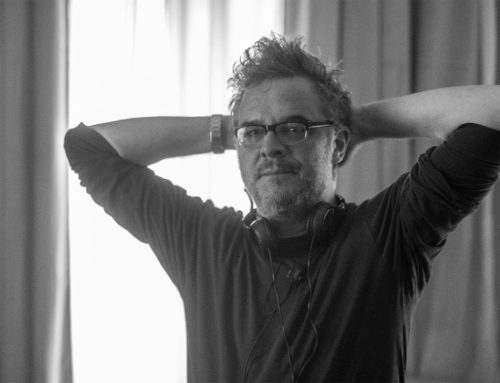
Interview with Michele Greco, the producer who brings together Italian and American talent
Michele Greco is a widely respected executive producer and line producer who has built a solid reputation working in the main North American production hubs, such as Los Angeles, Atlanta, and major Canadian cities. Over the years, he has contributed to successful series such as Chicago P.D. (2013–2014), The Rookie, and Zoey’s Extraordinary Playlist. He is currently in charge of production for NCIS: Origins (2024–2025), one of the very few network scripted series still being filmed entirely in Los Angeles, supported by the California Film & TV Tax Credit.
Greco’s background is firmly rooted in the world of entertainment. Born into a family of artists—his father Italo was a composer for Italian cinema and worked closely with Lina Wertmüller—he was exposed from an early age to the creative and professional communities of film and television. His early career included working as a location manager on Dangerous Beauty (1998), drawing on his in-depth local knowledge and language skills. Moving between Europe and the United States, from Morocco and the Balkans to major U.S. studios, Greco has developed a distinctive expertise, contributing to award-winning shows such as Mad Men, SMILF, Community, and more recently managing the complex musical productions of Zoey’s Extraordinary Playlist.
Known for his ability to bring together international vision and local expertise, Greco is recognized within the industry for his leadership in team building, careful stewardship of productions, and commitment to innovation while maintaining the highest professional standards.
From Europe to the United States: How did your career evolve, and what skills proved essential as you adapted to the American industry?
The knowledge of the English language has been a huge help. My mother was German, so I was bilingual since I was very young, and I had an advantage in learning English as third language. In the 90’s the European movie industry was different from today, more Indy and more founded on handshake agreements. When I moved to Los Angeles and I worked on my first MOW (Editor’s note: MOW stands for Movie of the Week, the made-for-television films broadcast by U.S. networks) , I had a fantastic experience. So much to learn (as I still do), a completely different system, and much pragmatic in many ways.
Then the Unions, were a totally uncharted territory to me, it took sometime to navigate it and learn how they regulate the business, but I also understood the benefits of them. I’d say that the most important skill that helped me work in US was the ability to adapt and learn different systems. I worked in many different countries and continents, where I always adapted my style of producing to the local standards, because I think you get the best out of any crew if you let them work the way they are used to.
NCIS: Origins is among the few scripted series produced by CBS Studios for the CBS network with its entire set based in Los Angeles. How does this local approach impact both the industry and the city’s creative community at this time?
Let’s start saying that we are very lucky to produce a show in LA, actually in North America! I read many statistics from the film Commission to the DGA and other Guilds where they report that in the last couple of years the number of productions dropped to less than 50%. It’s a sad time for the film industry, I hope this is the lowest and there will be a transition in some other forms of media to regrow the movie business, Los Angeles has so much talent, facilities and support that is hard to believe it won’t come out of these dark months.
What professional experiences have contributed most to shaping you as a producer?
I spent about 5 years working in Morocco, from Location managing to Producing many period projects. I worked closely with an extremely talented Production Designer “Paolo Biagetti” who I consider to be my first mentor in the business. Working far from home, and scouting Morocco from north to extreme south we spent a lot of time together where he told me many stories and anecdotes, but he also taught many important tips necessary for the success of producing a show. It seems silly, but the most important lesson I remember is to know the script inside out. He used to tell me: “remember, that’s the story we are telling!”.
Since Producing I interact more with the creative teams, and I recognize that I’m bringing up to my memory many conversations I used to hear in my living room in Rome when my father (music Composer/Producer at RCA Records) was conversing with pop singers, music producers or artists of any kind.
While the producer’s role often remains behind the scenes, it is central to every project’s outcome. What is your approach to managing a set and building your teams?
The choice of a crew for a TV show is based on many parameters. It’s a Drama or a Comedy, period or contemporary, etcetera. I always try to build a very inclusive Team and pick crew that has a passion for the type of material were are making., I look for creative talents whose vision is in line with the one of the creators. I treat every crew member with respect, I want everyone to feel free to bring up to me any questions or problems so we can find a solution together. I believe the crew is built like a chain where every link needs to be strong and connected with the others and clear communications is very important.
With the rapid evolution of the audiovisual sector—due to new platforms and changes in broadcast models—how do you see the role of the producer changing, and what lessons from recent challenges will you carry forward?
One major difference is that when TV was the main industry, most Series were produced in about 22 Episodes to air throughout the season, while today Streamers prefer a short season of 10, 8, or 6 episodes. In the old paradigm, most of the crew would complete the season, take few weeks off and go back to work on the following Season, usually from July to May. But now with the short seasons the crew, including writers cannot wait for a long hiatus, and need to jump on different project to earn enough yearly income, this forces producers to look for new crews in the event of multiple seasons.
Another change is that the short seasons for streamers don’t need Pilots, and Networks reduced budgets due to lesser eyeballs therefore less revenue from commercials result in very few TV pilots and mostly straight to series, when up to 10 years ago more than 100 Pilots were produced each spring.
Share:
 Interview with Charlie Trainer, Stand-In Actor on Modern Family and Network TV Series
 In conversation with Vicki Dobbs Beck
Related Posts
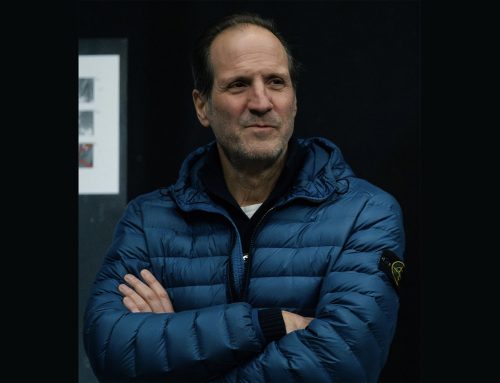
Interview with Michele Greco, the producer who brings together Italian and American talent
Michele Greco is a widely respected executive producer and line producer who has built a solid reputation working in the main North American production hubs, such as Los Angeles, Atlanta, and major Canadian cities. Over the years, he has contributed to successful series such as Chicago P.D. (2013–2014), The Rookie, and Zoey’s Extraordinary Playlist. He is currently in charge of production for NCIS: Origins (2024–2025), one of the very few network scripted series still being filmed entirely in Los Angeles, supported by the California Film & TV Tax Credit.
Greco’s background is firmly rooted in the world of entertainment. Born into a family of artists—his father Italo was a composer for Italian cinema and worked closely with Lina Wertmüller—he was exposed from an early age to the creative and professional communities of film and television. His early career included working as a location manager on Dangerous Beauty (1998), drawing on his in-depth local knowledge and language skills. Moving between Europe and the United States, from Morocco and the Balkans to major U.S. studios, Greco has developed a distinctive expertise, contributing to award-winning shows such as Mad Men, SMILF, Community, and more recently managing the complex musical productions of Zoey’s Extraordinary Playlist.
Known for his ability to bring together international vision and local expertise, Greco is recognized within the industry for his leadership in team building, careful stewardship of productions, and commitment to innovation while maintaining the highest professional standards.
From Europe to the United States: How did your career evolve, and what skills proved essential as you adapted to the American industry?
The knowledge of the English language has been a huge help. My mother was German, so I was bilingual since I was very young, and I had an advantage in learning English as third language. In the 90’s the European movie industry was different from today, more Indy and more founded on handshake agreements. When I moved to Los Angeles and I worked on my first MOW (Editor’s note: MOW stands for Movie of the Week, the made-for-television films broadcast by U.S. networks) , I had a fantastic experience. So much to learn (as I still do), a completely different system, and much pragmatic in many ways.
Then the Unions, were a totally uncharted territory to me, it took sometime to navigate it and learn how they regulate the business, but I also understood the benefits of them. I’d say that the most important skill that helped me work in US was the ability to adapt and learn different systems. I worked in many different countries and continents, where I always adapted my style of producing to the local standards, because I think you get the best out of any crew if you let them work the way they are used to.
NCIS: Origins is among the few scripted series produced by CBS Studios for the CBS network with its entire set based in Los Angeles. How does this local approach impact both the industry and the city’s creative community at this time?
Let’s start saying that we are very lucky to produce a show in LA, actually in North America! I read many statistics from the film Commission to the DGA and other Guilds where they report that in the last couple of years the number of productions dropped to less than 50%. It’s a sad time for the film industry, I hope this is the lowest and there will be a transition in some other forms of media to regrow the movie business, Los Angeles has so much talent, facilities and support that is hard to believe it won’t come out of these dark months.
What professional experiences have contributed most to shaping you as a producer?
I spent about 5 years working in Morocco, from Location managing to Producing many period projects. I worked closely with an extremely talented Production Designer “Paolo Biagetti” who I consider to be my first mentor in the business. Working far from home, and scouting Morocco from north to extreme south we spent a lot of time together where he told me many stories and anecdotes, but he also taught many important tips necessary for the success of producing a show. It seems silly, but the most important lesson I remember is to know the script inside out. He used to tell me: “remember, that’s the story we are telling!”.
Since Producing I interact more with the creative teams, and I recognize that I’m bringing up to my memory many conversations I used to hear in my living room in Rome when my father (music Composer/Producer at RCA Records) was conversing with pop singers, music producers or artists of any kind.
While the producer’s role often remains behind the scenes, it is central to every project’s outcome. What is your approach to managing a set and building your teams?
The choice of a crew for a TV show is based on many parameters. It’s a Drama or a Comedy, period or contemporary, etcetera. I always try to build a very inclusive Team and pick crew that has a passion for the type of material were are making., I look for creative talents whose vision is in line with the one of the creators. I treat every crew member with respect, I want everyone to feel free to bring up to me any questions or problems so we can find a solution together. I believe the crew is built like a chain where every link needs to be strong and connected with the others and clear communications is very important.
With the rapid evolution of the audiovisual sector—due to new platforms and changes in broadcast models—how do you see the role of the producer changing, and what lessons from recent challenges will you carry forward?
One major difference is that when TV was the main industry, most Series were produced in about 22 Episodes to air throughout the season, while today Streamers prefer a short season of 10, 8, or 6 episodes. In the old paradigm, most of the crew would complete the season, take few weeks off and go back to work on the following Season, usually from July to May. But now with the short seasons the crew, including writers cannot wait for a long hiatus, and need to jump on different project to earn enough yearly income, this forces producers to look for new crews in the event of multiple seasons.
Another change is that the short seasons for streamers don’t need Pilots, and Networks reduced budgets due to lesser eyeballs therefore less revenue from commercials result in very few TV pilots and mostly straight to series, when up to 10 years ago more than 100 Pilots were produced each spring.
Share:
Interview with Charlie Trainer, Stand-In Actor on Modern Family and Network TV SeriesIn conversation with Vicki Dobbs Beck