

In conversation with Vicki Dobbs Beck
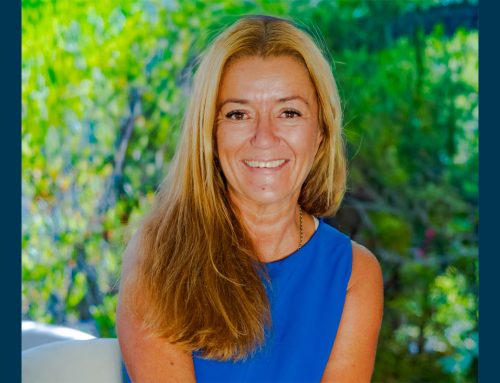
Vicki Dobbs Beck is the Vice President of Immersive Content at Lucasfilm and Industrial Light & Magic (ILM), focused on ILM’s award-winning Immersive Storytelling portfolio.
With a career spanning over 30 years at Lucasfilm, she has contributed to some of the most iconic film franchises of our time, including Star Wars, Indiana Jones, Jurassic Park, and Pirates of the Caribbean. A pioneer in immersive media, she has played a key role in groundbreaking projects such as Alejandro G. Iñárritu’s CARNE y ARENA, Vader Immortal: A Star Wars VR Series and What If…? – An Immersive Story. Through ILM, Dobbs Beck is helping to redefine storytelling as “storyliving”, blending real and digital worlds, fostering emotional connections, and shaping the future of interactive entertainment.
- You’ve spent over three decades at Lucasfilm — a remarkable journey. How did it all begin? What was your background before joining the company, and how has your role evolved over the years to lead you to your current position as VP of Immersive Content?
When I was preparing to graduate from Stanford Business School in 1988, I decided that I wanted to work for a company whose product was ‘inherently creative’. In addition to entertainment, I looked into fashion, wine, performing arts, and musical theater. The vast majority of my classmates pursued careers in management consulting and investment banking so creative opportunities were relatively limited and I had to ‘work outside the box’ to develop a network of possibilities. In the end, I leveraged connections that I had from Stanford Undergraduate where I had majored in International Relations in 1982. One connection led to another and I finally reached someone at Industrial Light & Magic, the visual effects division of Lucasfilm. I was hired as a Marketing Assistant and my first assignment was to write a marketing plan. I asked if there was a business plan to guide my efforts and was told there was nothing formal so I suggested that my then-boss tell me who to interview and I would write a first draft of an ILM business plan. I figured even if I was 100% wrong, it would be something for people to react to and we could refine it from there.
Needless to say, it was an illuminating experience – one that laid the foundation for my next three decades with the company. Shortly after delivering the business plan, Lucasfilm began moving me around the larger organization to assess the sustainability of various entrepreneurial initiatives taking place. Again, I learned a great deal in the process and was impressed by the future-forward vision manifesting in these fledgling efforts. In particular, I was intrigued by Lucasfilm Learning – a team that was creating educational multimedia content while operating at the intersection of storytelling, high fidelity visuals and sound, and interactivity. At that time, we were doing so using computer-driven laser disc players. Although we ended up having to close the team down because we could not sustain a profitable business, the groundbreaking innovation that was revealed through prototypes and experiences, had me hooked. I was determined to watch as real-time technology evolved, seeking opportunities to drive innovation and digital transformation in support of storytelling.
In 2015, I co-founded Lucasfilm & ILM’s award-winning Immersive Storytelling studio, previously known as ILMxLAB. Our goal was to build on the groundbreaking work our R&D team had been doing in high-fidelity real-time graphics and leverage the then emerging immersive devices such as VR (virtual reality) to invite our fans to ‘Step Inside Our Stories’ in ways never before possible.
- Immersive technologies are redefining how stories are told — and experienced. In your view, how are virtual, augmented, and mixed reality shaping the future of entertainment? For those less familiar with these formats, could you briefly explain the difference between VR, AR, and MR, and perhaps give us a few examples of ILM projects that illustrate their unique potential? (For instance, CARNE y ARENA is often cited as a breakthrough in VR.)
Immersive technologies have the power of ‘presence’ and ‘connection’ that make it possible for us to transition from storytelling which is one-way communication to this much bigger idea of storyLIVING where you’re in a world making meaningful choices that drive the narrative forward. VR can transport you to different worlds while AR (augmented reality) allows you to see your world differently by seamlessly introducing a digital layer to your physical surroundings. Mixed reality (MR) enables both VR and AR thereby giving us a broader story canvas on which to create.
Star Wars is a perfect IP for VR since it takes place in a galaxy far, far away as evidenced in our early VR episodic series: Vader Immortal. Not only were we able to put you in Vader’s castle on the planet Mustafar, we could bring you face to face with Vader himself in all of his terrifying glory. In contrast, the Marvel Cinematic Universe takes place both on planet Earth and in other worlds, making it a perfect candidate for Mixed Reality as demonstrated in our more recent release: “What If…? – An Immersive Story” where we move between AR in your living room and transporting you to other planets. The key to both of these experiences was placing you at the center. You become the hero and your relationships are the unfolding story.
- I experienced CARNE y ARENA at LACMA in Los Angeles a few years ago and was deeply moved — I actually burst into tears and had to close my eyes at moments. It created a sense of presence and emotional connection that traditional forms of entertainment simply couldn’t achieve. Do you think we’ll see more projects like CARNE y ARENA in the near future — experiences that aim to provoke deep emotional or even physical reactions in the audience?
CARNE y ARENA was the vision of award-winning director, Alejandro González Iñárritu. He saw the potential of VR and designed the experience to take advantage of the device’s strengths which are, as you say, the power of ‘presence’ and ‘connection’. He was able to elicit the emotions of these immigrants who cross the Mexican border into the US, seeking a better life. Although seemingly an ‘observer’, you literally feel their fear and despair when they are caught. The sensation is both visceral and devastating. My favorite quote was from the Toronto Star: “It’s an experience that lasts just 6 ½ minutes but it creates memories that will last a lifetime.”
CARNE y ARENA had a profound impact on those who experienced it and was awarded a Special Oscar for its pioneering contribution to a new form of storytelling. Since that time, a number of others have recognized VR’s ability to ‘put you in someone else’s shoes’ and have created projects that support a broader social mission.
- ILM works with some of the world’s most beloved and recognizable IPs — Star Wars, to name one. How do you approach the balance between staying true to the integrity of these franchises and exploring new, experimental forms of storytelling?
We always say ‘the right story for the right platform’ and ‘design to the device’s unique strengths’. For us, ‘story’ is always at the core of any Star Wars experience that we develop. We have had to experiment in order to validate our beliefs about what is truly special in the world of immersive entertainment and how to strike the right balance between narrative and interactivity.
- What advice would you give to a young person who’s just beginning their journey into the world of immersive media or entertainment more broadly? Are there specific skills or mindsets you consider essential for the next generation of creators?
I suggest recognizing key trends: the rise of the ‘creator economy’; children expect to interact with their media; the potential power of emerging technologies to enable true ‘StoryLIVING experiences’; and the importance of human-centered design. If you’re college bound, seek out programs that encourage cross-disciplinary collaboration and focus on cross-platform storytelling. To create immersive experiences requires a diverse range of talents. It is a collaborative art. Have courage; take thoughtful risks; experiment; and be open to change and adapt accordingly. This is a rapidly evolving industry.
*Italy Meets Hollywood thanks Vicki Dobbs Beck for sharing her insights and experience, and for her time.
—————————————————————————————————————————————————————————————————————–
What If…? – An Immersive Story, is the first interactive Disney+ original, launched last year as a groundbreaking collaboration between Marvel Studios and ILM, created exclusively for Apple Vision Pro.
This hour-long mixed-reality experience invites fans to step inside the Marvel Cinematic Universe in an entirely new way. They can journey through the multiverse with the Watcher, encounter alternate versions of iconic characters, explore the mystic arts, and even wield the Infinity Stones.
In this behind-the-scenes clip, the creators reflect on the innovative creative and technical process that brought the project to life, offering a deeper look at how this immersive story was made.
Share:
 Interview with Michele Greco, the producer who brings together Italian and American talent
 In Conversation with Pietro Scalia
Related Posts


In conversation with Vicki Dobbs Beck
Vicki Dobbs Beck is the Vice President of Immersive Content at Lucasfilm and Industrial Light & Magic (ILM), focused on ILM’s award-winning Immersive Storytelling portfolio.
With a career spanning over 30 years at Lucasfilm, she has contributed to some of the most iconic film franchises of our time, including Star Wars, Indiana Jones, Jurassic Park, and Pirates of the Caribbean. A pioneer in immersive media, she has played a key role in groundbreaking projects such as Alejandro G. Iñárritu’s CARNE y ARENA, Vader Immortal: A Star Wars VR Series and What If…? – An Immersive Story. Through ILM, Dobbs Beck is helping to redefine storytelling as “storyliving”, blending real and digital worlds, fostering emotional connections, and shaping the future of interactive entertainment.
- You’ve spent over three decades at Lucasfilm — a remarkable journey. How did it all begin? What was your background before joining the company, and how has your role evolved over the years to lead you to your current position as VP of Immersive Content?
When I was preparing to graduate from Stanford Business School in 1988, I decided that I wanted to work for a company whose product was ‘inherently creative’. In addition to entertainment, I looked into fashion, wine, performing arts, and musical theater. The vast majority of my classmates pursued careers in management consulting and investment banking so creative opportunities were relatively limited and I had to ‘work outside the box’ to develop a network of possibilities. In the end, I leveraged connections that I had from Stanford Undergraduate where I had majored in International Relations in 1982. One connection led to another and I finally reached someone at Industrial Light & Magic, the visual effects division of Lucasfilm. I was hired as a Marketing Assistant and my first assignment was to write a marketing plan. I asked if there was a business plan to guide my efforts and was told there was nothing formal so I suggested that my then-boss tell me who to interview and I would write a first draft of an ILM business plan. I figured even if I was 100% wrong, it would be something for people to react to and we could refine it from there.
Needless to say, it was an illuminating experience – one that laid the foundation for my next three decades with the company. Shortly after delivering the business plan, Lucasfilm began moving me around the larger organization to assess the sustainability of various entrepreneurial initiatives taking place. Again, I learned a great deal in the process and was impressed by the future-forward vision manifesting in these fledgling efforts. In particular, I was intrigued by Lucasfilm Learning – a team that was creating educational multimedia content while operating at the intersection of storytelling, high fidelity visuals and sound, and interactivity. At that time, we were doing so using computer-driven laser disc players. Although we ended up having to close the team down because we could not sustain a profitable business, the groundbreaking innovation that was revealed through prototypes and experiences, had me hooked. I was determined to watch as real-time technology evolved, seeking opportunities to drive innovation and digital transformation in support of storytelling.
In 2015, I co-founded Lucasfilm & ILM’s award-winning Immersive Storytelling studio, previously known as ILMxLAB. Our goal was to build on the groundbreaking work our R&D team had been doing in high-fidelity real-time graphics and leverage the then emerging immersive devices such as VR (virtual reality) to invite our fans to ‘Step Inside Our Stories’ in ways never before possible.
- Immersive technologies are redefining how stories are told — and experienced. In your view, how are virtual, augmented, and mixed reality shaping the future of entertainment? For those less familiar with these formats, could you briefly explain the difference between VR, AR, and MR, and perhaps give us a few examples of ILM projects that illustrate their unique potential? (For instance, CARNE y ARENA is often cited as a breakthrough in VR.)
Immersive technologies have the power of ‘presence’ and ‘connection’ that make it possible for us to transition from storytelling which is one-way communication to this much bigger idea of storyLIVING where you’re in a world making meaningful choices that drive the narrative forward. VR can transport you to different worlds while AR (augmented reality) allows you to see your world differently by seamlessly introducing a digital layer to your physical surroundings. Mixed reality (MR) enables both VR and AR thereby giving us a broader story canvas on which to create.
Star Wars is a perfect IP for VR since it takes place in a galaxy far, far away as evidenced in our early VR episodic series: Vader Immortal. Not only were we able to put you in Vader’s castle on the planet Mustafar, we could bring you face to face with Vader himself in all of his terrifying glory. In contrast, the Marvel Cinematic Universe takes place both on planet Earth and in other worlds, making it a perfect candidate for Mixed Reality as demonstrated in our more recent release: “What If…? – An Immersive Story” where we move between AR in your living room and transporting you to other planets. The key to both of these experiences was placing you at the center. You become the hero and your relationships are the unfolding story.
- I experienced CARNE y ARENA at LACMA in Los Angeles a few years ago and was deeply moved — I actually burst into tears and had to close my eyes at moments. It created a sense of presence and emotional connection that traditional forms of entertainment simply couldn’t achieve. Do you think we’ll see more projects like CARNE y ARENA in the near future — experiences that aim to provoke deep emotional or even physical reactions in the audience?
CARNE y ARENA was the vision of award-winning director, Alejandro González Iñárritu. He saw the potential of VR and designed the experience to take advantage of the device’s strengths which are, as you say, the power of ‘presence’ and ‘connection’. He was able to elicit the emotions of these immigrants who cross the Mexican border into the US, seeking a better life. Although seemingly an ‘observer’, you literally feel their fear and despair when they are caught. The sensation is both visceral and devastating. My favorite quote was from the Toronto Star: “It’s an experience that lasts just 6 ½ minutes but it creates memories that will last a lifetime.”
CARNE y ARENA had a profound impact on those who experienced it and was awarded a Special Oscar for its pioneering contribution to a new form of storytelling. Since that time, a number of others have recognized VR’s ability to ‘put you in someone else’s shoes’ and have created projects that support a broader social mission.
- ILM works with some of the world’s most beloved and recognizable IPs — Star Wars, to name one. How do you approach the balance between staying true to the integrity of these franchises and exploring new, experimental forms of storytelling?
We always say ‘the right story for the right platform’ and ‘design to the device’s unique strengths’. For us, ‘story’ is always at the core of any Star Wars experience that we develop. We have had to experiment in order to validate our beliefs about what is truly special in the world of immersive entertainment and how to strike the right balance between narrative and interactivity.
- What advice would you give to a young person who’s just beginning their journey into the world of immersive media or entertainment more broadly? Are there specific skills or mindsets you consider essential for the next generation of creators?
I suggest recognizing key trends: the rise of the ‘creator economy’; children expect to interact with their media; the potential power of emerging technologies to enable true ‘StoryLIVING experiences’; and the importance of human-centered design. If you’re college bound, seek out programs that encourage cross-disciplinary collaboration and focus on cross-platform storytelling. To create immersive experiences requires a diverse range of talents. It is a collaborative art. Have courage; take thoughtful risks; experiment; and be open to change and adapt accordingly. This is a rapidly evolving industry.
*Italy Meets Hollywood thanks Vicki Dobbs Beck for sharing her insights and experience, and for her time.
—————————————————————————————————————————————————————————————————————–
What If…? – An Immersive Story, is the first interactive Disney+ original, launched last year as a groundbreaking collaboration between Marvel Studios and ILM, created exclusively for Apple Vision Pro.
This hour-long mixed-reality experience invites fans to step inside the Marvel Cinematic Universe in an entirely new way. They can journey through the multiverse with the Watcher, encounter alternate versions of iconic characters, explore the mystic arts, and even wield the Infinity Stones.
In this behind-the-scenes clip, the creators reflect on the innovative creative and technical process that brought the project to life, offering a deeper look at how this immersive story was made.
Share:
Interview with Michele Greco, the producer who brings together Italian and American talentIn Conversation with Pietro Scalia