
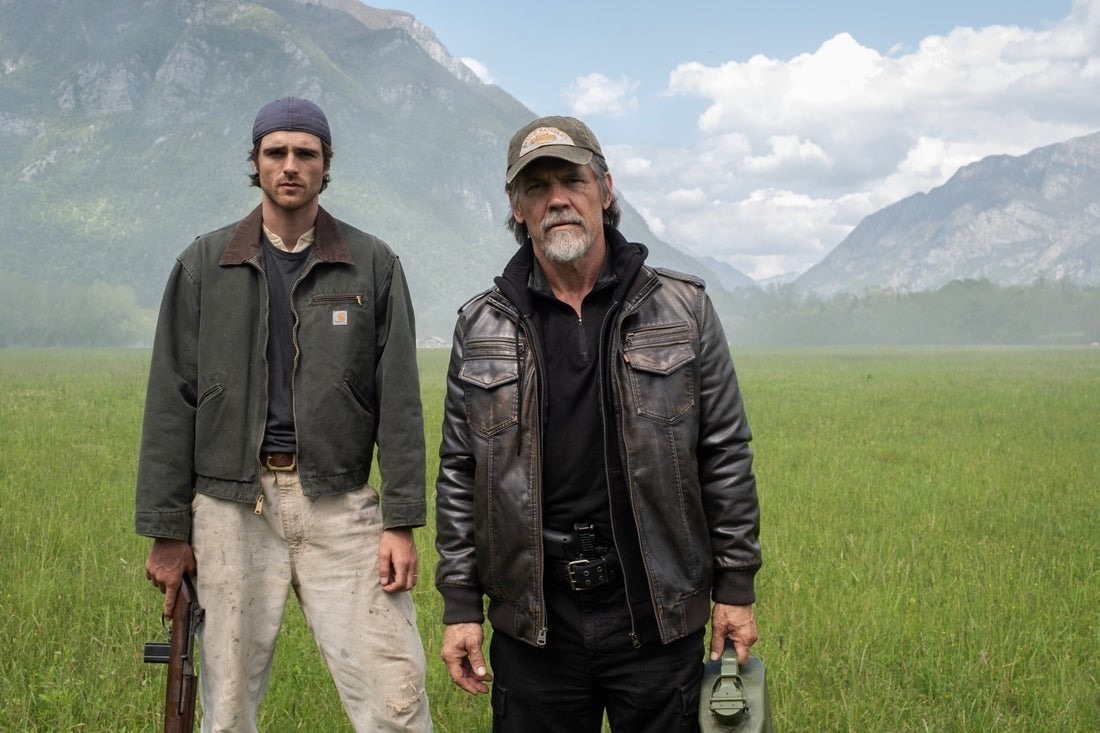
The Dog Stars: Ridley Scott’s Italy-Shot Film Opens Theaters
The Dog Stars, Ridley Scott’s new post-apocalyptic feature starring Jacob Elordi, Josh Brolin and Margaret Qualley, has arrived simultaneously on two sides of the Atlantic, bringing to the U.S. and Italian box offices a major Hollywood production largely shot in Italy.
In the United States, the 20th Century Studios release opened on August 28 with approximately $8 million at the domestic box office, placing fifth over the weekend. The result came in a crowded late-summer marketplace led for a fifth consecutive weekend by Spider-Man: Brand New Day, while Coyote vs. Acme debuted in second place. Internationally, The Dog Stars added approximately $11.3 million from overseas markets during its opening frame.
The movie was released in Italy two days earlier, on August 26, by The Walt Disney Company Italia. According to Cinetel data, by Sunday, August 30, The Dog Stars – Le stelle dopo la fine had generated approximately €669,000 at the Italian box office, with more than 86,000 admissions. On Sunday alone, it ranked fifth, earning approximately €159,000 from nearly 20,000 admissions.
For the Italian industry, however, the film carries significance beyond its theatrical performance. Although Peter Heller’s story is set in a pandemic-ravaged Colorado, a substantial portion of Scott’s America was recreated in Italy. Principal photography took place in spring 2025 across Friuli Venezia Giulia, Veneto, Abruzzo and Lazio, including Cinecittà Studios in Rome. Locations ranged from Bordano and the Tagliamento River area in Friuli Venezia Giulia to the Cansiglio plateau in Veneto and Ovindoli and the Sirente-Velino area in Abruzzo.
Speaking at the film’s press events, Scott explained the choice of Italy over an earlier round of location scouting in Canada with characteristic candor: after scouting near Calgary, he found the wilderness unsettling — “there are wolves and bears,” he said, calling it intimidating — whereas he had already scouted the Dolomites and knew “the food is better” in Italy. Beyond logistics, both Scott and Elordi described a deeper connection to Italian filmmaking. Scott said Italian and French cinema had shaped him “even more than Hollywood,” recalling personal encounters with Federico Fellini and Sergio Leone at Cinecittà. Elordi, who shot several scenes at the historic studios, said it was “impossible not to think about the history of Italian cinema” while filming there, noting that many crew members carry on a craft passed down through generations.
The production provides a particularly tangible example of how Italian territories can double for North American landscapes while supporting a large-scale international shoot. According to Italy for Movies, the nine-week production employed 403 Italian crew members alongside 117 international professionals. In Friuli Venezia Giulia specifically, where Bordano was transformed into the abandoned Colorado airport at the center of the story, the production generated direct local spending of nearly €3.4 million and an estimated economic impact of €6.1 million, according to regional reporting. That spending broke down across the local economy: approximately €360,000 for locations, €420,000 for local crew, €525,000 for catering and per diems, €990,000 for set suppliers, and €1.1 million for crew accommodation. The three-week shoot in the area also engaged 102 local crew members and 110 extras from the region.
The film therefore reaches theaters as both a Hollywood release and an Italian production story: its performance is being measured at the U.S. and Italian box offices, while much of the landscape audiences see standing in for the American West was created through Italian locations, crews, studios and regional production infrastructure — a collaboration both its director and star describe as shaped as much by Italy’s cinematic heritage as by its landscapes.
Sources:, Cinetel, FVG Film Commission, Veneto Film Commission, Washingtontimes.com
Share:
 Strike: Hollywood Writers Responded to AMPTP Counterproposal
 Martin Scorsese Named Honorary President of the Accademia del Cinema Italiano- David di Donatello Awards
Related Posts

The Dog Stars, Ridley Scott’s new post-apocalyptic feature starring Jacob Elordi, Josh Brolin and Margaret Qualley, has arrived simultaneously on two sides of the Atlantic, bringing to the U.S. and Italian box offices a major Hollywood production largely shot in Italy.
In the United States, the 20th Century Studios release opened on August 28 with approximately $8 million at the domestic box office, placing fifth over the weekend. The result came in a crowded late-summer marketplace led for a fifth consecutive weekend by Spider-Man: Brand New Day, while Coyote vs. Acme debuted in second place. Internationally, The Dog Stars added approximately $11.3 million from overseas markets during its opening frame.
The movie was released in Italy two days earlier, on August 26, by The Walt Disney Company Italia. According to Cinetel data, by Sunday, August 30, The Dog Stars – Le stelle dopo la fine had generated approximately €669,000 at the Italian box office, with more than 86,000 admissions. On Sunday alone, it ranked fifth, earning approximately €159,000 from nearly 20,000 admissions.
For the Italian industry, however, the film carries significance beyond its theatrical performance. Although Peter Heller’s story is set in a pandemic-ravaged Colorado, a substantial portion of Scott’s America was recreated in Italy. Principal photography took place in spring 2025 across Friuli Venezia Giulia, Veneto, Abruzzo and Lazio, including Cinecittà Studios in Rome. Locations ranged from Bordano and the Tagliamento River area in Friuli Venezia Giulia to the Cansiglio plateau in Veneto and Ovindoli and the Sirente-Velino area in Abruzzo.
Speaking at the film’s press events, Scott explained the choice of Italy over an earlier round of location scouting in Canada with characteristic candor: after scouting near Calgary, he found the wilderness unsettling — “there are wolves and bears,” he said, calling it intimidating — whereas he had already scouted the Dolomites and knew “the food is better” in Italy. Beyond logistics, both Scott and Elordi described a deeper connection to Italian filmmaking. Scott said Italian and French cinema had shaped him “even more than Hollywood,” recalling personal encounters with Federico Fellini and Sergio Leone at Cinecittà. Elordi, who shot several scenes at the historic studios, said it was “impossible not to think about the history of Italian cinema” while filming there, noting that many crew members carry on a craft passed down through generations.
The production provides a particularly tangible example of how Italian territories can double for North American landscapes while supporting a large-scale international shoot. According to Italy for Movies, the nine-week production employed 403 Italian crew members alongside 117 international professionals. In Friuli Venezia Giulia specifically, where Bordano was transformed into the abandoned Colorado airport at the center of the story, the production generated direct local spending of nearly €3.4 million and an estimated economic impact of €6.1 million, according to regional reporting. That spending broke down across the local economy: approximately €360,000 for locations, €420,000 for local crew, €525,000 for catering and per diems, €990,000 for set suppliers, and €1.1 million for crew accommodation. The three-week shoot in the area also engaged 102 local crew members and 110 extras from the region.
The film therefore reaches theaters as both a Hollywood release and an Italian production story: its performance is being measured at the U.S. and Italian box offices, while much of the landscape audiences see standing in for the American West was created through Italian locations, crews, studios and regional production infrastructure — a collaboration both its director and star describe as shaped as much by Italy’s cinematic heritage as by its landscapes.
Sources:, Cinetel, FVG Film Commission, Veneto Film Commission, Washingtontimes.com
Share:
Strike: Hollywood Writers Responded to AMPTP CounterproposalMartin Scorsese Named Honorary President of the Accademia del Cinema Italiano- David di Donatello Awards