
Big Screens, Big Questions: What Future for Theatrical Exhibition?
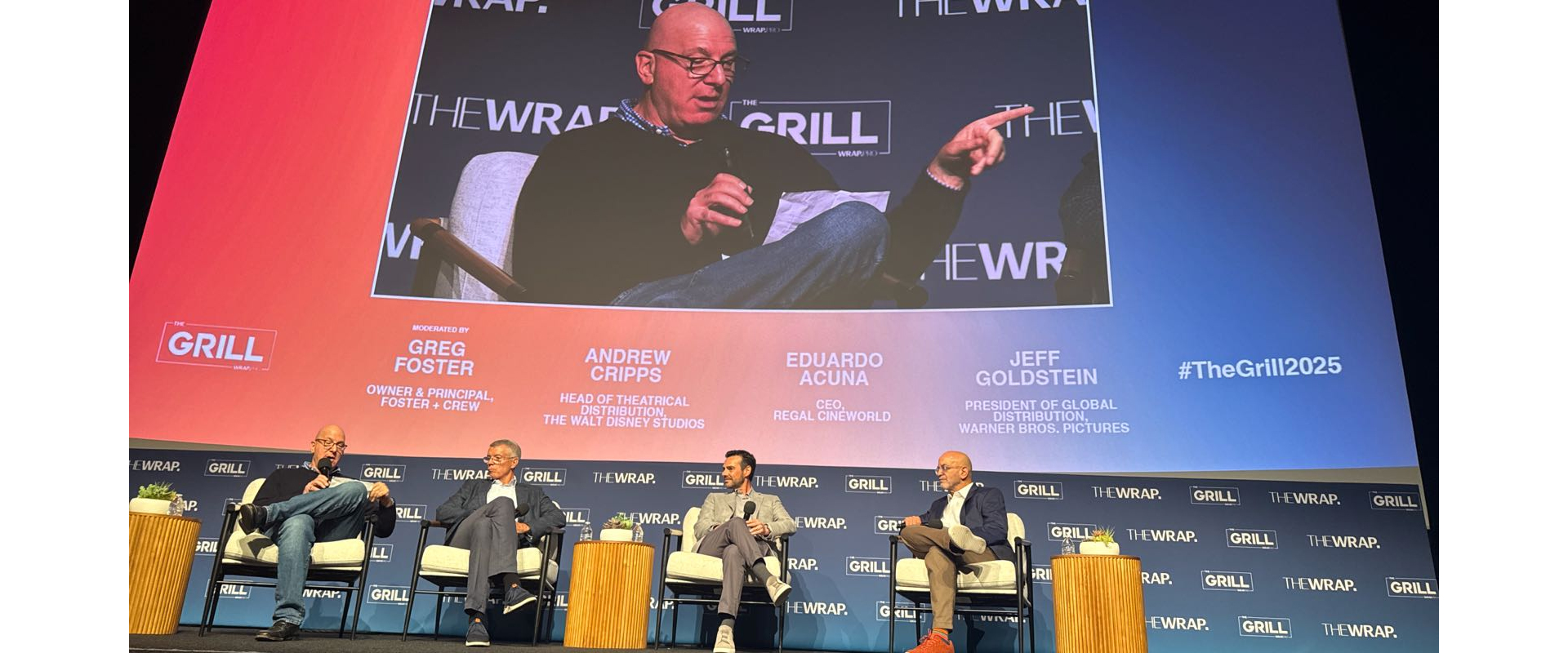
The theatrical distribution and exhibition market is undergoing profound transformation. At The Grill 2025 in Los Angeles – the annual conference organized by The Wrap, a leading trade publication in the entertainment industry – three top executives examined the challenges and opportunities shaping the future of cinema: Jeff Goldstein, President of Global Distribution at Warner Bros. Pictures; Andrew Cripps, Head of Theatrical Distribution at The Walt Disney Studios; and Eduardo Acuna, CEO of Regal Cineworld.
Globalization and Local Roots
Goldstein argued that audience preferences are increasingly aligned worldwide, with social media acting as “jet fuel” for audience interest. This, he suggested, makes centralized global release strategies more effective.
Cripps countered that audience habits remain divergent, stressing the importance of strong local teams able to capture regional nuances. Acuna reinforced this point, emphasizing that markets have unique tastes and require “boots on the ground” to maximize local titles and respond quickly to shifting trends.
The In-Theater Experience and the Role of PLF
The panel agreed on the growing significance of Premium Large Formats (PLF) such as IMAX, Dolby, and 4DX, while noting that the majority of audiences still watch films on traditional screens. Cripps underlined the need to ensure quality across all formats, not just the premium ones.
Acuna highlighted how premium auditoriums transform moviegoing into an event, selling the “live performance of films.” Goldstein added that expanding premium screens is crucial, as they signal to audiences that the theatrical experience is distinct from streaming.
International Dynamics and Original Content
The unexpected success of Formula 1 in Korea illustrated how word-of-mouth and FOMO can reshape market expectations. Both Goldstein and Cripps pointed to the case as proof of the need for flexible strategies.
The dominance of local blockbusters in Asia—such as Nezha 2 in China and Demon Slayer in Japan—was another focal point. Cripps noted that Hollywood now struggles to compete in these markets, where local films account for the majority of box office revenues. Acuna called for embracing more diverse content, from anime and Indian productions to Chinese hits.
Looking Ahead
Looking at upcoming releases, Acuna cited the next Avengers films as major drivers of anticipation. Goldstein pointed to titles like Odyssey and The Devil Wears Prada as evidence of the enduring power of strong IP and nostalgia. Cripps concluded with a note of caution: while IP matters, the industry must also deliver original stories that resonate today, or risk losing the franchises of tomorrow.
Share:
 The Academy Museum Honors Carlo Rambaldi on His Centennial, as Alien Perspective Extends His Legacy
 Taylor Swift Reinvents the Box Office with “The Life of a Showgirl”
Related Posts
The theatrical distribution and exhibition market is undergoing profound transformation. At The Grill 2025 in Los Angeles – the annual conference organized by The Wrap, a leading trade publication in the entertainment industry – three top executives examined the challenges and opportunities shaping the future of cinema: Jeff Goldstein, President of Global Distribution at Warner Bros. Pictures; Andrew Cripps, Head of Theatrical Distribution at The Walt Disney Studios; and Eduardo Acuna, CEO of Regal Cineworld.
Globalization and Local Roots
Goldstein argued that audience preferences are increasingly aligned worldwide, with social media acting as “jet fuel” for audience interest. This, he suggested, makes centralized global release strategies more effective.
Cripps countered that audience habits remain divergent, stressing the importance of strong local teams able to capture regional nuances. Acuna reinforced this point, emphasizing that markets have unique tastes and require “boots on the ground” to maximize local titles and respond quickly to shifting trends.
The In-Theater Experience and the Role of PLF
The panel agreed on the growing significance of Premium Large Formats (PLF) such as IMAX, Dolby, and 4DX, while noting that the majority of audiences still watch films on traditional screens. Cripps underlined the need to ensure quality across all formats, not just the premium ones.
Acuna highlighted how premium auditoriums transform moviegoing into an event, selling the “live performance of films.” Goldstein added that expanding premium screens is crucial, as they signal to audiences that the theatrical experience is distinct from streaming.
International Dynamics and Original Content
The unexpected success of Formula 1 in Korea illustrated how word-of-mouth and FOMO can reshape market expectations. Both Goldstein and Cripps pointed to the case as proof of the need for flexible strategies.
The dominance of local blockbusters in Asia—such as Nezha 2 in China and Demon Slayer in Japan—was another focal point. Cripps noted that Hollywood now struggles to compete in these markets, where local films account for the majority of box office revenues. Acuna called for embracing more diverse content, from anime and Indian productions to Chinese hits.
Looking Ahead
Looking at upcoming releases, Acuna cited the next Avengers films as major drivers of anticipation. Goldstein pointed to titles like Odyssey and The Devil Wears Prada as evidence of the enduring power of strong IP and nostalgia. Cripps concluded with a note of caution: while IP matters, the industry must also deliver original stories that resonate today, or risk losing the franchises of tomorrow.
Share:
The Academy Museum Honors Carlo Rambaldi on His Centennial, as Alien Perspective Extends His LegacyTaylor Swift Reinvents the Box Office with “The Life of a Showgirl”