
Carlo Rambaldi Honored with a Hollywood Walk of Fame Star for His Contribution to Special Effects
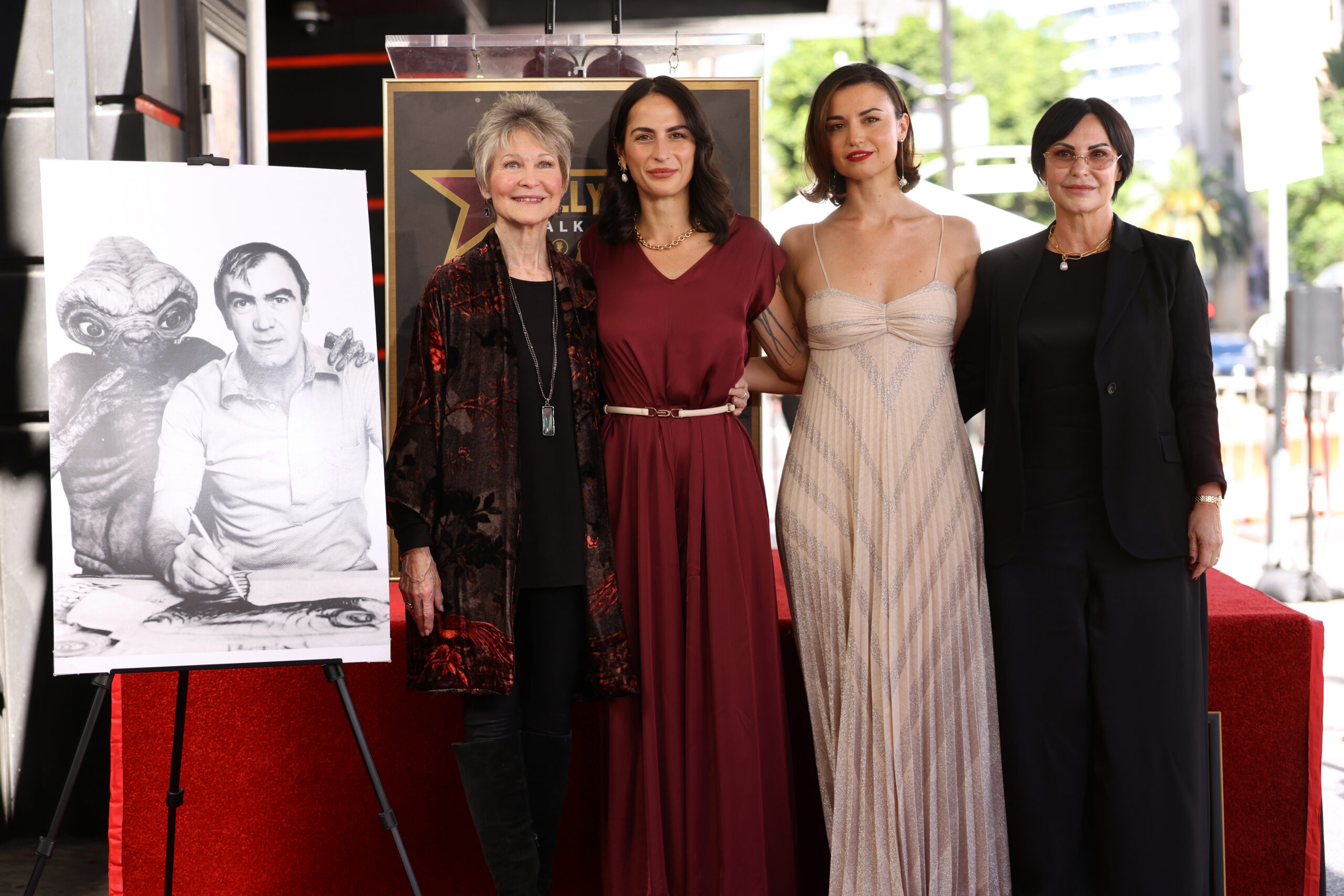
Hollywood has paid tribute to Carlo Rambaldi and the contribution of Italian talent to cinematic special effects. On October 15, 2026, the three-time Academy Award winner received a posthumous star on the Hollywood Walk of Fame in the Motion Pictures category, recognizing a career that combined artistic training and technical innovation to create some of American cinema’s most recognizable characters.
The 2,860th star was accepted by his daughter Daniela Rambaldi, president of the Carlo Rambaldi Foundation, at a ceremony hosted by journalist Silvia Bizio. Speakers included Cinecittà President Antonio Saccone, Rambaldi’s granddaughter Cristina Lippolis Rambaldi, and Matt Winston, son of special effects artist Stan Winston. Supported by Cinecittà, the recognition brought together the Hollywood Chamber of Commerce, Italy’s Ministry of Culture, the national committee for Rambaldi’s centennial celebrations, and the Carlo Rambaldi Foundation.
Born in 1925 in Vigarano Mainarda, near Ferrara, Rambaldi trained at the Academy of Fine Arts in Bologna and worked on more than sixty Italian films, collaborating with filmmakers including Federico Fellini, Pier Paolo Pasolini, and Dario Argento. Dino De Laurentiis brought him to Hollywood for King Kong (1976), which earned him an Academy Special Achievement Award. Oscars for Visual Effects followed for Alien (1979) and E.T. the Extra-Terrestrial (1982), alongside his work on the creatures of David Lynch’s Dune.
His contribution is particularly clear in the production of Alien. Working from H.R. Giger’s creature design, Rambaldi developed the head’s mechanical systems, making its lips and jaws move. In an account published by American Cinematographer, Ridley Scott explained that the quality of the result allowed him to film the creature in an extreme close-up—a technical solution that opened up an expressive opportunity for the director.
With E.T., the connection between mechanics and performance became even more apparent. Speaking at the ceremony, Matt Winston recalled how Rambaldi combined traditional puppetry, costume performance, and advanced animatronics to create a character that seemed alive rather than simply a special effect. He also described the influence that approach had on his father Stan Winston’s work.
The Los Angeles tribute continues with Carlo Rambaldi: Dreaming the Cosmos, on view through December 31, 2026, at the Italian Cultural Institute. Curated by Cristina Lippolis Rambaldi and organized in collaboration with the Carlo Rambaldi Foundation, the exhibition features paintings from the Atmosfere Spaziali series, sculptures, and career materials, including his three Academy Award statuettes and an E.T. animatronic head created for his centennial. It offers a broader perspective on his artistic exploration of the relationship between humanity, technology, matter, and the future.
Beyond celebrating his creatures, the recognition highlights a working method that connected artistic skills, mechanical design, and the demands of filming. That ability to translate an imagined character into a functioning on-set creation defines Rambaldi’s contribution to the film industry—and his role as a bridge between Italian artistic traditions and Hollywood production.
Sources: Cinecitta’ News, The Asc, IIC Los Angeles
Share:
 Beyond Representation: How the Creator Economy Is Reshaping Hollywood’s Talent Agencies
 Guadagnino’s Artificial Premieres at the New York Film Festival
Related Posts



Carlo Rambaldi Honored with a Hollywood Walk of Fame Star for His Contribution to Special Effects
Hollywood has paid tribute to Carlo Rambaldi and the contribution of Italian talent to cinematic special effects. On October 15, 2026, the three-time Academy Award winner received a posthumous star on the Hollywood Walk of Fame in the Motion Pictures category, recognizing a career that combined artistic training and technical innovation to create some of American cinema’s most recognizable characters.
The 2,860th star was accepted by his daughter Daniela Rambaldi, president of the Carlo Rambaldi Foundation, at a ceremony hosted by journalist Silvia Bizio. Speakers included Cinecittà President Antonio Saccone, Rambaldi’s granddaughter Cristina Lippolis Rambaldi, and Matt Winston, son of special effects artist Stan Winston. Supported by Cinecittà, the recognition brought together the Hollywood Chamber of Commerce, Italy’s Ministry of Culture, the national committee for Rambaldi’s centennial celebrations, and the Carlo Rambaldi Foundation.
Born in 1925 in Vigarano Mainarda, near Ferrara, Rambaldi trained at the Academy of Fine Arts in Bologna and worked on more than sixty Italian films, collaborating with filmmakers including Federico Fellini, Pier Paolo Pasolini, and Dario Argento. Dino De Laurentiis brought him to Hollywood for King Kong (1976), which earned him an Academy Special Achievement Award. Oscars for Visual Effects followed for Alien (1979) and E.T. the Extra-Terrestrial (1982), alongside his work on the creatures of David Lynch’s Dune.
His contribution is particularly clear in the production of Alien. Working from H.R. Giger’s creature design, Rambaldi developed the head’s mechanical systems, making its lips and jaws move. In an account published by American Cinematographer, Ridley Scott explained that the quality of the result allowed him to film the creature in an extreme close-up—a technical solution that opened up an expressive opportunity for the director.
With E.T., the connection between mechanics and performance became even more apparent. Speaking at the ceremony, Matt Winston recalled how Rambaldi combined traditional puppetry, costume performance, and advanced animatronics to create a character that seemed alive rather than simply a special effect. He also described the influence that approach had on his father Stan Winston’s work.
The Los Angeles tribute continues with Carlo Rambaldi: Dreaming the Cosmos, on view through December 31, 2026, at the Italian Cultural Institute. Curated by Cristina Lippolis Rambaldi and organized in collaboration with the Carlo Rambaldi Foundation, the exhibition features paintings from the Atmosfere Spaziali series, sculptures, and career materials, including his three Academy Award statuettes and an E.T. animatronic head created for his centennial. It offers a broader perspective on his artistic exploration of the relationship between humanity, technology, matter, and the future.
Beyond celebrating his creatures, the recognition highlights a working method that connected artistic skills, mechanical design, and the demands of filming. That ability to translate an imagined character into a functioning on-set creation defines Rambaldi’s contribution to the film industry—and his role as a bridge between Italian artistic traditions and Hollywood production.
Sources: Cinecitta’ News, The Asc, IIC Los Angeles
Share:
Beyond Representation: How the Creator Economy Is Reshaping Hollywood’s Talent AgenciesGuadagnino’s Artificial Premieres at the New York Film Festival